English
 中文简体
中文简体Custom Solid Color/Melange Double-face Overcoating Fabric
Home > Products > Double-face Overcoating Fabric > Solid Color/Melange Double-face Overcoating Fabric

Product Categories
You are comparing a 340 gsm wool flannel with a 760 gsm melton for the same winter coat pattern. The flannel drapes and breathes; the melton feels dense and almost felted. By the time you check wind penetration, abrasion resistance, and sewing behavior, the flannel vs melton decision becomes about much more than fabr...
When a coat factory buyer compares single-face vs double-face wool coating for a new winter line, the samples on the table may look nearly identical. Cut into a garment, they diverge dramatically. Single-face needs a lining, holds sharp tailor creases, and behaves like a structured shell. Double-face drapes softly, c...
A 760 gsm Melton shell with a 70/30 wool-polyester blend will hold its structure through a full winter of daily wear, shed light rain for roughly 20 minutes before wetting out, and keep the wearer warm at -10 Celsius with only a mid-layer underneath. That mix of weather defense, insulation, and shape retention is one...
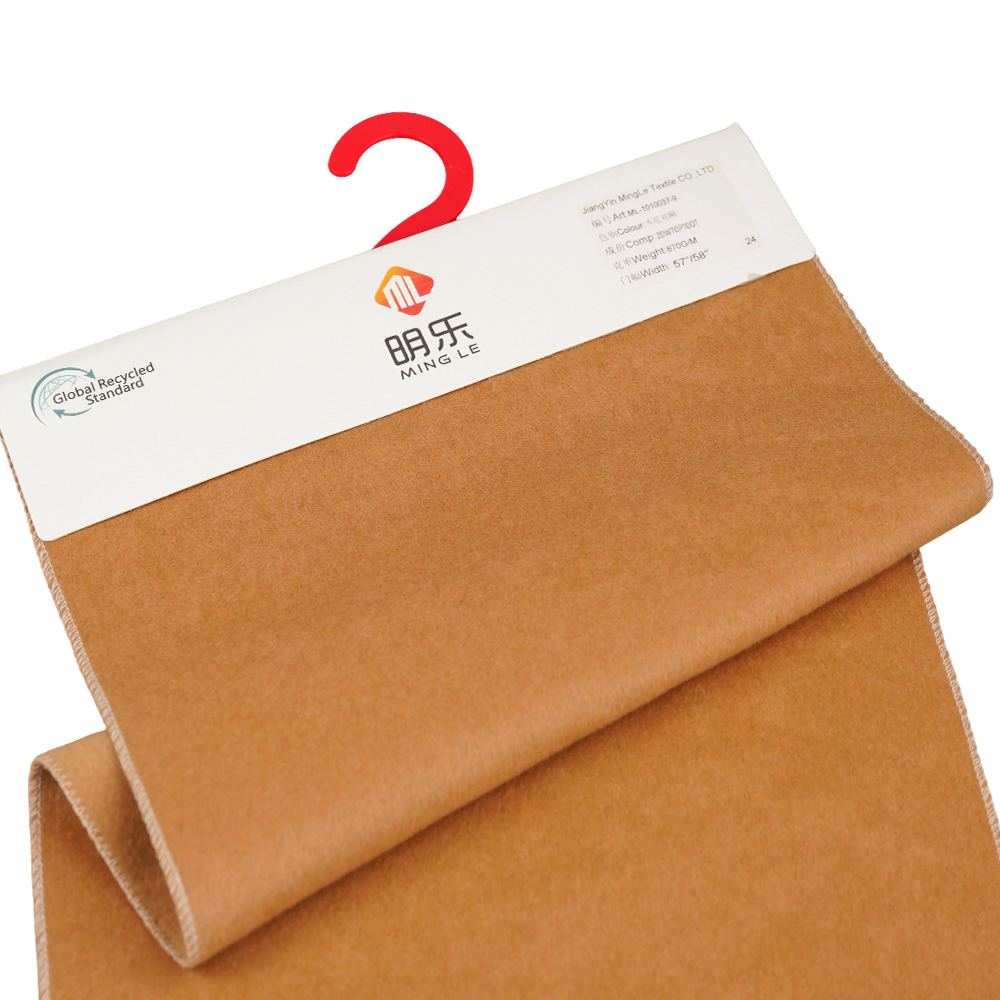
Bean Paste Double-Smooth: 720g/m thick, double-faced fleece fabric, gentle and e...
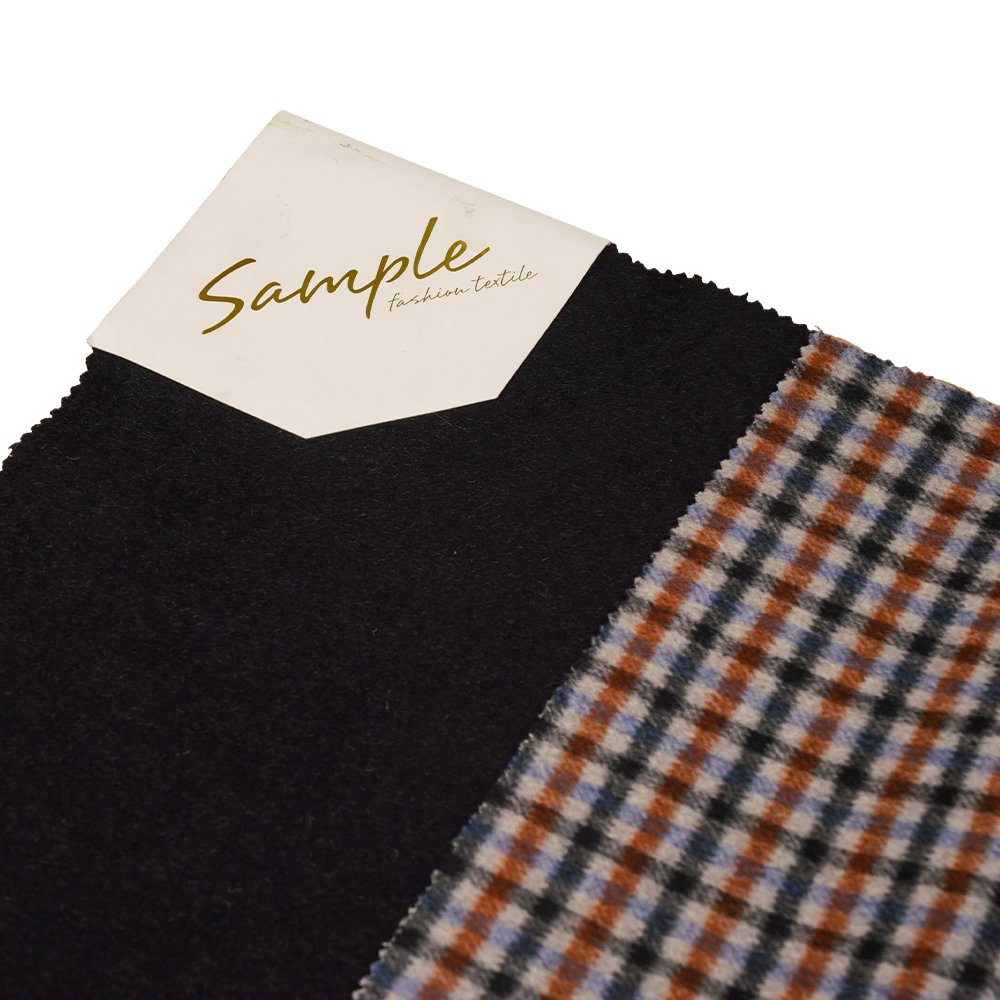
50% Wool 50% other fiber 780G/M Color Check Plaiddouble-face overcoating fabricF...
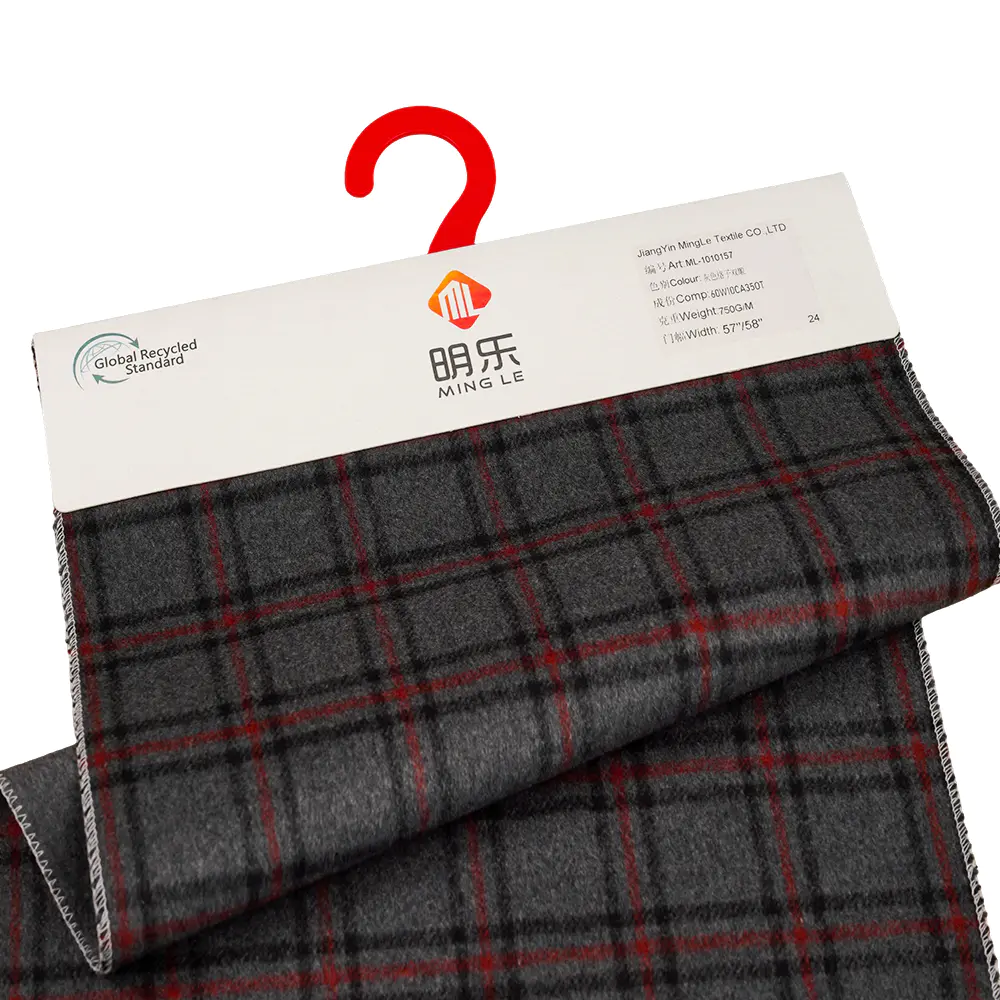
60% Wool 5% Cashmere 35% Synthetic Fabric Double-Sided Brushed Fabric: Gray Plai...
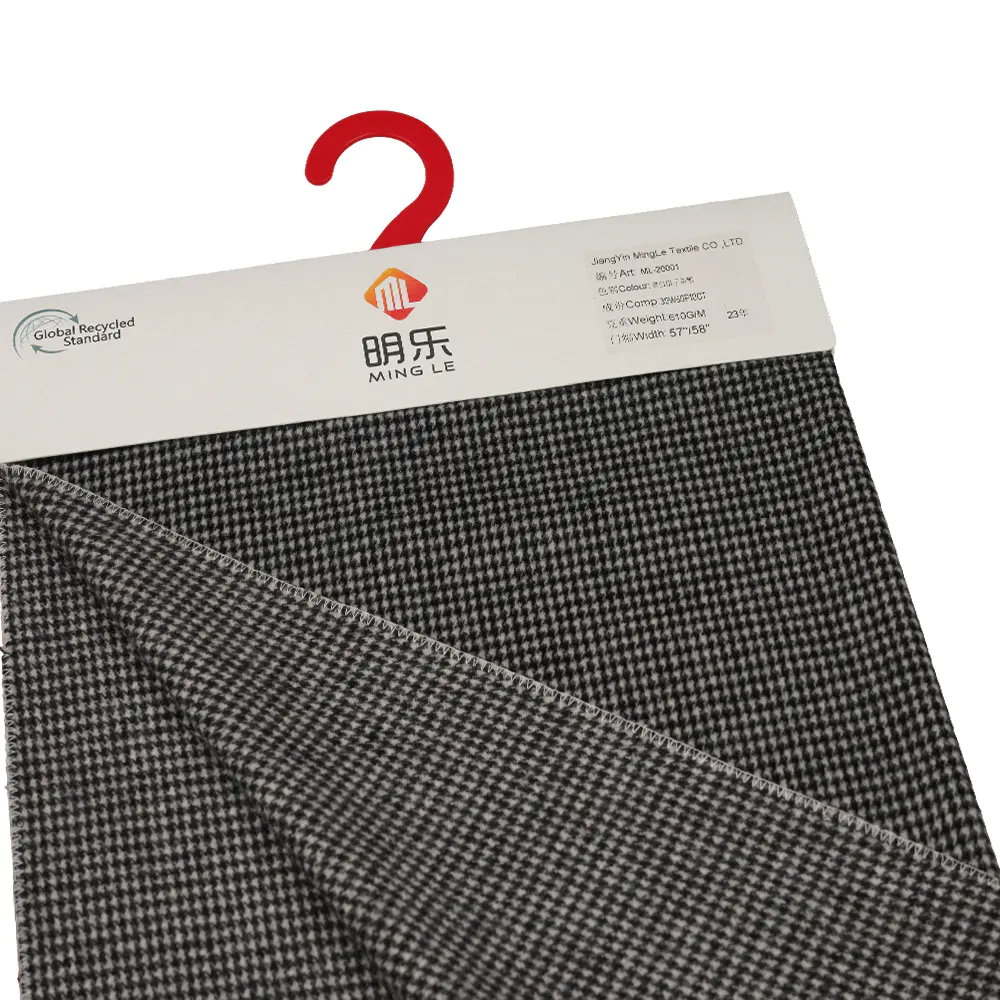
30% Wool 60% Polyester 10% other fiber610G/M Black White Plaid Single-Pile Fleec...
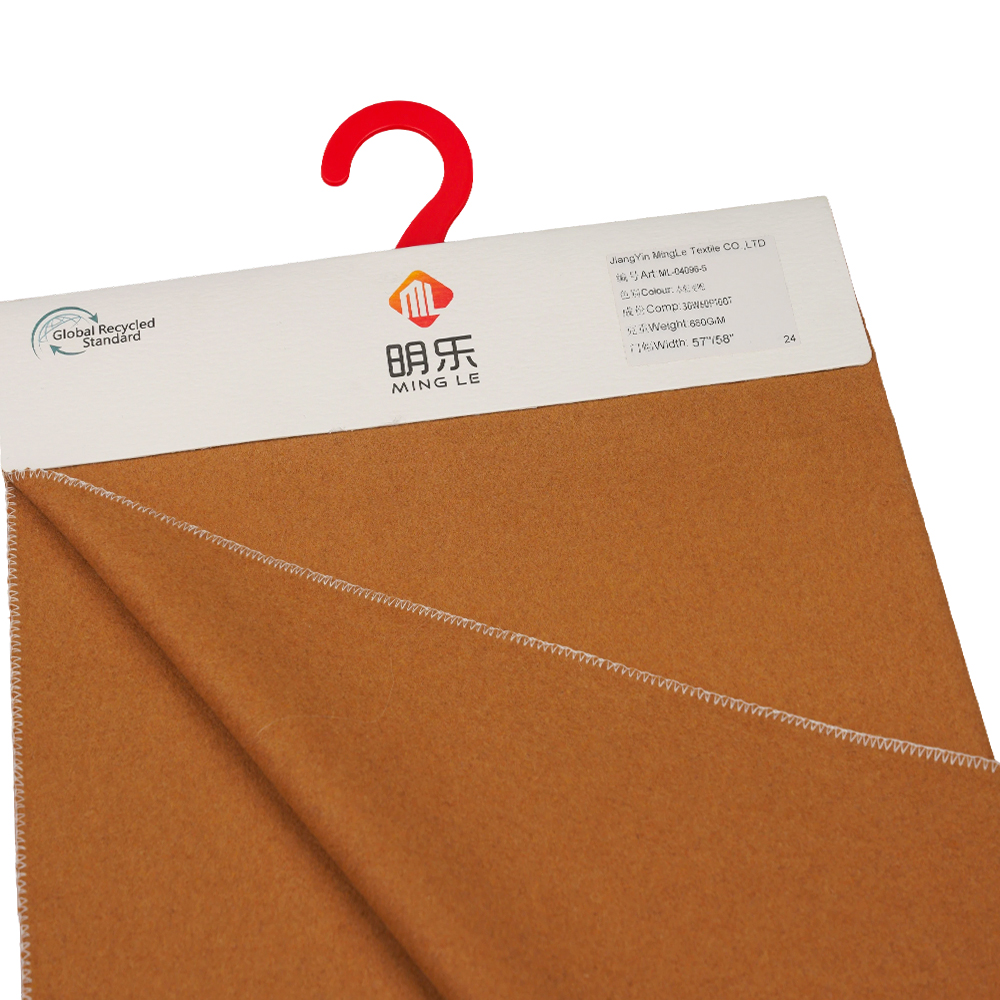
Brownish-Tan Melton Fabric: 30% Wool, 60% Polyester, 10% other fiber, 680g/m Thi...
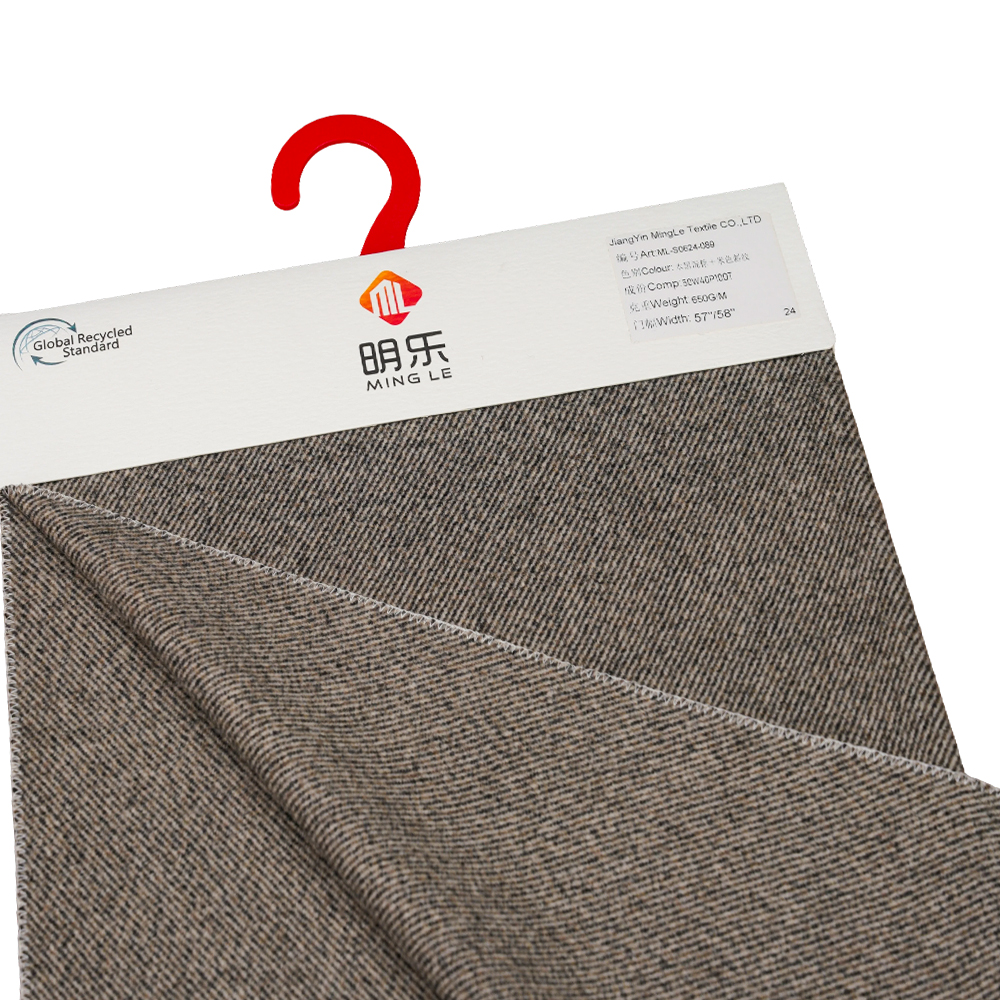
ML-S0624-089 650g/m Off-Black Blend Brown + Beige Twill Wool Fabric: Classic bla...
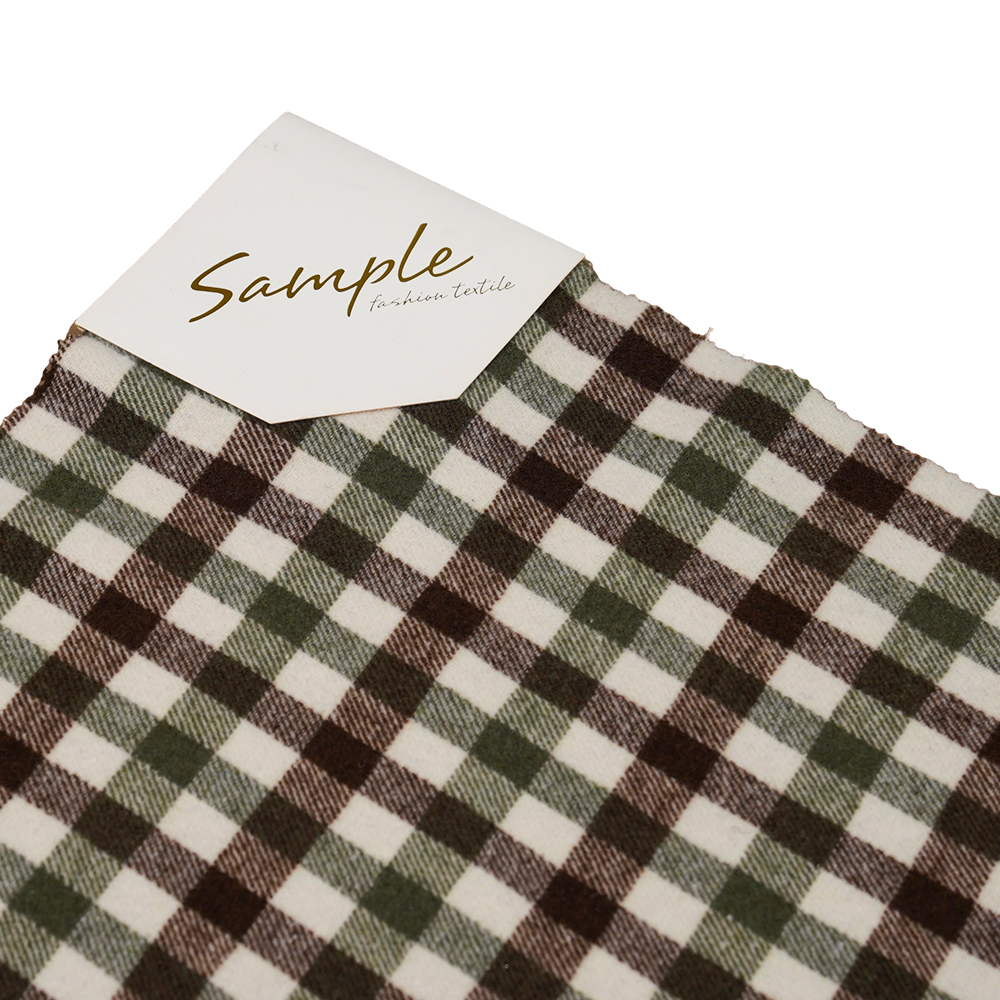
100% other, 410G/M Green-Brown-White Plaid Yarn: Vintage British Style, Natural ...
In the high-end textile market, Solid Color/Melange Double-face Wool Overcoat Fabric is favored for its rich visual texture and elegant drape. However, Melange (heathered) fabrics present a unique technical challenge: because they are composed of fibers dyed in different colors and often different properties, the friction and shrinkage rates during the weaving and fulling processes can vary. This often leads to inconsistent peeling strength between the two layers. Jiangyin Mingle Textile Co., Ltd., a specialized manufacturer since 2006, has leveraged its integrated production capabilities to solve this through precise fiber management and tension control.
The core of the issue lies in the "interlocking yarn." In solid fabrics, the fibers are uniform. In Melange fabrics, the blend of light and dark fibers may react differently to the finishing chemicals and mechanical heat.
| Technical Parameter | Solid Color Double-face | Melange Double-face | Jiangyin Mingle Textile Co., Ltd. Optimization |
| Fiber Composition | Single-color dyed fibers. | Multi-tone fiber blend (Top-dyed). | We use our own recycled fiber production to ensure fiber length consistency. |
| Peeling Strength Deviation | Low (±1N) | High (±5N without control) | Our digital tension looms maintain a steady deviation of < 2N. |
| Fulling (Shrinkage) Control | Uniform shrinkage across the surface. | Differential shrinkage potential. | Pre-shrinking each fiber batch before spinning ensures structural stability. |
| Hand-feel/Texture | Flat and smooth. | Rich, granular, and three-dimensional. | Customized napping processes to protect the delicate Melange visual effect. |
As a dedicated manufacturer of coarse spun fabrics, Jiangyin Mingle Textile Co., Ltd. addresses these challenges through a "system-wide" approach:
Uneven texture usually results from inconsistent fiber shrinkage. Jiangyin Mingle Textile Co., Ltd. adheres to the philosophy of "Quality as the Foundation." By using industrial-scale production and professional R&D, we ensure that the Melange blends are perfectly balanced in terms of fiber micron and oil content. This leads to a flat, stable surface that remains consistent even after the intensive double-facing process.
Absolutely. Jiangyin Mingle Textile Co., Ltd. is market-demand oriented and specializes in customization based on customer samples. Whether you need a subtle 5% grey Melange or a high-contrast charcoal blend, we can engineer the spinning process to meet your visual needs while maintaining the integrity of the double-faced structure.
Working with global leaders has taught Jiangyin Mingle Textile Co., Ltd. that "Integrity is the Core." These brands require rigorous physical testing for pilling and peeling. Our evolution into a specialized enterprise integrating recycled fibers and weaving means we can provide the high-performance Melange fabrics required by premium brands at a "reasonable pricing" point, ensuring the final garment meets international export standards for Japan, Korea, Europe, and the U.S.
 +86 - 510 - 86373115
 +86 - 13812129532
 No. 118, Huancun West Road, Huaxi Fifth Village, Huashi Town, Jiangyin City, Wuxi City, Jiangsu Province, China