

 English
 中文简体
News
Home > News > Industry News > How Color, Pattern, and Fiber Content Shape Wool Fabric Selection in Coat Making

Content
A buyer who swaps a 30 percent wool melton for a 70 percent wool melton changes the warmth, the hand, and the unit cost of a coat far more than a switch from charcoal to camel ever will. Color, pattern, and fiber content shape wool fabric selection in that order of visibility and the reverse order of importance: the blend decides what the cloth can do, the pattern decides what it costs to cut, and the color decides whether the same coat can be reordered next season.
Jiangyin Mingle Textile Co., Ltd. has manufactured coarse spun coating fabric in Jiangyin since 2006, and its specification sheets show the arithmetic without decoration: wool content from 9 to 70 percent, cashmere from 5 to 10 percent, and weights from 300 g/m on flannel to 870 g/m on double-face overcoating. Those three figures determine more about the finished garment than any swatch card.
Fiber content sets the outer limits on warmth, drape, abrasion resistance, and cost. Color and pattern can only rearrange value inside those limits, which is why the blend should be signed off before the shade card is opened.
9-70%
Wool share across the coarse spun coating range
300-870 g/m
Production weight band by construction type
5-10%
Cashmere added in premium overcoating qualities
Wool does the structural work. Its crimp traps still air, its moisture regain sits near 13 to 16 percent against roughly 0.4 percent for polyester, and its resilience lets a heavy coating recover after being folded, pressed, and shipped. Polyester adds tensile strength and dimensional stability, holds a sharp pattern edge, and controls cost. Toward the 60 to 70 percent polyester end, a coarse spun cloth starts to read dry and boardy in cold air, and surface pilling becomes the complaint that reaches the buyer two seasons later.
Definition
Fiber content is the percentage by weight of each fiber spun into the yarn before finishing. It is the one specification that no amount of cutting, lining, or pressing can correct afterward.
| Fiber | Typical share | What it contributes | What to watch |
| Wool | 9 to 70 percent | Loft, warmth, moisture buffering, recovery | Below 30 percent the cloth loses its wool hand |
| Cashmere | 5 to 10 percent | Softer hand, finer surface, warmth per gram | Cost climbs faster than performance above 10 percent |
| Polyester | 10 to 70 percent | Strength, shape retention, price control | Above 60 percent, pilling and a dry hand |
| Other fibers | 5 to 25 percent | Body, texture, cost balance | Confirm shrinkage behavior before bulk cutting |
A 670 g/m Melton built from 70 percent wool, 10 percent cashmere, 10 percent polyester, and 10 percent other fiber sits at the top of that table: enough wool to hold loft through a full winter, enough cashmere to soften the surface, and a price that still works for a mid-tier retail program.
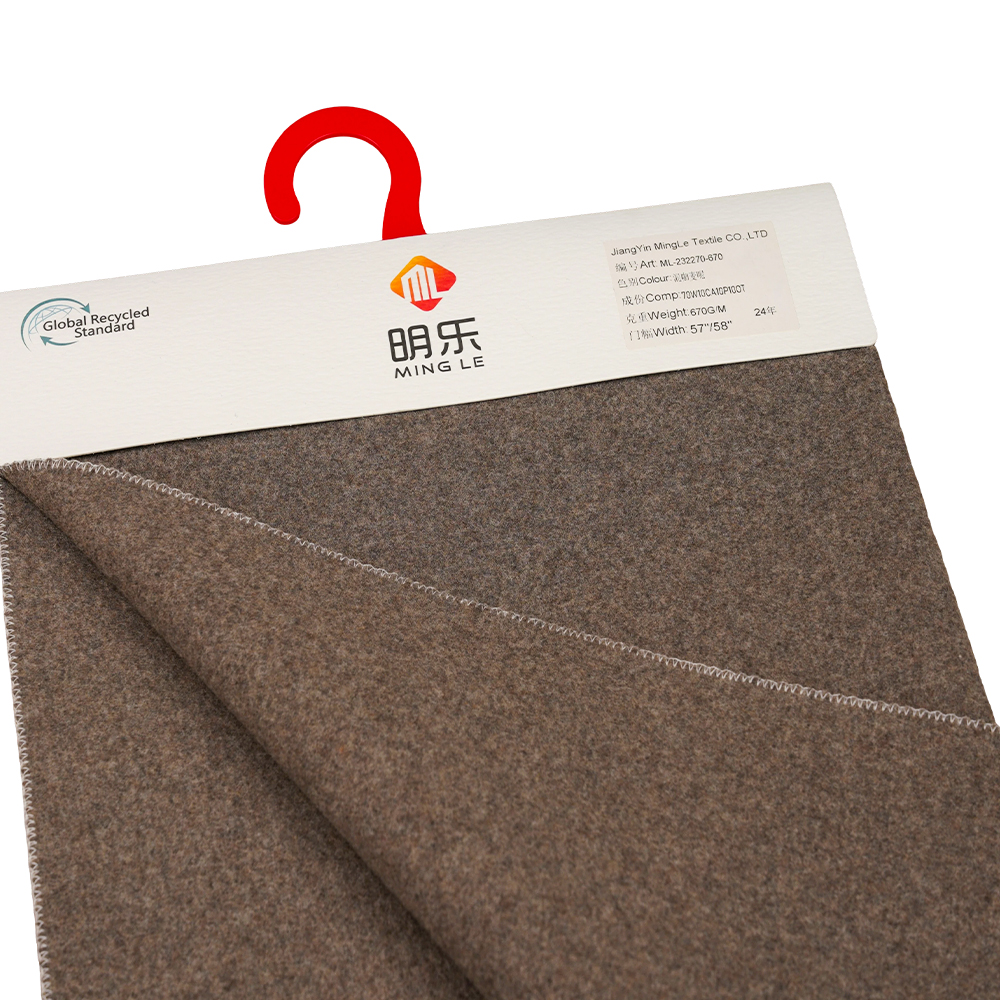 70% Wool, 10% Cashmere, 10% Polyester, 10% Other Fiber, 670G/M, Mixed Coffee, Melton Fabri·Cashmere component increases softness and comfort ·Blended ratio optimizes durability and wrinkle resistance ·Earth tone colors facilitate easy matching with multiple...View Product →
Color does not change thermal performance at all, but it changes two things that cost money: how reliably a shade can be repeated and how easily surface defects show.
Solid piece-dyed shades repeat well because the color is applied to finished cloth under controlled conditions. Melange is fiber dyed. Colored wool is blended before spinning, so the final tone depends on the blending ratio of those fibers. The result has depth that flat dyeing cannot reach, and it is also why two lots of the same melange reference can sit two or three shades apart when laid side by side on a cutting table.
Evaluate every shade under D65 and then again in daylight. Metamerism between a showroom lamp and a cloudy morning is the most common reason a bulk shade is rejected after the studio has already approved it.
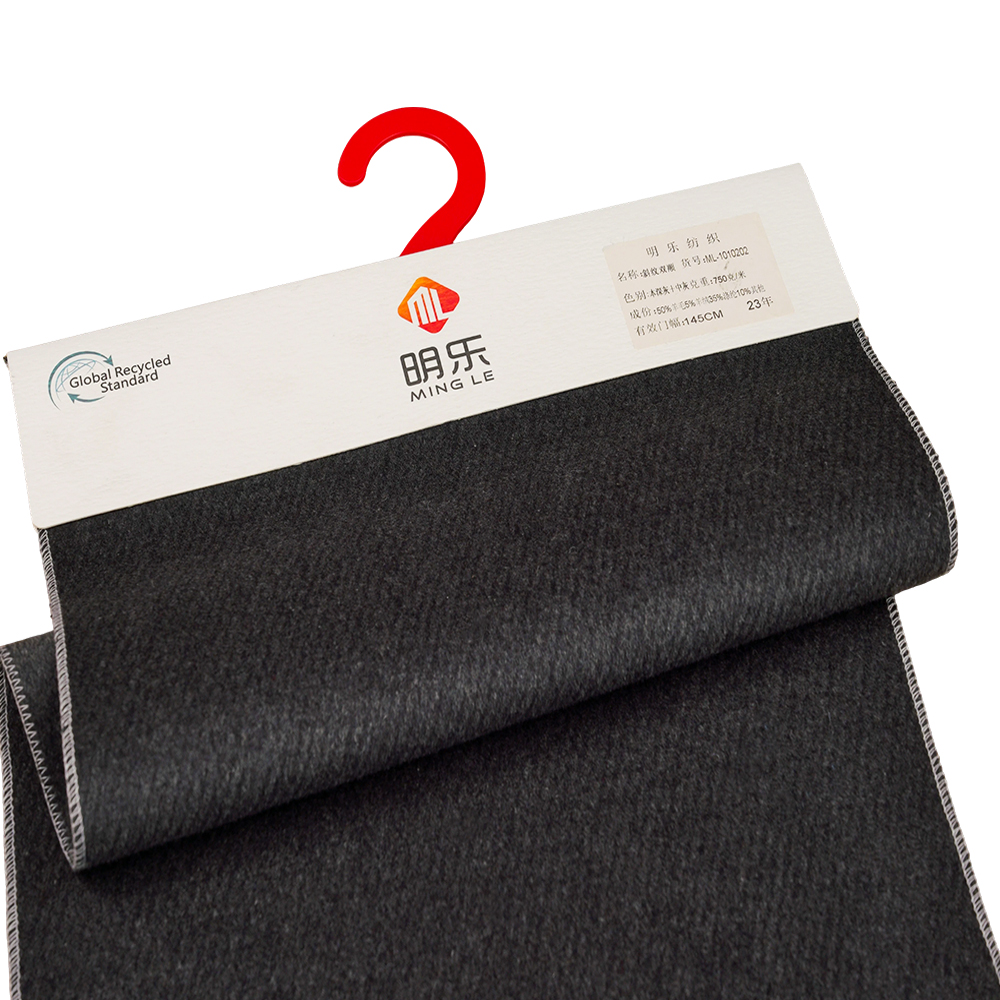 50% Wool, 5% Cashmere, 35% Polyester, 10% Other, Fiber 750G/M, Dark Gray + , Medium Gray, ·Double-sided brushed structure provides consistent surface texture and hand feel. ·Low-saturation neutral tones facilitate easy pairing with different fashion styles....View Product →
Pattern is a cutting-efficiency decision before it is a design decision. A plaid with a repeat above roughly 2 cm typically consumes 10 to 15 percent more fabric per garment than a plain ground of the same weight and width.
The reason is matching, not weaving. Checks must align at center front, side seams, pockets, and sleeve heads, and the marker has to be planned around the repeat before yardage is reserved. Small patterns hide that cost: a fine herringbone reads rich at a distance and survives both mending marks and the cutting table.
Pattern also interacts with fiber content. A 30 percent wool herringbone at 630 g/m holds its diagonal line better than a softer, higher wool cloth of the same weight, because the synthetic share stiffens the structure and reduces the wet relaxation that blurs a weave during finishing.
 30% Wool, 70% Other Fiber, 630G/M, Camel/Brown, Herringbone Single-Face Overcoating Fabric·30% wool blend improves thermal insulation, while 70% other fiber enhances durability. ·Single-face overcoating pile treatment ensures consistent smoothness of surfac...View Product →
Once the target weight is fixed, the plausible blends narrow fast: flannel runs 300 to 420 g/m at 50 to 60 percent wool, Melton runs 560 to 800 g/m from 30 to 70 percent wool, and double-face overcoating occupies 720 to 870 g/m at 50 to 60 percent wool, with 5 percent cashmere marking the premium tier.
Typical weight range by construction, in g/m
Scale 0 to 900 g/m. Bars show the production range, not a single reference weight.
Read that chart as a sourcing map rather than a ranking. A 420 g/m flannel at 60 percent wool is not a weaker fabric than a 680 g/m Melton at 30 percent wool; it is a different garment weight aimed at a different climate and a different retail price.
Run these five decisions in order and each one narrows the next. Run them in reverse and the color sample arrives before anyone has confirmed that the cloth can hold a sharp plaid edge.
The same sequence, extended with the lining and finishing checks that follow it, is set out in this guide on how to choose the right winter coat fabric.
No. Weight does more work than percentage. A 560 g/m Melton at 70 percent wool outperforms a 420 g/m flannel at the same wool percentage, because trapped still air provides the insulation. Fix the weight band first and the wool percentage second.
Fastness is comparable when both are dyed to the same standard. The real risk in melange is lot-to-lot tone drift, because the shade depends on the ratio of colored fibers blended before spinning. Ask for a retained sample from each bulk lot.
Only when the repeat is small and the marker allows a mirrored layout. For a visible plaid, plan 10 to 15 percent extra consumption and confirm it during sampling rather than after the bulk order is placed.
Most lined city coats sit between 560 and 800 g/m. For below-freezing markets, or for unlined double-face silhouettes, 720 to 870 g/m gives structure without an interlining.
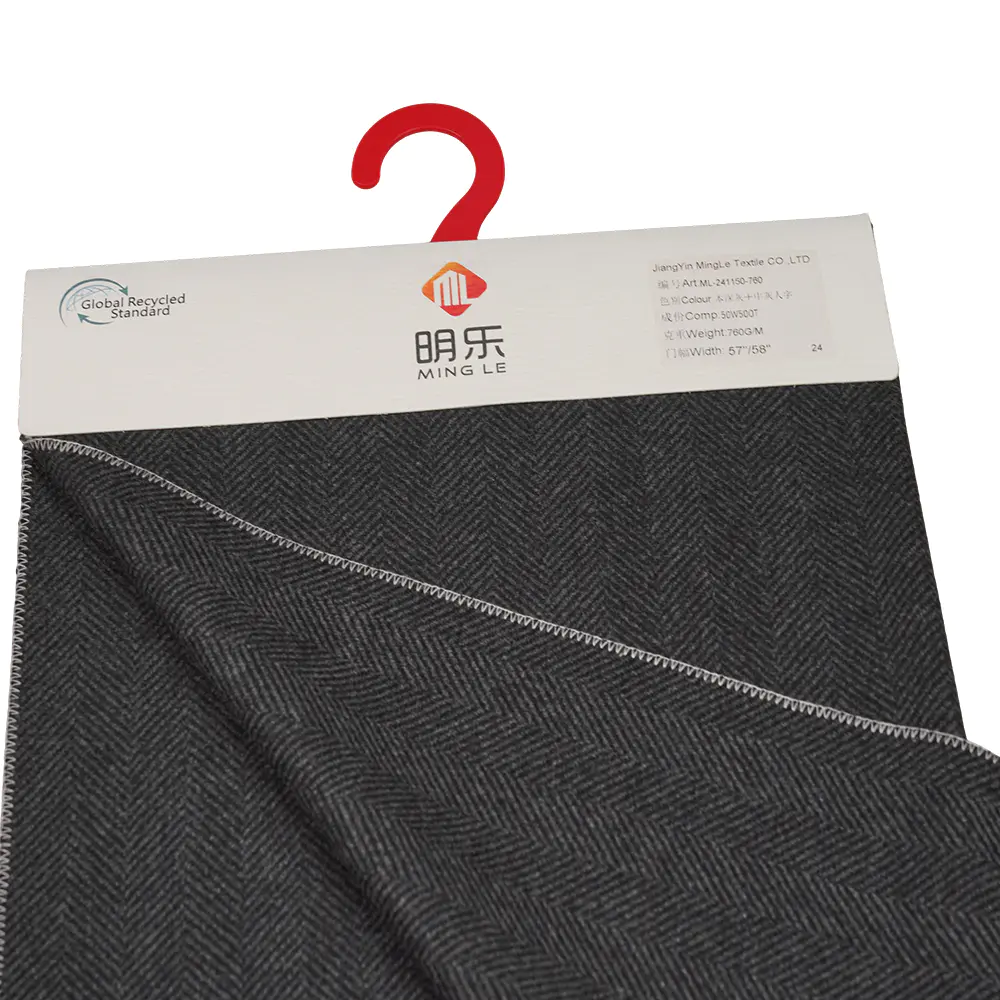
Classic Dark Gray Check Herringbone Melton Fabric – 50% Wool 50% other fiber, 76...
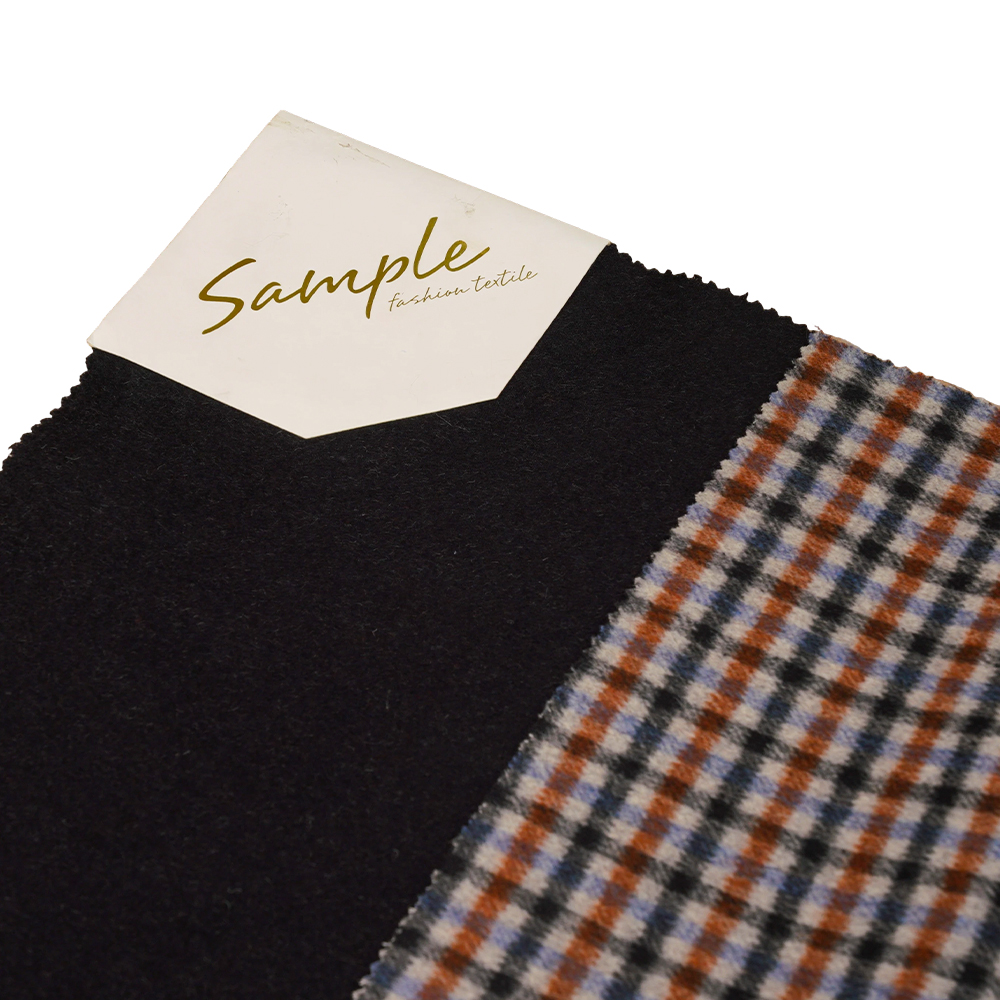
50% Wool 50% other fiber 780G/M Color Check Plaiddouble-face overcoating fabricF...
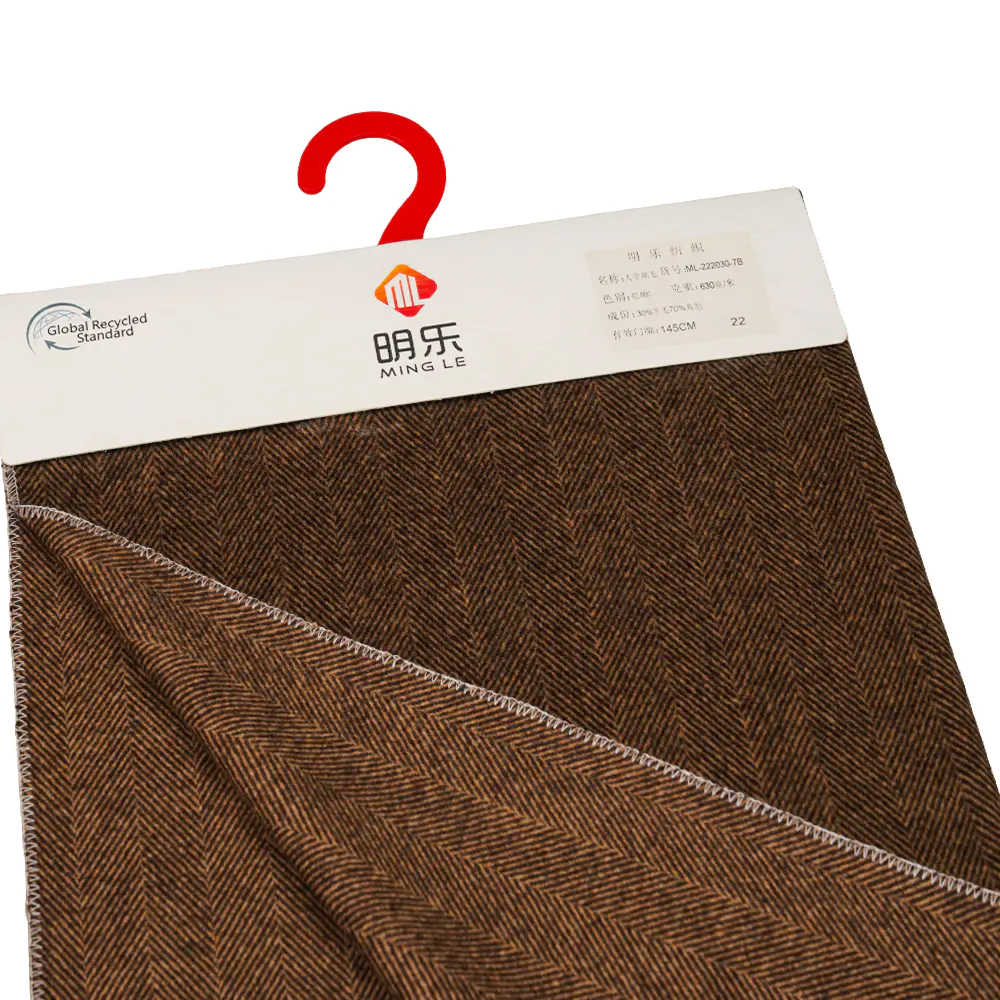
30% Wool 70% other fiber 630G/M Camel/Brown Herringbone single-face overcoating ...
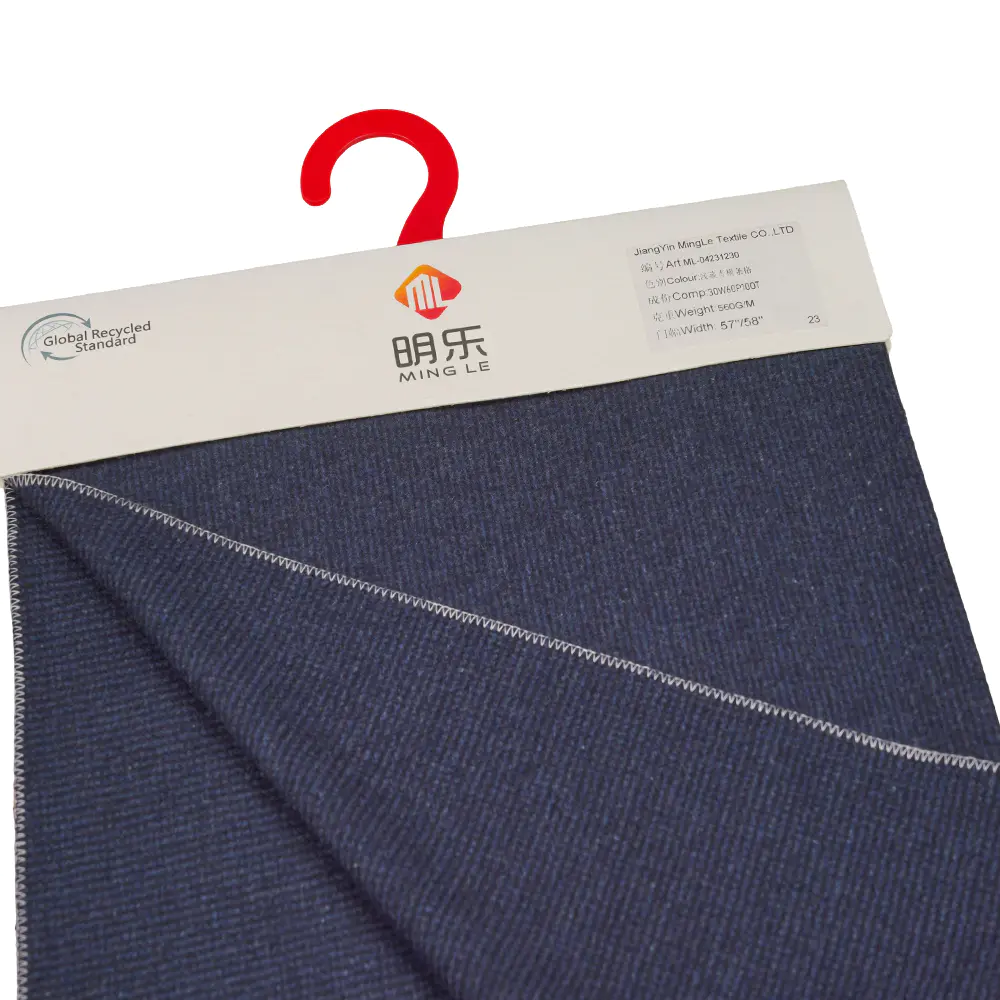
Ben Zhi Qing + Lan Qing Horizontal Striped Wool-Blend Melton Fabric: 560G/M Busi...
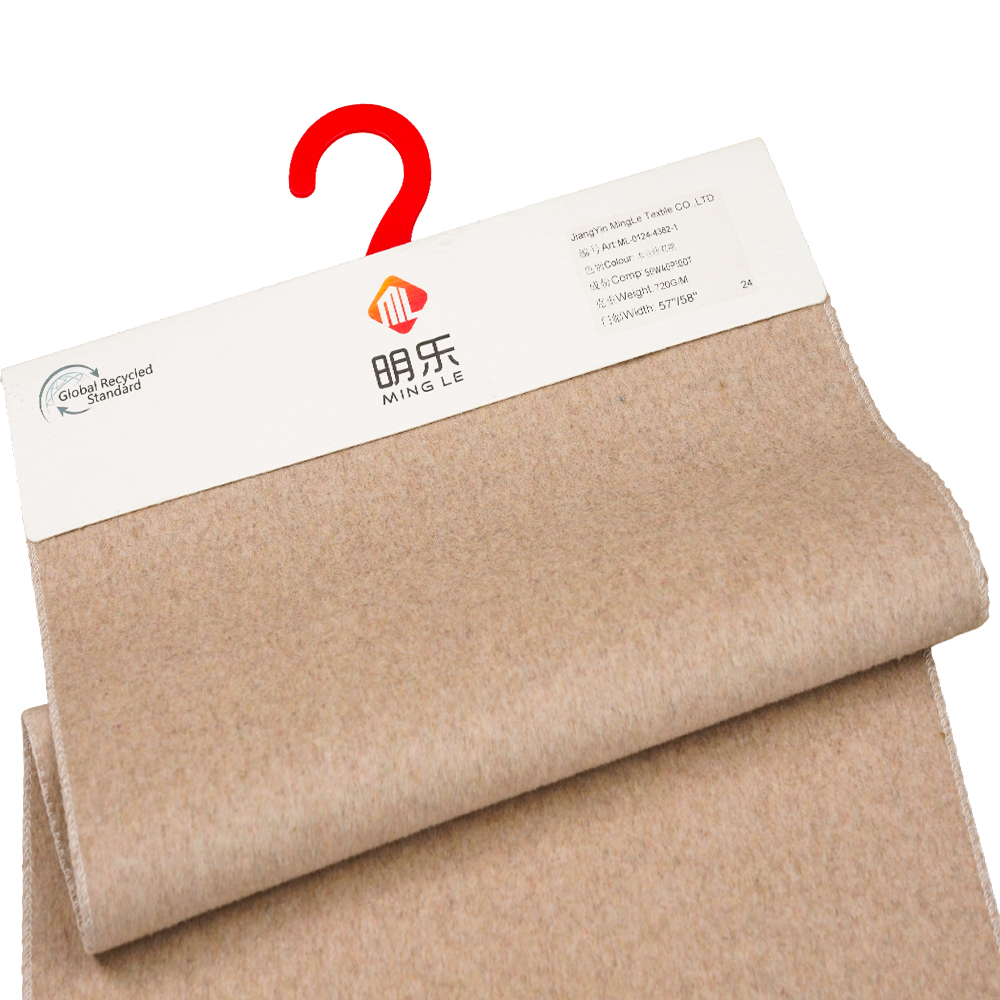
Bean Paste Double-Smooth: 720g/m thick, double-faced fleece fabric, gentle and e...
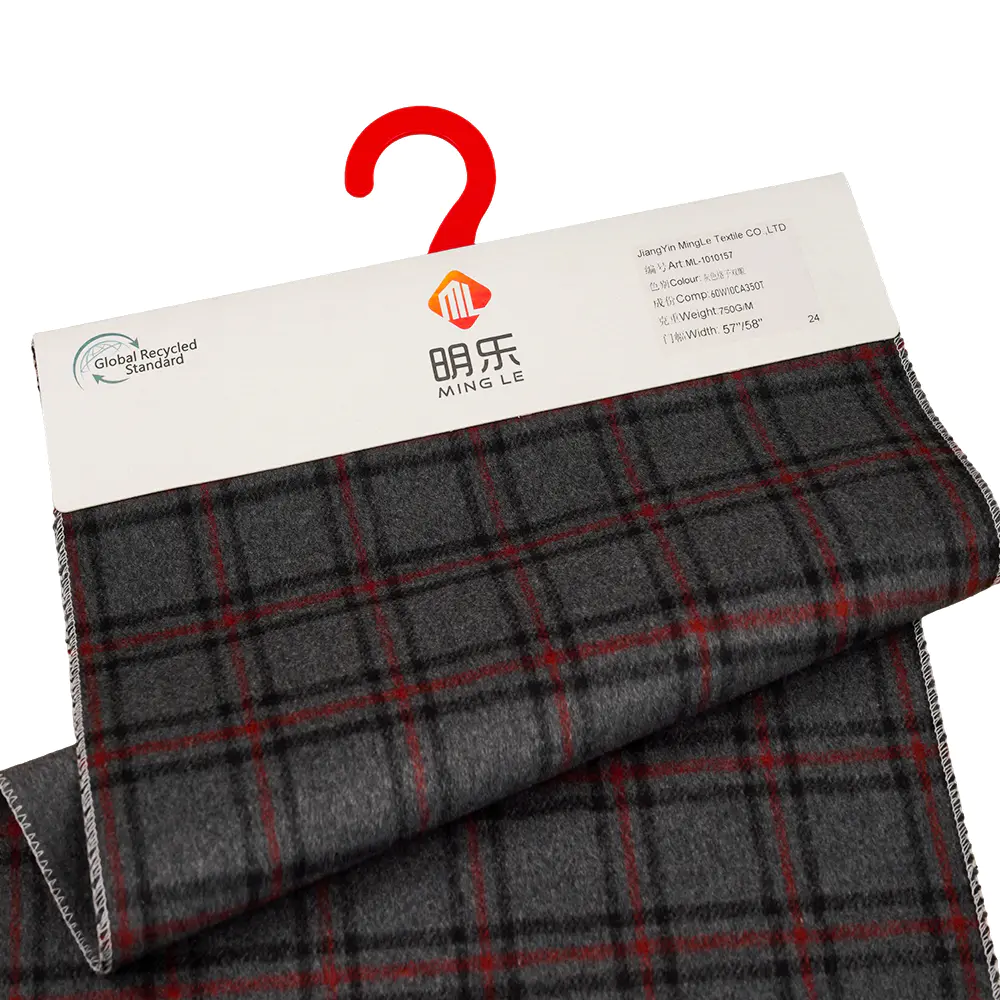
60% Wool 5% Cashmere 35% Synthetic Fabric Double-Sided Brushed Fabric: Gray Plai...
 +86 - 510 - 86373115
 +86 - 13812129532
 No. 118, Huancun West Road, Huaxi Fifth Village, Huashi Town, Jiangyin City, Wuxi City, Jiangsu Province, China


