

 English
 中文简体
News
Home > News > Industry News > Selecting Wool Blend Fabric for Winter Coats: A Practical Buyer's Guide

Content
Two melton swatches land on the same buyer's desk in the same week: both dark grey, both dense, both 0.9 mm on the gauge. One is 30% wool and 60% polyester at 560 g/m. The other is 70% wool with 10% cashmere at 670 g/m. One ships into a promotional line and looks tired by February. The other holds a lapel roll for three winters.
Choosing wool blend fabric for winter coats is a specification exercise, not a hand-feel exercise. Wool share, grams per square metre, fibre mix and finish route decide whether a coat survives a season, and every one of those numbers can be verified before a deposit is paid.
This guide is written for buyers, product developers and sourcing managers who already know they want a wool-rich coating. The specification ranges quoted here come from the production book of Jiangyin Mingle Textile Co., Ltd., a coarse-spun woollen mill in Jiangyin, Jiangsu, and the same logic applies to any mill you audit.
Wool percentage buys three things: warmth per unit of weight, recovery after compression, and abrasion resistance at the points where a coat is rubbed. Everything above roughly 50% wool mainly improves shape retention and hand.
Below 30% wool, the cloth handles and ages much like a polyester coat with a wool-like surface. It presses sharply, costs less per metre, and develops shine at the cuffs and elbows because the fibre mass stops returning to its original loft.
The mechanism is crimp. Wool fibres are crimped, and crimp traps still air, which conducts heat at roughly 0.026 W/(m K) against several times that figure for solid synthetic polymer. More wool at the same weight means more trapped air, and that is the whole warmth story.
| Wool share | Typical partner fibres | On the finished garment | Main risk |
| 9% to 30% | 60% to 70% polyester, 10% other fibre | Sharp press, stable hand, lowest cost per metre | Surface shine at cuffs, slow loft recovery |
| 40% to 55% | 40% to 50% polyester or other fibre | Good drape, holds a steamer crease, mid price | Flatter hand than wool-rich cloth |
| 60% to 70% with 5% to 10% cashmere | 10% to 35% polyester or other fibre | Dense, warm, resilient, premium hand | Highest yarn cost, dry clean only |
For a coat worn more than twice a week through a real winter, specify 50% wool or higher. Below that threshold, plan the garment as a fashion coat rather than a workhorse.
Read grams per square metre first. Weight is the most verifiable number on a swatch card and the strongest single predictor of how warm a finished coat feels.
A 320 g/m flannel and an 870 g/m double-face are both sold as coat fabric, but they belong to different garments. The chart below shows the top of the typical weight range for the main coarse-spun coating families.
Weight tolerance is a sourcing risk of its own. A plus or minus 5% swing between dye lots is normal on woollen cloth, and at 870 g/m that is a 43 g/m gap between the first and fourth delivery of the same quality. Write the tolerance into the purchase order.
Composition comes second because it explains how that mass behaves. The mill's own explainer on how GSM shapes wool coating selection covers the weight argument in more depth.
Match the cloth to the construction. Double-face cloth removes the lining entirely; single-face cloth needs a lining and a canvas that can carry structure.
Two woven faces held into one cloth, so no lining and no interlining are required. Reversible, heavier in the hand, less seam bulk along the front edge.
Best for: relaxed coats, wrap styles, unlined tailored coats and any design where the inside face will be seen.
One finished face sewn against a lining. Lighter, easier to press, more forgiving around shoulder pads and chest canvas.
Best for: structured tailoring, blazers and coats where a contrast lining is part of the design.
Double-face is where the weight range matters most. A 720 g/m cloth with 50% wool and 40% polyester has enough body to fall in a straight line with nothing behind it.
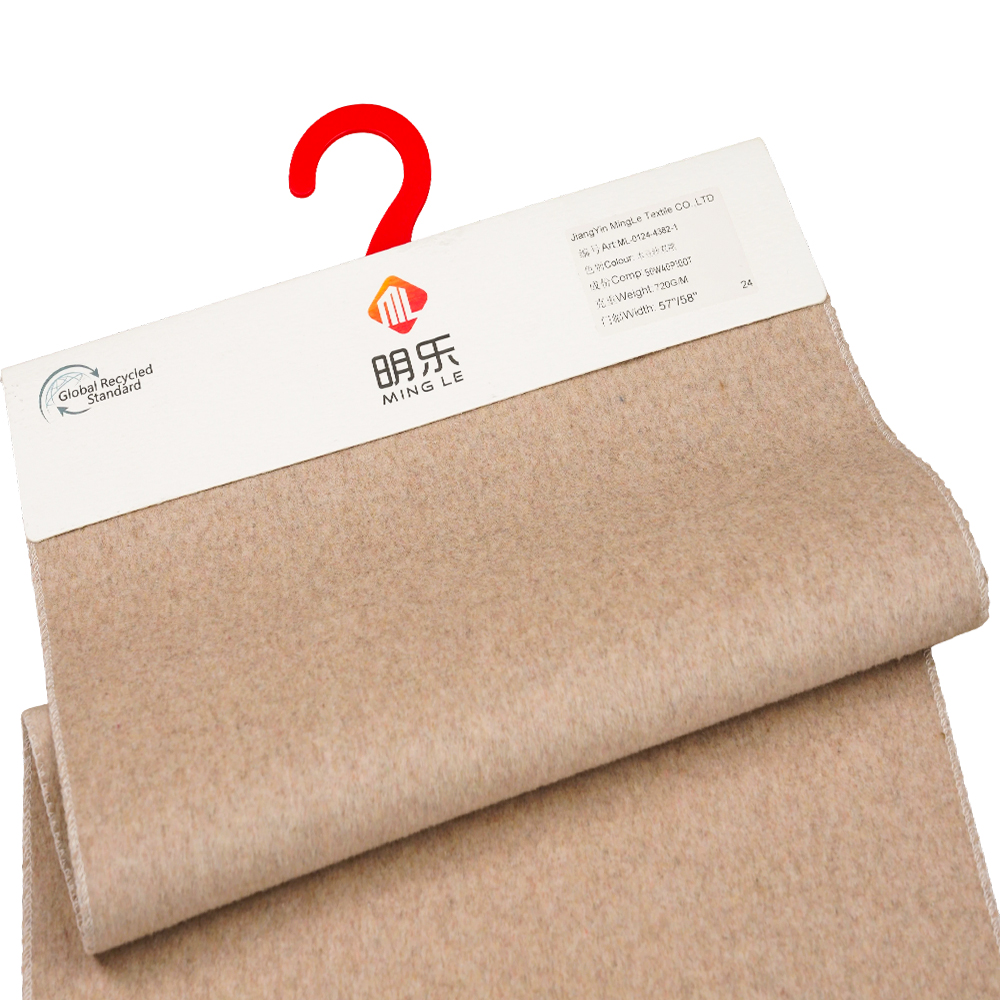 50% Wool , 40% Polyester , 10% Other Fiber, 720G/M, Bean Paste Color, Thick Double-Sided W·Gentle Color: The bean paste hue is soft and versatile, complementing the skin tone and highlighting the wearer's elegant demeanor. Thick and Comfortable: 720g/m high...View Product →
Melton is the other workhorse. Milled after weaving, its surface closes and the fibres lock, which is why a 670 g/m melton with 70% wool and 10% cashmere reads warmer than its weight alone suggests.
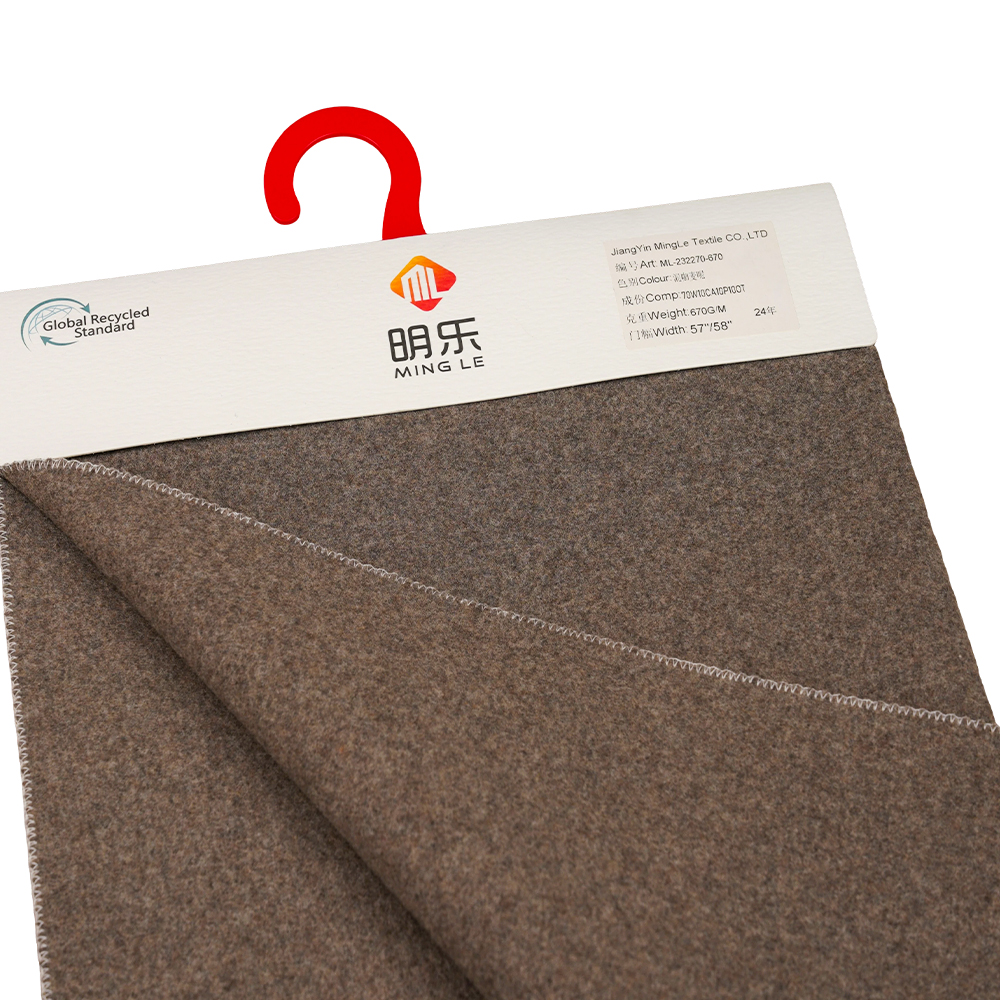 70% Wool, 10% Cashmere, 10% Polyester, 10% Other Fiber, 670G/M, Mixed Coffee, Melton Fabri·Cashmere component increases softness and comfort ·Blended ratio optimizes durability and wrinkle resistance ·Earth tone colors facilitate easy matching with multiple...View Product →
Single-face constructions around 680 g/m are the practical middle ground for a lined coat that needs a defined shoulder and a clean front edge.
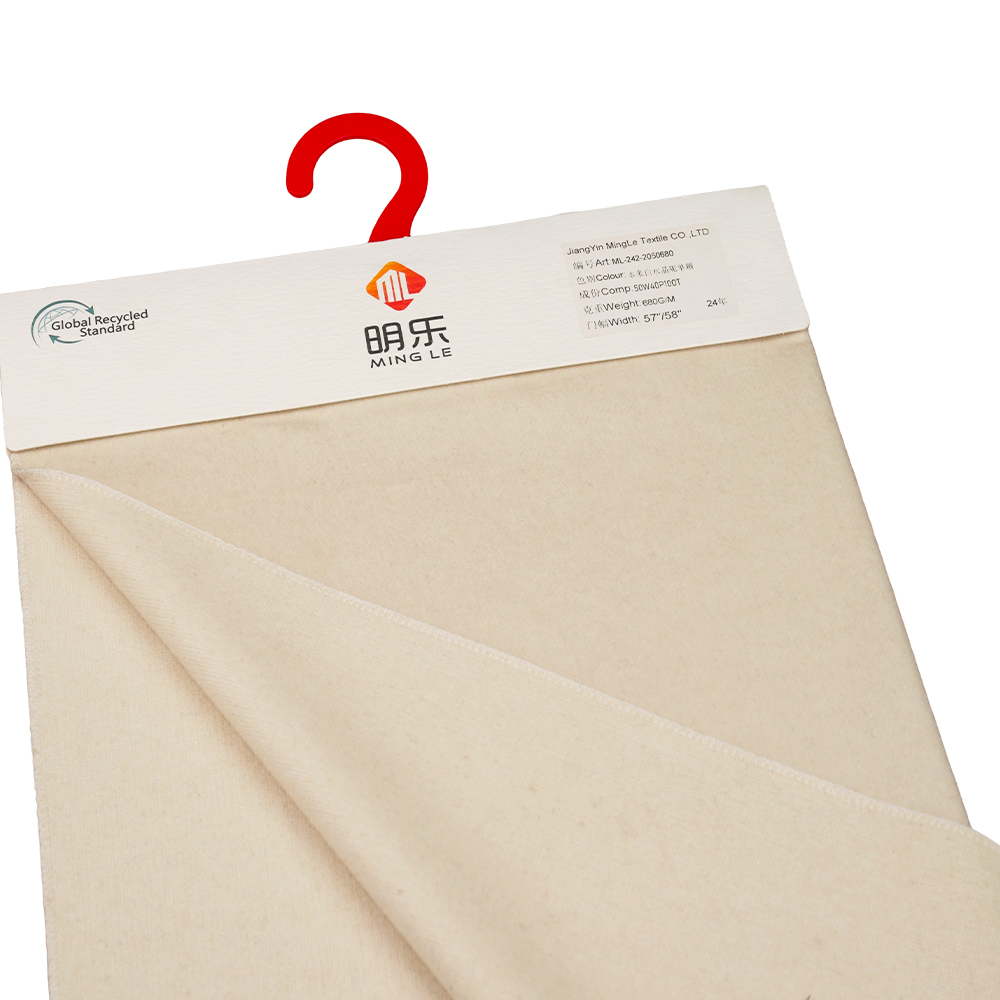 50% Wool, 40% Polyester, 10% Other Fiber, 680G/M, Beige, Crystal Wool Single-Face Overcoat·Optimized blend ratio for fabric performance: wool provides warmth, polyester enhances durability, and other fibers improve elasticity. ·Single-face overcoating fleec...View Product →
A well-built blend beats pure wool on abrasion resistance, dimensional stability and cost predictability. Pure wool still wins on hand, drape and colour depth. Choose deliberately rather than by default.
| Attribute | 60% to 70% wool blend | 100% wool |
| Abrasion resistance | High; polyester carries the wear points | Moderate; pills and felts under friction |
| Dimensional stability | High; resists stretching at the elbow | Moderate; relaxes and grows with wear |
| Hand and drape | Firm, slightly dry, crisp surface | Soft, fluid, deeper colour |
| Cost per metre | Lower and easier to forecast | Volatile with the raw wool market |
| Care | Dry clean; tolerant of steam | Dry clean; sensitive to heat and water |
Buy the blend when volume, repeat orders and landed cost decide the programme. Buy wool-rich or pure wool cloth when the coat sells on touch and drape on a retail floor.
Approve a swatch only after you have steamed it, rubbed it and cut it. A sample card is finished to look good flat; a coat fabric has to survive a shoulder seam, a seatbelt and a steam press.
Weight matters as much as content. A 50% wool cloth at 750 g/m is warmer than a 70% wool cloth at 400 g/m, because the heavier cloth traps more air. For a daily-wear city coat, 50% wool and above at 600 g/m or more is the practical floor.
No. Blends carrying 40% to 60% polyester typically outlast pure wool on abrasion and dimensional stability. Pure wool wins on hand, drape and colour depth; blends win on repeatability and cost.
It means the coat needs no lining and no interlining, because the cloth alone does the work of a lined 600 g/m shell plus its lining. It also means a heavier garment, so check that the machine room can handle the seam bulk.
Two swatches and one sewn seam sample. Keep one swatch sealed as the shade reference, use the other for steam, rub and shrinkage tests, and approve a pre-production sample in the final colour.
Specify in numbers, verify on samples, and keep the approved swatch sealed. That sequence removes most of the risk from a wool coating order, whatever the wool percentage printed on the label.
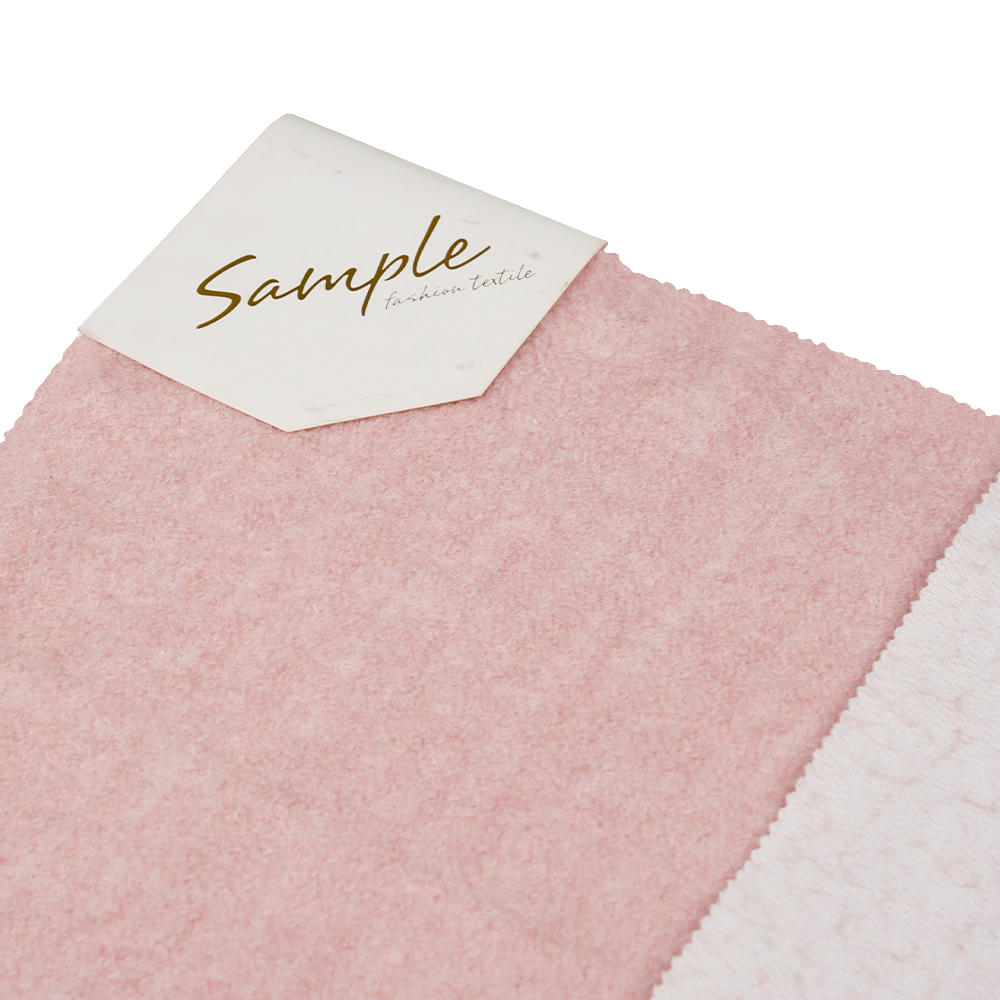
40% Wool 60% Polyester 700-740G/M Pink-White Small Fish Scale Loop Woolen Fabric...
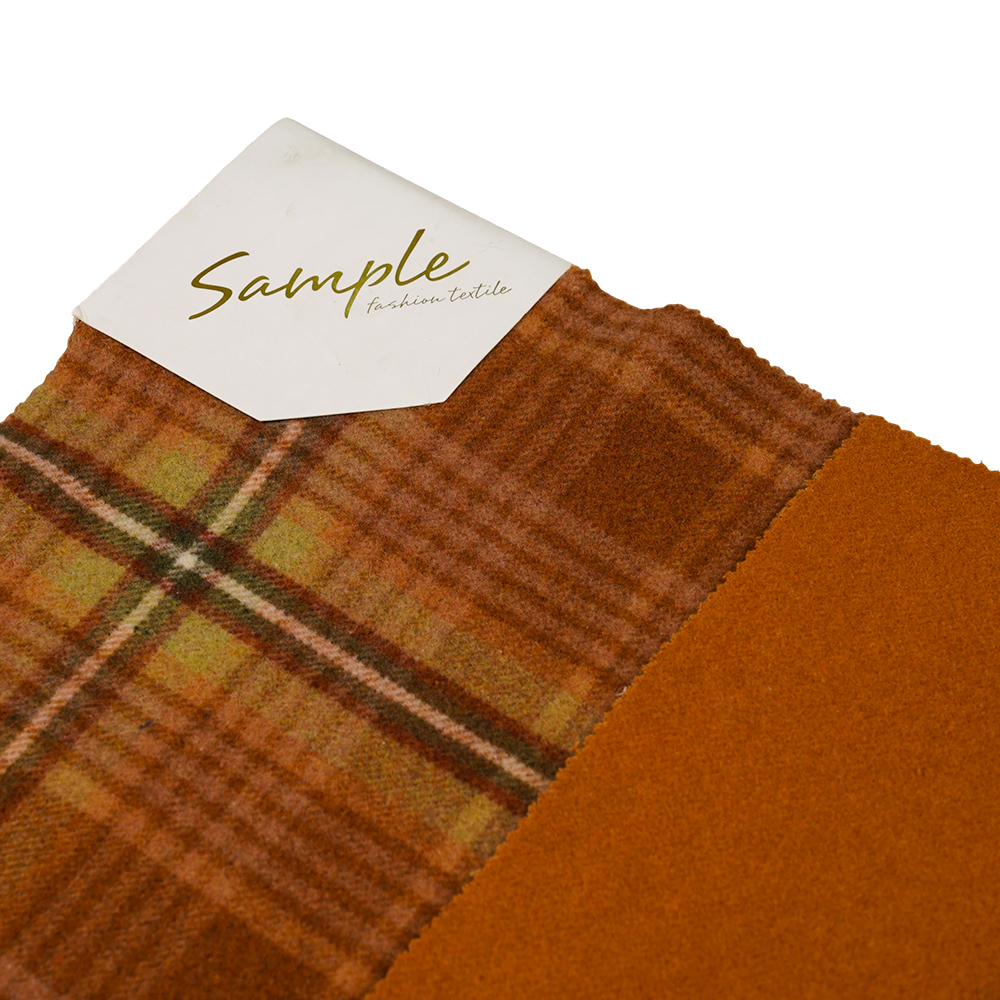
50% Wool 40% Polyester 10% other fiber860G/M Brown-Yellow Check Plush Fabric – A...
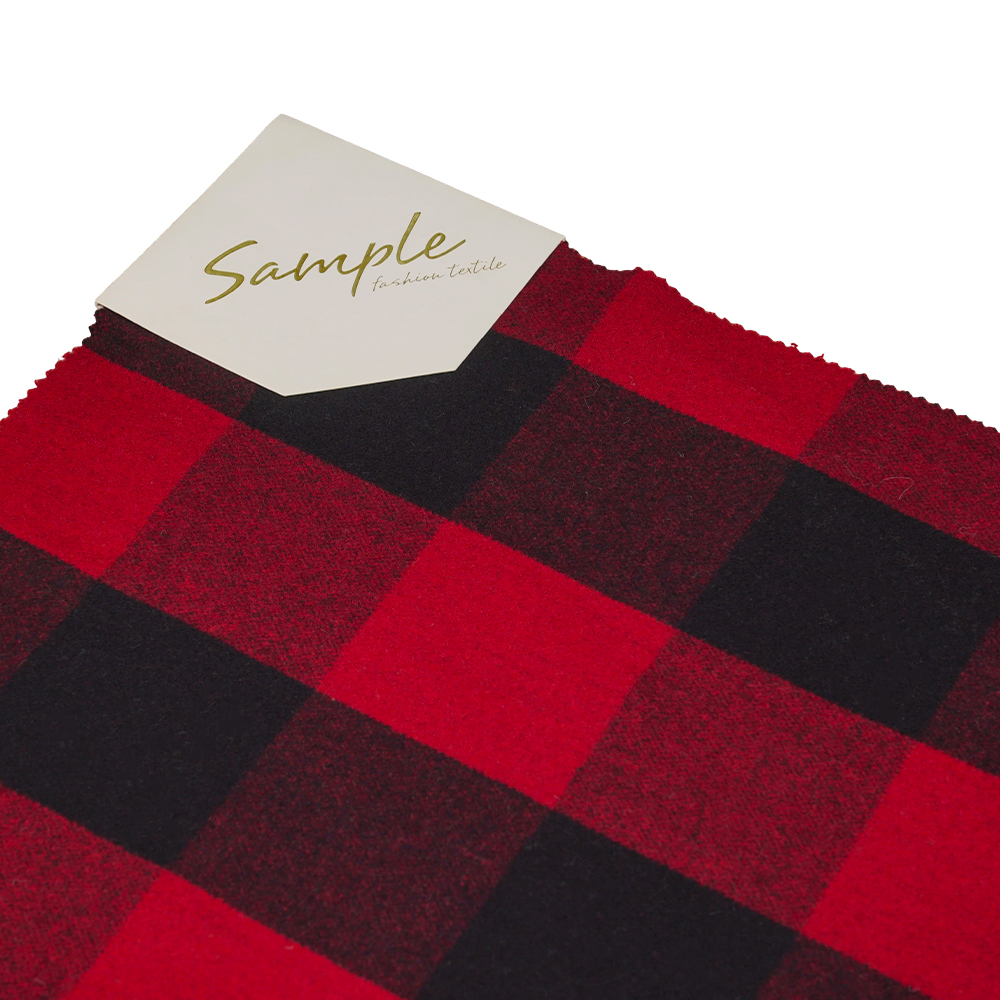
Black Red Plaid Wool Blend Fabric: 760gsm Wool Mix MaterialThis wool blend fabri...
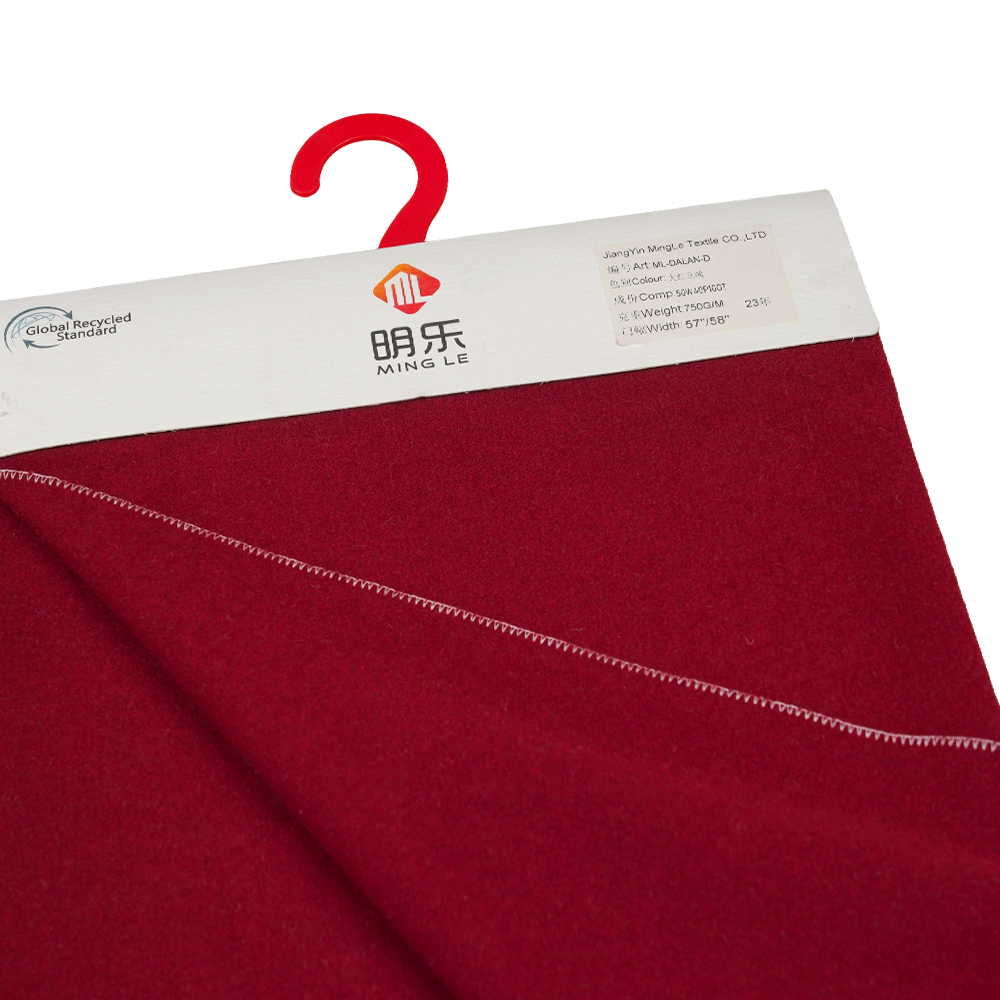
50% Wool 40% Polyester 10% other fiber 750G/M Bright Red Pile Fabric – Professio...
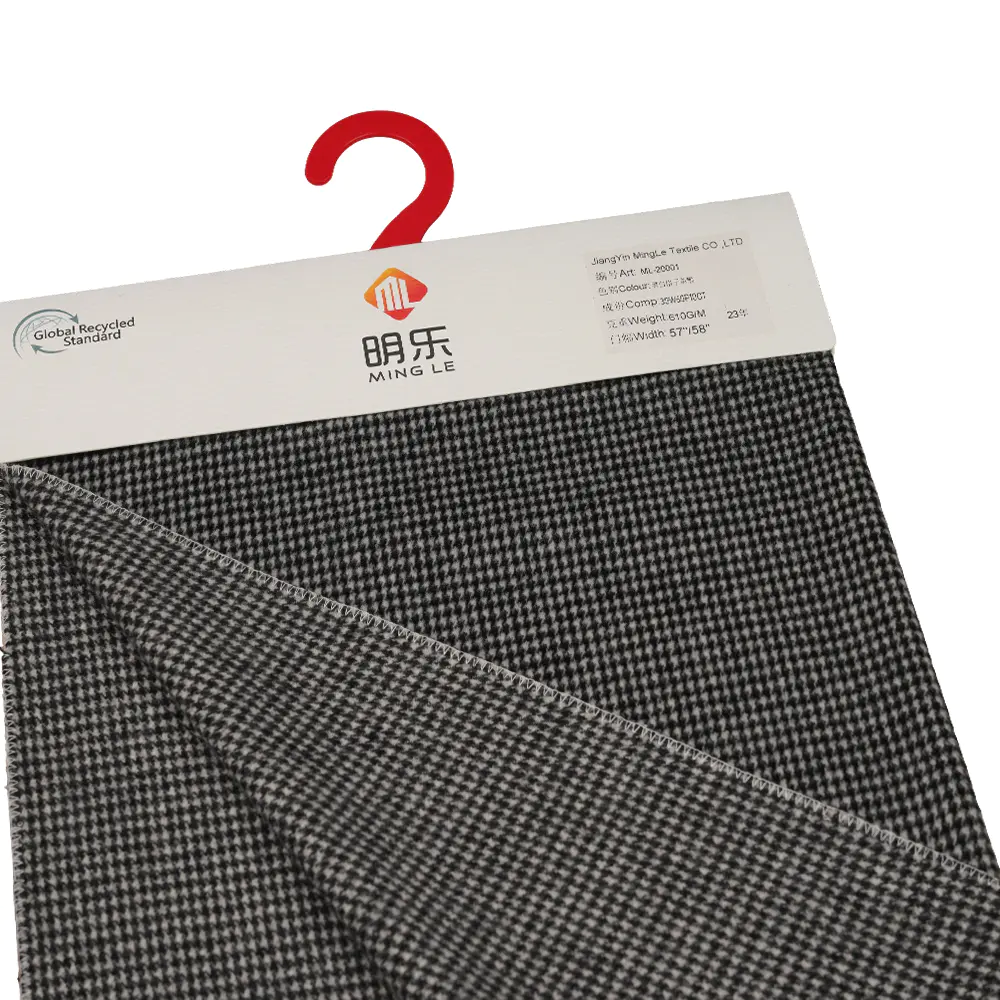
30% Wool 60% Polyester 10% other fiber610G/M Black White Plaid Single-Pile Fleec...
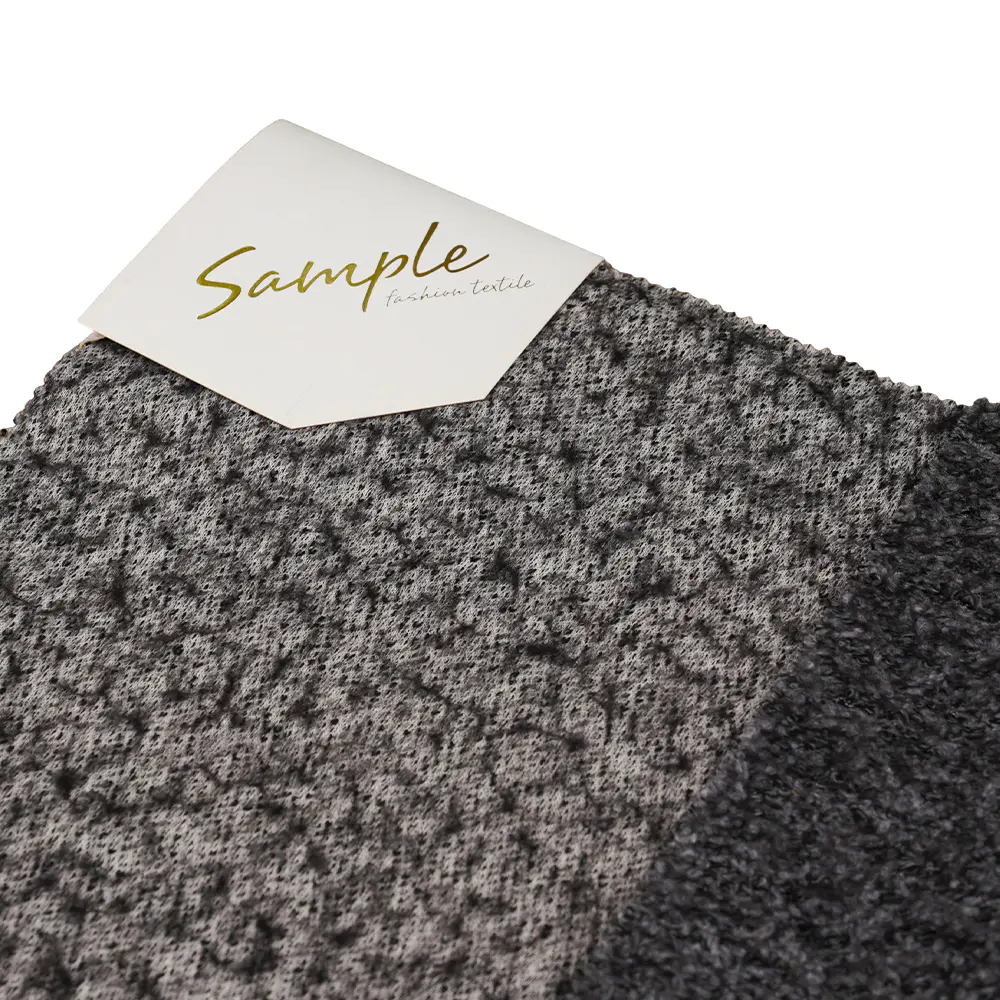
40% Wool 60% Polyester 750GSM Black Grey Bali Woolen Fabric - Classic Versatile ...
 +86 - 510 - 86373115
 +86 - 13812129532
 No. 118, Huancun West Road, Huaxi Fifth Village, Huashi Town, Jiangyin City, Wuxi City, Jiangsu Province, China


