

 English
 中文简体
中文简体News
Home > News > Industry News > Melton vs Tweed: How Do They Compare for Winter Wear? The Fabric Guide

Content
On a rainy morning in a London showroom, a buyer holds two wool swatches side by side: a dense charcoal Melton and a brown herringbone tweed. Both are winter fabrics, but comparing Melton vs tweed for winter wear reveals two completely different approaches to warmth, weather, and comfort. The buyer's question is not which one is better, but which one will serve the coat's intended purpose.
Melton is a densely woven, single-pile wool fabric whose surface is tightly napped and pressed until it resembles felt. The term comes from Melton Mowbray, a town in Leicestershire, England, where the cloth was originally developed for hunting and military overcoats. Tweed is a rougher, open-weave wool fabric with a visible twill or herringbone construction and a textured finish. The word tweed derives from the Scottish "tweel" (twill) and is strongly associated with the Scottish Borders.
The difference begins with the weave. Melton uses a heavy, tightly packed construction that creates a smooth, low-pile surface. Tweed is woven from thicker yarns in a looser pattern, leaving individual fibers and weave lines clearly visible. The result is two fabrics that feel completely different against the skin and perform differently in weather.
For winter wear, Melton behaves like a protective shell. Tweed behaves like a breathable sweater. One blocks wind, the other lets it through.
Definition: Melton fabric is a dense, single-pile wool textile with a smooth, felt-like surface that blocks wind and holds body heat. Tweed fabric is a rougher, open-weave wool textile with visible twill or herringbone patterns that prioritizes breathability over wind resistance.
The fastest way to understand both fabrics is to compare their core technical properties side by side. The most important difference: Melton is a dense, wind-blocking fabric, while tweed is a textured, breathable fabric.
| Attribute | Melton | Tweed |
| Surface finish | Smooth, napped, felt-like | Textured, visible weave |
| Construction | Tight single-pile weave | Open twill or herringbone |
| Typical weight | 560-800 g/m | 350-720 g/m |
| Wind resistance | High | Low to moderate |
| Breathability | Low | High |
| Drape | Structured, crisp | Soft, relaxed |
| Textile pattern | Mostly solid colors | Herringbone, check, houndstooth |
| Best for | Formal overcoats, business coats | Casual jackets, field coats |
| Rain behavior | Sheds light rain | Absorbs water quickly |
For stationary warmth in cold wind, Melton is the more reliable choice. Its dense surface stops air movement, which is what makes a coat feel warm on a blustery day.
Melton's construction traps fibers in a dense mat. A 650 g/m Melton fabric blocks wind at speeds where tweed at the same weight fails. The napped surface also holds an insulating layer of air close to the body. In practical terms, a Melton coat keeps you warm when waiting at a bus stop, standing on a train platform, or walking through an open square.
Melton fabrics produced by Jiangyin Mingle Textile Co., Ltd. typically weigh between 560 and 800 g/m. The dense pile means a 700 g/m Melton feels warmer than a 700 g/m tweed of the same wool content because it reduces the airflow through the fabric. Field tests conducted by textile mills show that a 600 g/m Melton fabric provides comparable warmth to a 750 g/m tweed fabric under identical wind conditions. This weight savings matters when shopping for a coat: a Melton coat achieves the same warmth with less bulk.
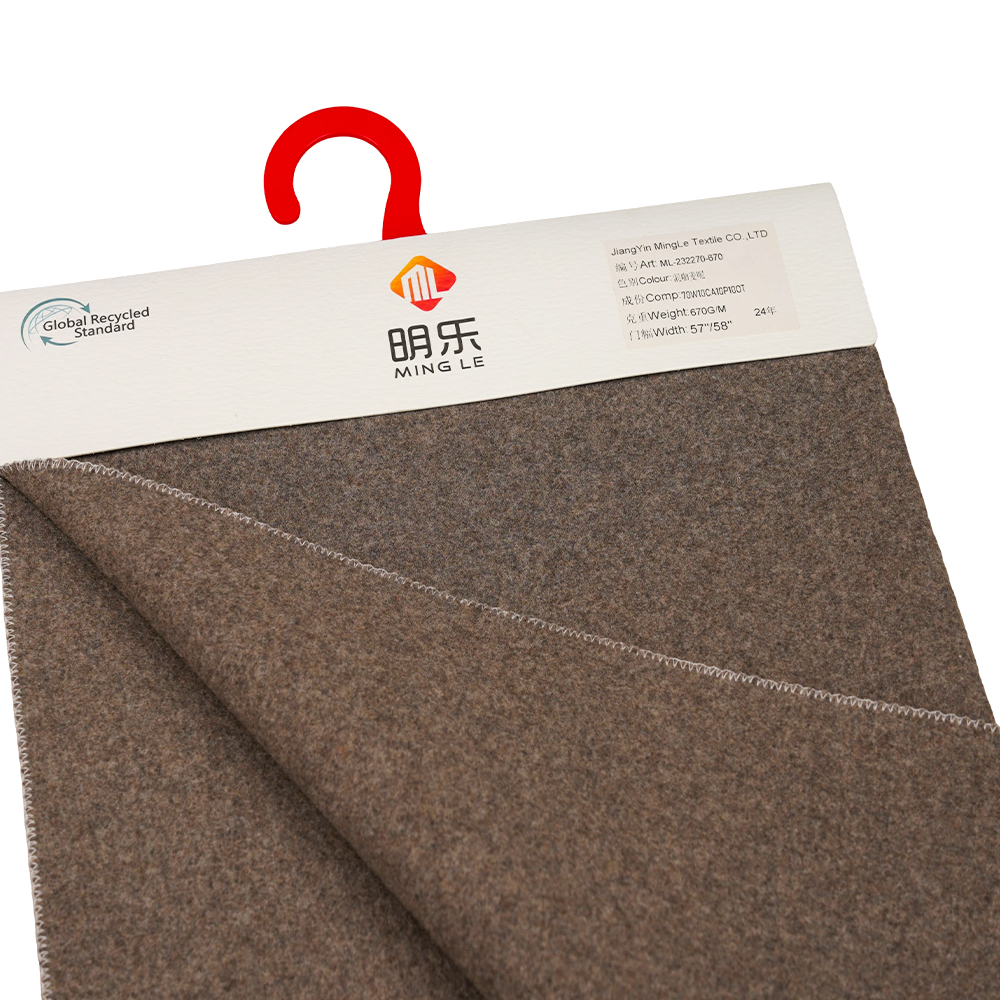 Premium Melton Fabric with Wool and Cashmere for CoatsThis Melton fabric blends wool, cashmere, and polyester for warmth and softness. Its 670 g/m weight offers insulation and drape, making it ideal for autumn and winter outerwear with a refined, retro look.View Product →
Tweed's open weave allows air and moisture to escape, so it is more comfortable during activity. The loose construction lets heat out, reducing the clammy feeling that dense Melton can produce.
When you walk at a brisk pace, carry a heavy bag, or move between cold outdoor air and a heated indoor space, tweed adjusts faster than Melton. It releases body heat before it becomes uncomfortable, which has made tweed the traditional choice for sport coats, shooting jackets, and casual winter outerwear.
In practical commuting, cycling, or walking use, tweed's breathability translates to a dry feeling against the skin. The same breathability that makes tweed comfortable also makes it a poor wind barrier. This is why tweed jackets are often worn with a scarf, a vest, or an extra layer underneath. In terms of winter wear, tweed is a material for motion; Melton is a material for standing still.
One cannot simply say a winter coat "is warm" without knowing whether the wearer is standing still or moving. Melton wins when stationary, tweed wins in motion.
Melton holds crisp, tailored lines. Tweed creates a softer, more textured silhouette. The drape difference is the most visible way to tell the two fabrics apart in a finished coat.
Melton's density gives it the body to hold shoulder lines, sharp lapels, and structured seams. It resists wrinkling and bounces back from creases, which is why it is the standard for classic single-breasted and double-breasted overcoats.
Tweed's looser weave means it drapes with more movement. It works well for unstructured jackets, field coats, and casual winter outerwear. The visible weave and pattern - herringbone, check, barberpole - are part of its appeal, and they allow for more design variety than the mostly solid colors of Melton.
Presses clean, holds shoulder lines, resists wrinkles. Best for architectural, formal profiles.
Drapes with movement, softer look, visible weave patterns. Best for heritage and organic styles.
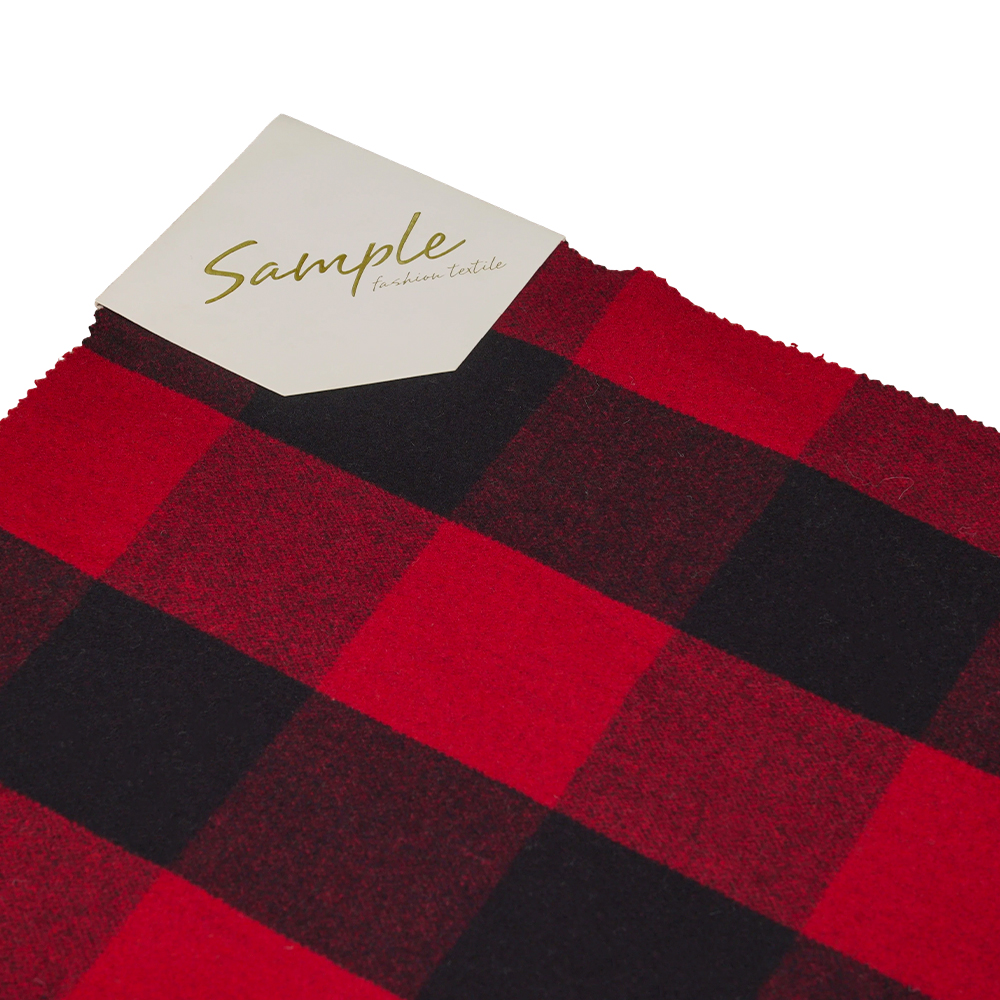 Black and Red Plaid Melton Fabric for Structured GarmentsThis 760 g/m Melton fabric combines wool and polyester for durability and warmth. The bold plaid pattern suits retro American casual styles, making it a strong choice for coats and jackets needing visual impact.View Product →
Choose Melton for a structured coat you will wear in cold, windy conditions. Choose tweed for an active lifestyle or a casual, textured look. Both are viable; the decision comes down to how the coat will be used.
If you stand still in cold weather (commuting, waiting, window-shopping). If you want a sharp tailored silhouette. If you want the longest possible wear, Melton resists abrasion better.
If you move a lot (cycling, walking, running errands). If you prefer a relaxed, textured look. If you are on a tight budget, tweed is often cheaper per meter than dense Melton.
When you start sourcing, review the factors in this practical guide to choosing winter coat fabric. The fabric blend, weight, and intended use determine whether Melton or tweed is the right call.
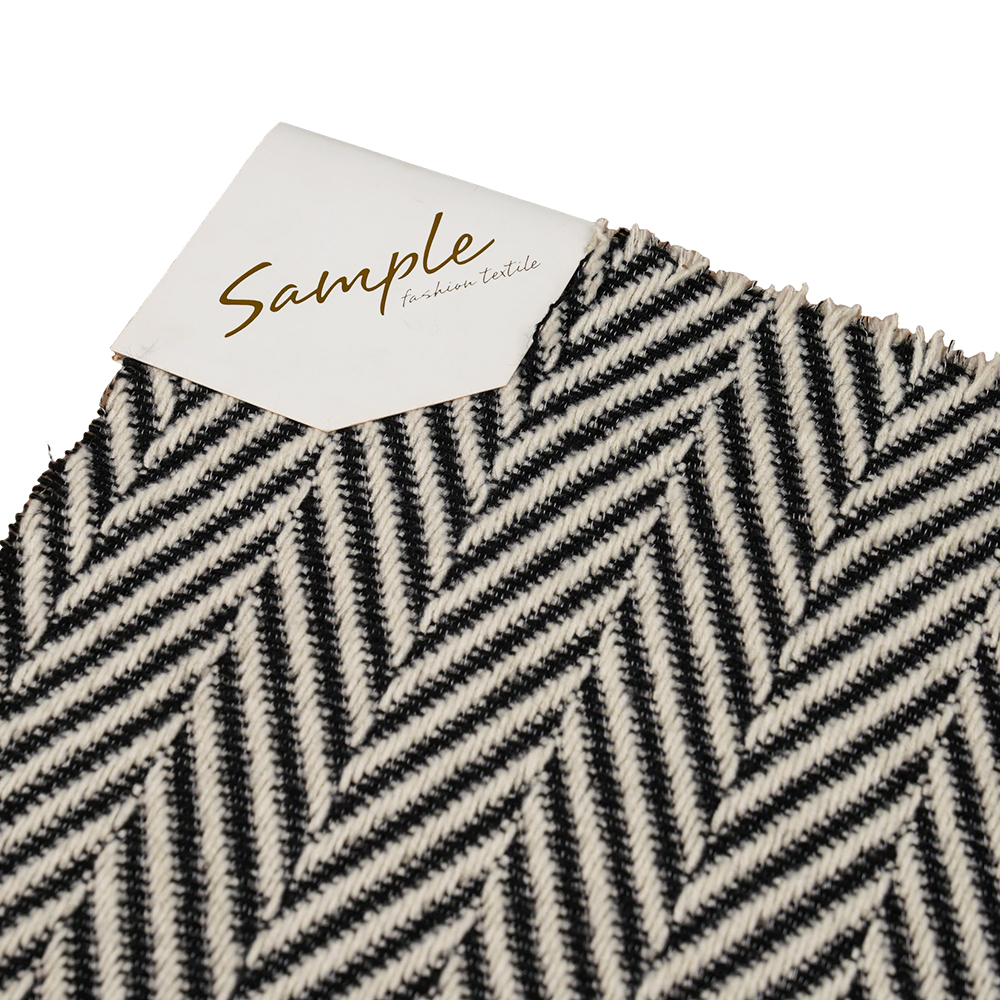 Classic Herringbone Tweed Yarn for Versatile ApparelThis tweed yarn features a smooth finish and classic black-and-white herringbone pattern. Its 720 g/m weight provides stability, making it suitable for coats and knitwear that require a structured yet comfortable feel.View Product →
Quick answer: Melton outperforms tweed in wind resistance; tweed outperforms Melton in breathability.
Melton is a cold-weather fabric. Its typical weight range of 560-800 g/m and wind-blocking structure make it too warm for spring or autumn wear. Once temperatures rise above 15°C, most Melton coats will feel unnecessarily hot and heavy. Tweed is a better year-round option because its open weave allows more air circulation.
With reasonable care, both fabrics last 5-10 years in regular winter use. Melton resists abrasion better because of its dense surface. Tweed's open weave is more likely to snag, but its textured appearance often hides wear well. If you compare lifespan per cost over 10 years, Melton generally offers better value because its density reduces pilling and surface damage.
Yes. Both Melton and tweed can be made from the same wool-polyester blends. Jiangyin Mingle Textile Co., Ltd. produces Melton in blends such as 70% wool / 10% cashmere / 10% polyester and tweed yarns with a variety of natural and blended compositions. The difference lies in the weave structure and finishing, not only in the fiber content. A 50% wool / 40% polyester / 10% other fiber blend is a common workhorse for both fabric types.
Melton handles light rain better. Its dense surface sheds water before the fabric becomes saturated. Tweed absorbs rain quickly and can become heavy. For real rain resistance, Melton still needs a water-repellent finish. A waxed or laminated Melton coat will outperform any untreated tweed in wet conditions.
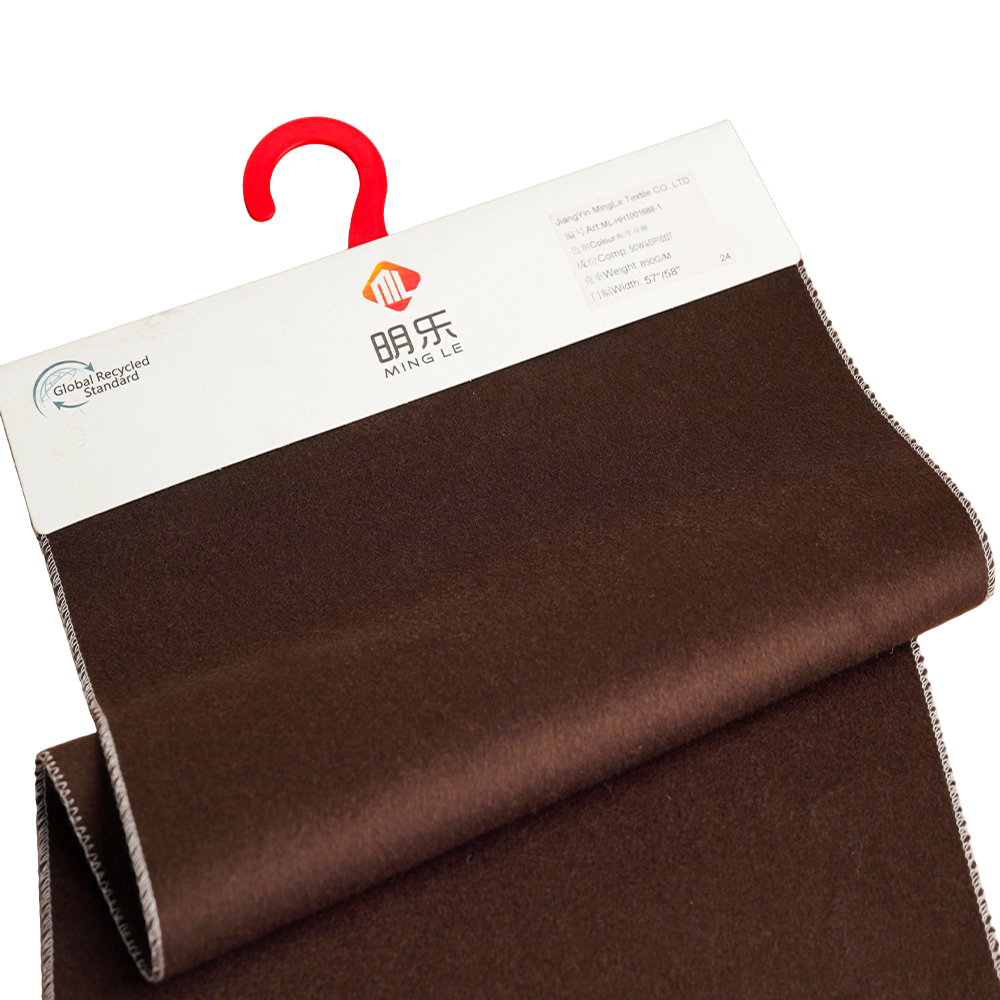
ML-HH1001688-1 Coffee Solid Color Double-face Overcoating Fabric: 850g/m, 50% Wo...
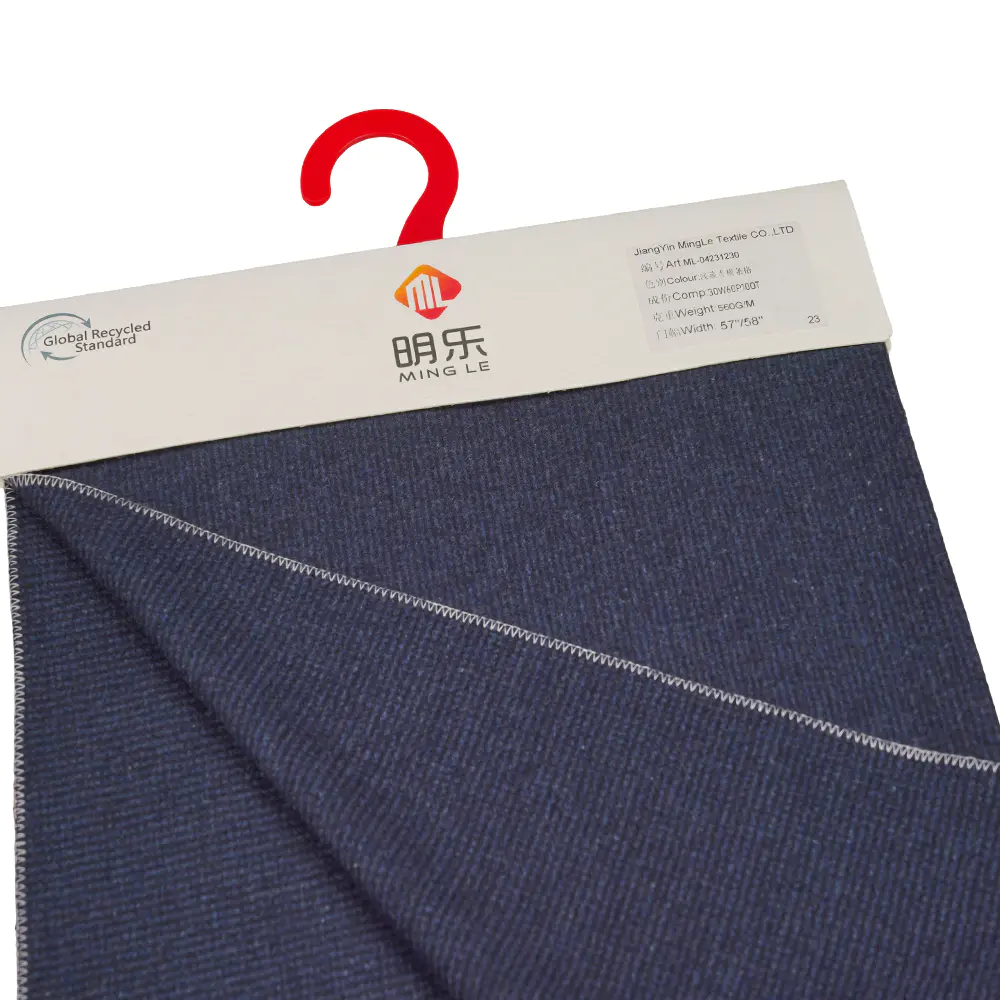
Ben Zhi Qing + Lan Qing Horizontal Striped Wool-Blend Melton Fabric: 560G/M Busi...
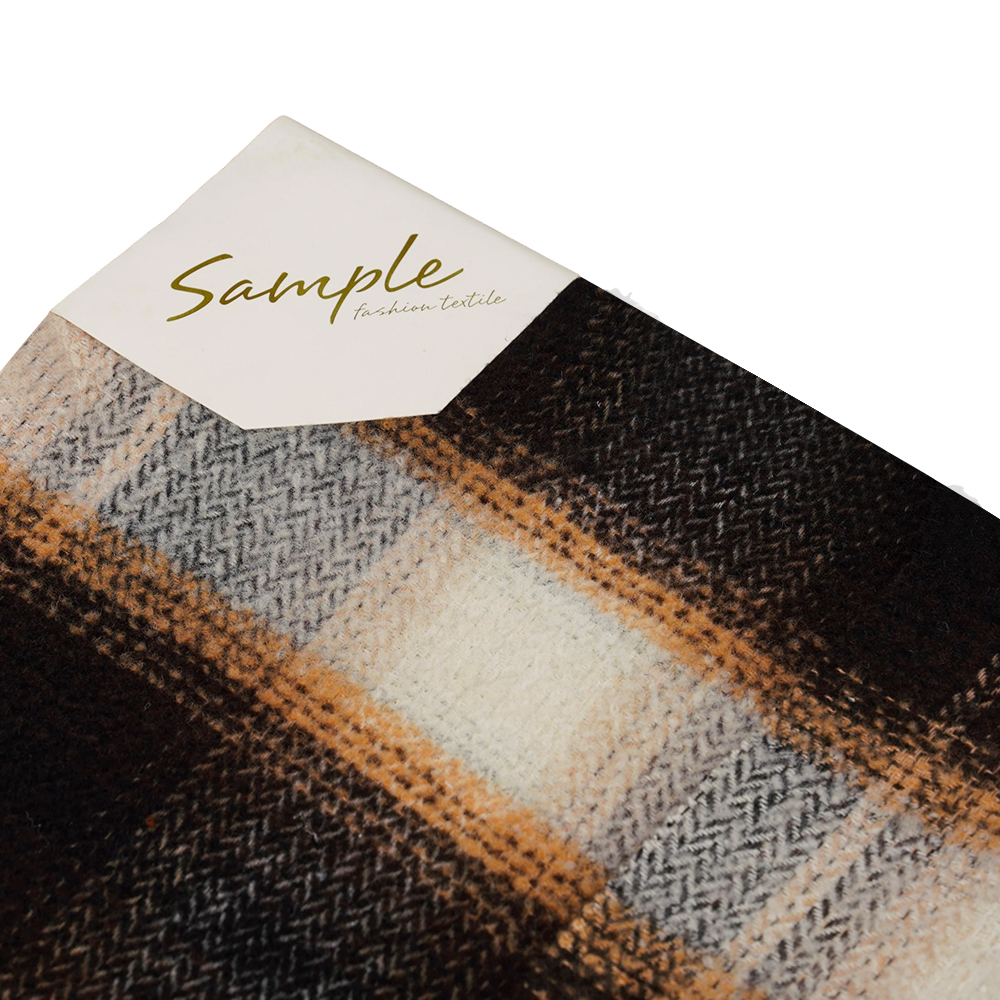
ML-8021071 Black and White Boucle Fabric: 40% Wool, 60% Polyester Blend, 540 g/m...
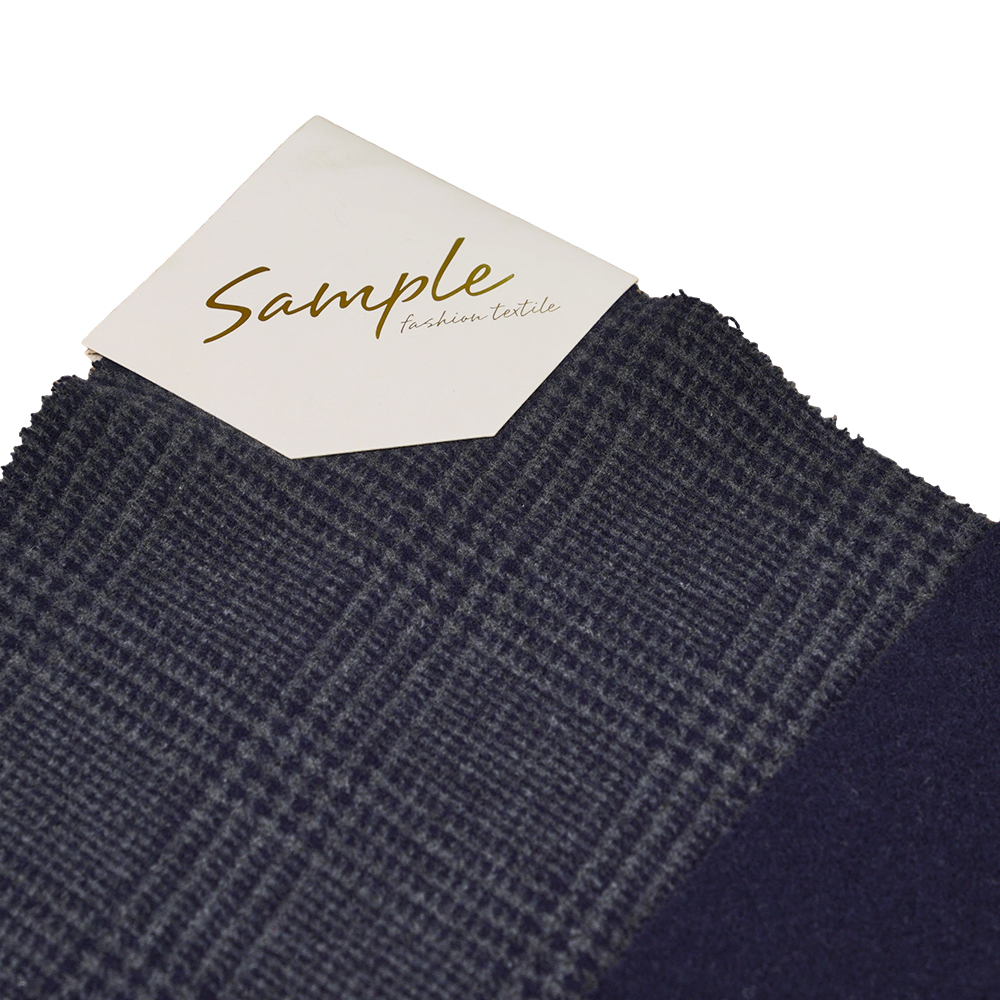
55% Wool 45% Other 645G/M Navy Blue Double-faced Velvet Fabric – Double-sided De...
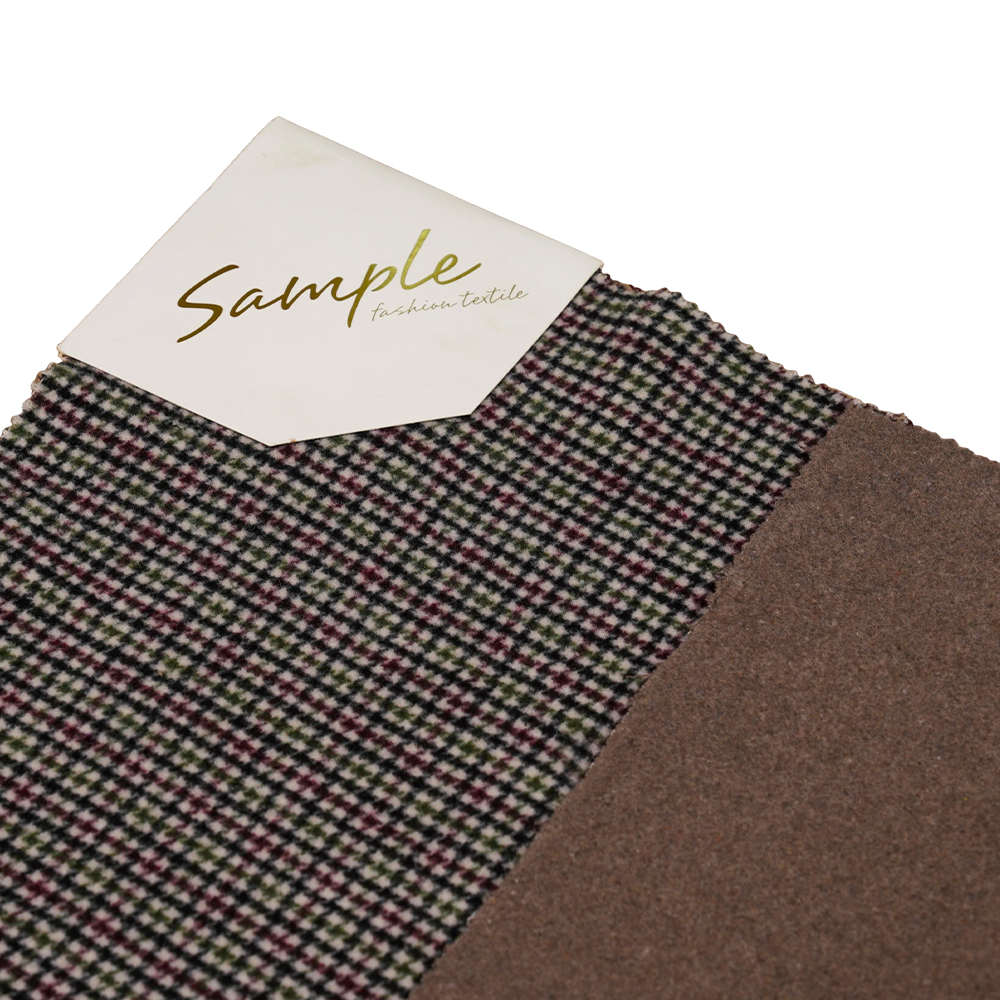
20% Wool 70% Polyester 10% other fiber 800G/M Colorful Check Double-sided Velvet...
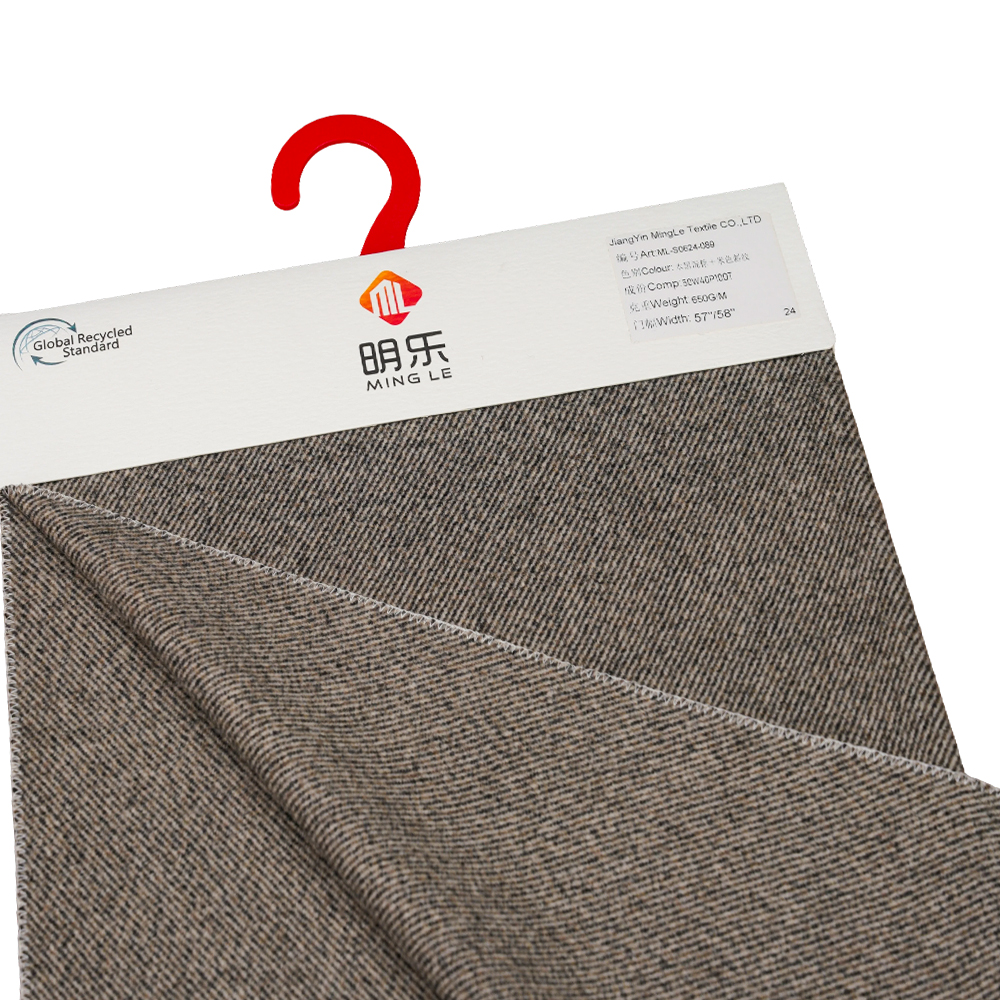
ML-S0624-089 650g/m Off-Black Blend Brown + Beige Twill Wool Fabric: Classic bla...
 +86 - 510 - 86373115
 +86 - 13812129532
 No. 118, Huancun West Road, Huaxi Fifth Village, Huashi Town, Jiangyin City, Wuxi City, Jiangsu Province, China


