

 English
 中文简体
中文简体News
Home > News > Industry News > What Makes Melton the Best Fabric for Winter Coats? A Manufacturer's Guide

Content
A 760 gsm Melton shell with a 70/30 wool-polyester blend will hold its structure through a full winter of daily wear, shed light rain for roughly 20 minutes before wetting out, and keep the wearer warm at -10 Celsius with only a mid-layer underneath. That mix of weather defense, insulation, and shape retention is one reason Melton is consistently described as the best fabric for winter coats in commercial garment production.
The fabric takes its name from Melton Mowbray in Leicestershire, England, where the dense felted construction was first developed for riding coats and military uniforms. Today, coarse-spun Melton is produced in a wide range of wool blends and weights, and its core advantages remain unchanged: wind resistance, short-term rain shedding, thermal insulation, and durability.
Melton differs from ordinary wool fabric because its fibers are fused into a dense, felted sheet that resists wind and rain without requiring a lining.
Melton fabric is a densely woven, heavily felted wool textile with a smooth matte face and a short concealed nap. The fiber matrix is so tightly interlocked that the fabric resists fraying when cut.
During finishing, moisture, heat, and friction make the wool fibers mat together. Once the process is complete, individual yarns are no longer visible. That gives Melton its characteristic smooth surface and firm hand, which separates it from open-weave alternatives such as flannel or tweed.
For a coat maker, the practical effects are direct: raw edges can be seamed without overlocking, pressed creases hold longer, and light rain beads on the surface because the felted construction is dense enough to delay absorption.
Melton delivers the strongest balanced performance of any coarse-spun wool fabric when insulation, wind resistance, water resistance, and durability are assessed together.
A tightly felted 680 gsm Melton blocks significantly more cold air than an open-weave flannel at the same weight.
The dense face causes light rain to bead and roll off before the fabric begins to absorb moisture.
A 750 gsm Melton shell traps static air and can deliver warmth close to a synthetic padded layer.
Interlocked fibers resist abrasion and pilling better than standard wool in repeated-wear tests.
These four parameters directly affect how a coat performs in daily use. A coat that holds its shape, sheds light rain, and does not pill after a season of wear reduces complaints and returns for a garment brand. That is why the fabric still appears on spec sheets for premium overcoating programs.
Melton is the most balanced choice for winter coats because no other single-faced wool fabric combines structure with weather resistance at the same level.
Composite score from insulation, wind resistance, water resistance, and shape retention. 0 equals lowest, 100 equals highest.
Twill Melton follows closely behind standard Melton. It uses a twill weave beneath the felted surface, which adds a subtle diagonal texture and slightly better drape. For relaxed outerwear silhouettes, some brands choose twill Melton over flat-faced Melton because of that softer movement.
| Parameter | Melton | Flannel | Tweed | Double-Face |
| Wind resistance | Excellent | Moderate | Good | Good |
| Light rain resistance | Good | Low | Moderate | Low |
| Thermal insulation | Excellent | Moderate | Good | Excellent |
| Shape retention | Excellent | Soft | Medium | Soft |
| Typical weight (gsm) | 560-800 | 300-420 | 410-720 | 720-870 |
| Typical wool content | 30-70% | 50-60% | 50-100% | 50-60% |
Insight: a winter coat in Melton at 680-760 gsm gives you the durability of a technical shell and the insulation of natural wool in one single-faced fabric.
For a commercial winter coat program, Melton in the 620-760 gsm range with a 50-70% wool content delivers the most reliable balance of warmth, structure, and production cost.
Soft drape for relaxed coats and transitional winter pieces.
Versatile all-rounder for tailored and casual outerwear.
Maximum structure for military-style and extreme-cold coats.
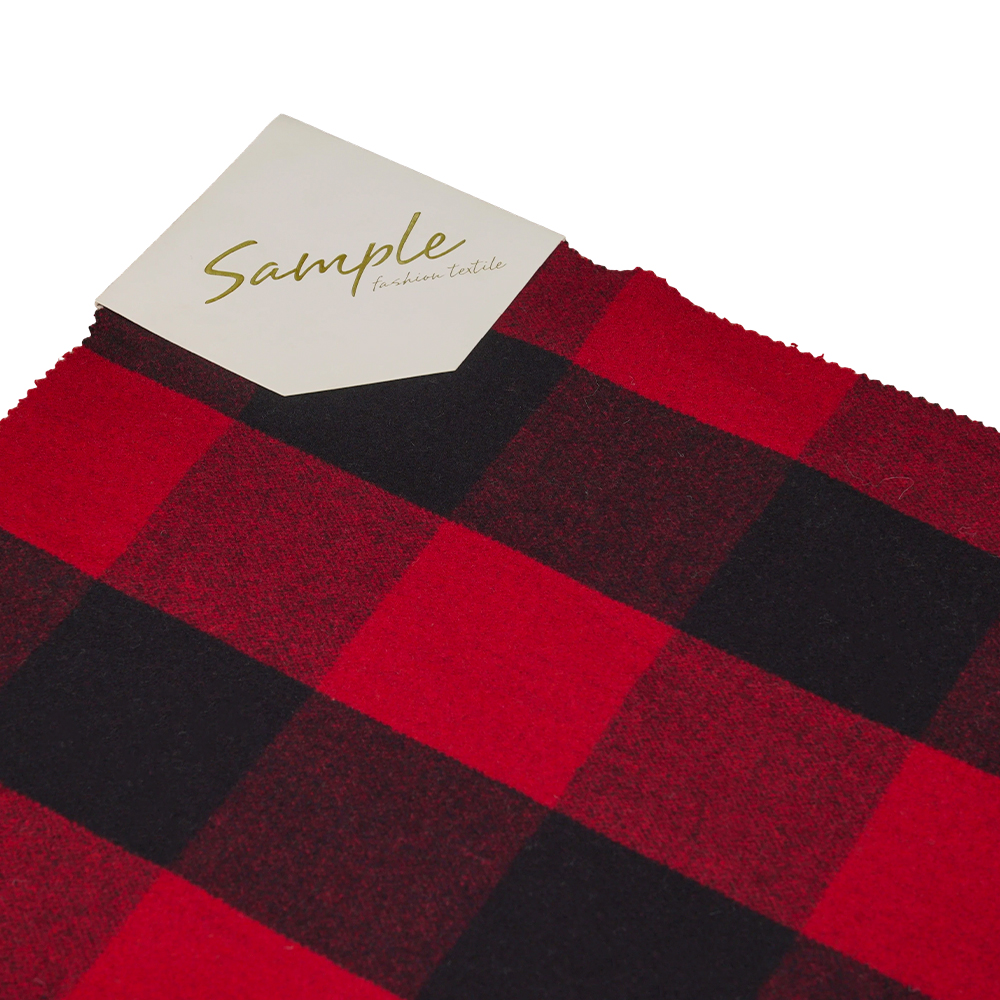 50% Wool, 40% Polyester, 10% Other Fiber, 760G/M, Black And Red Plaid, Melton Fabric, ML-3·Wool and polyester blend balances warmth and durability ·760gsm weight provides good drape and insulation ·Black and red plaid pattern enhances visual appeal through ...View Product →
The wool-to-synthetic ratio is the second variable that decides how the coat performs. Polyester additions improve durability and lower cost, while higher wool content delivers a warmer hand and better loft. Cashmere blends lift the fabric into the premium segment without adding weight.
Cost-sensitive lines with acceptable wind resistance.
Commercial standard, balanced warmth and durability.
Premium hand feel and noticeably better loft.
Luxury segment, maximum softness for the same weight.
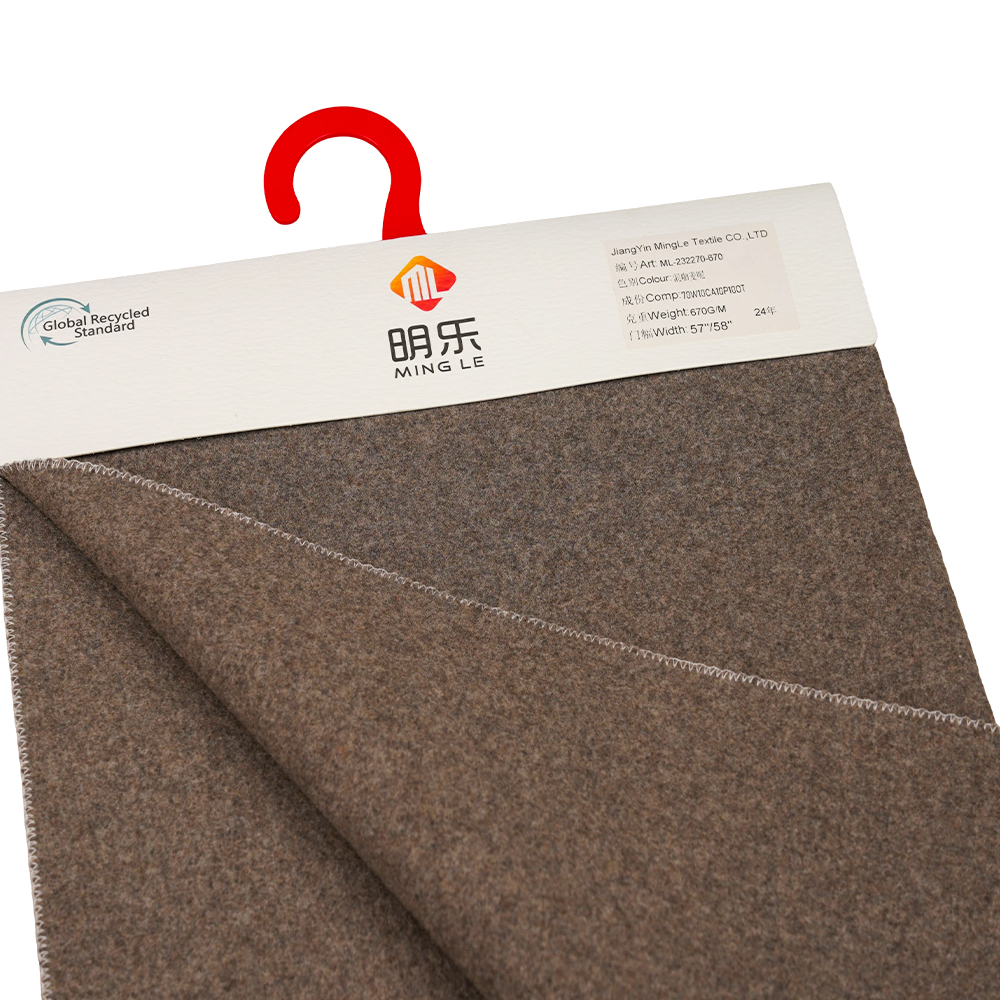 70% Wool, 10% Cashmere, 10% Polyester, 10% Other Fiber, 670G/M, Mixed Coffee, Melton Fabri·Cashmere component increases softness and comfort ·Blended ratio optimizes durability and wrinkle resistance ·Earth tone colors facilitate easy matching with multiple...View Product →
A reliable Melton supplier should demonstrate stable weight across lots, consistent felted density, clean finishing, and shrinkage below 3% after steaming.
Practical tip: request one meter of your target weight, cut a 10 cm square, and steam it. If the square shrinks more than 3% or distorts the weave, that Melton will not hold up in production.
Takeaway: if your coat needs structure, weather resistance, and warmth in one fabric, start with a 620-760 gsm Melton at 50-70% wool content and verify the felted construction with a steam test.
Yes. Melton in weights above 700 gsm and wool content above 60% provides strong insulation and wind protection for sub-zero temperatures. Adding a cashmere blend improves warmth without adding bulk.
Standard Melton has a flat, densely felted surface. Twill Melton uses a twill weave beneath the felted face, giving a subtle diagonal texture and better drape. Both share the same weather resistance but differ in surface character.
Yes. A dedicated coarse-spun manufacturer like Jiangyin Mingle Textile Co., Ltd. can develop custom blends, weights, and colors. Common development includes adjusting wool-to-polyester ratios, adding cashmere, matching Pantone colors, and creating fancy melange or plaid effects.
For commercial winter coats, 50-70% wool is the standard range. Below 50%, the fabric becomes cooler and less durable. Above 70%, cost rises sharply without a proportional gain in warmth unless cashmere is added.
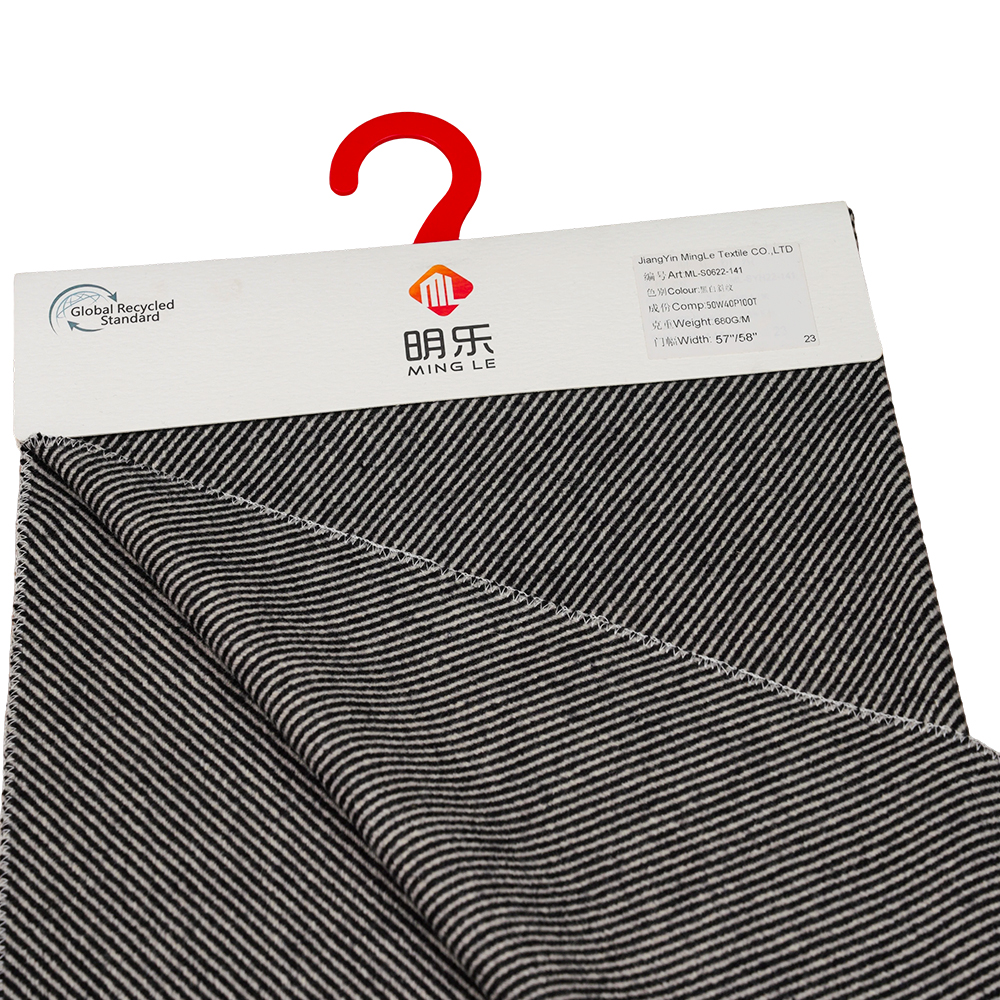
50% Wool 40% Polyester 10% other fiber680G/M Black White Twill Melton Fabric | S...
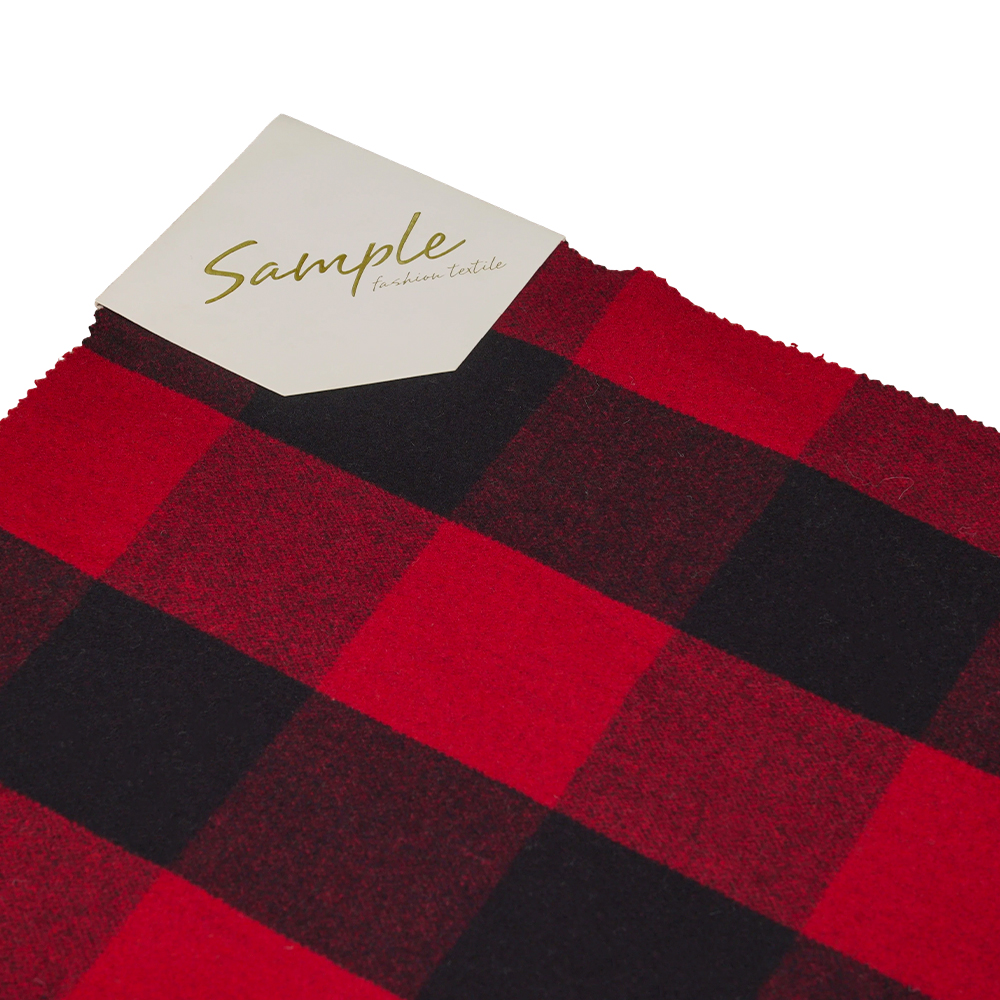
Black Red Plaid Wool Blend Fabric: 760gsm Wool Mix MaterialThis wool blend fabri...
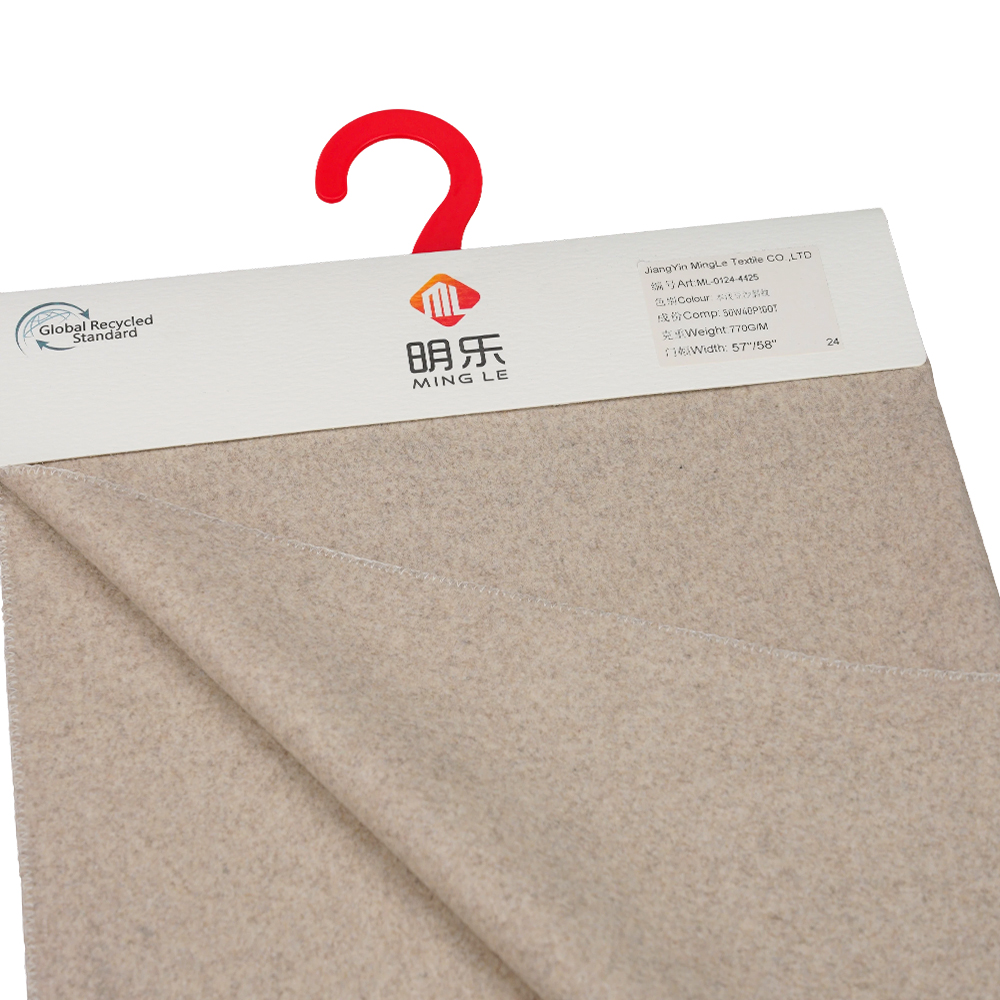
50% Wool, 40% Polyester, 10% other fiber, 770g/m Natural Light Bean Paste Twill ...
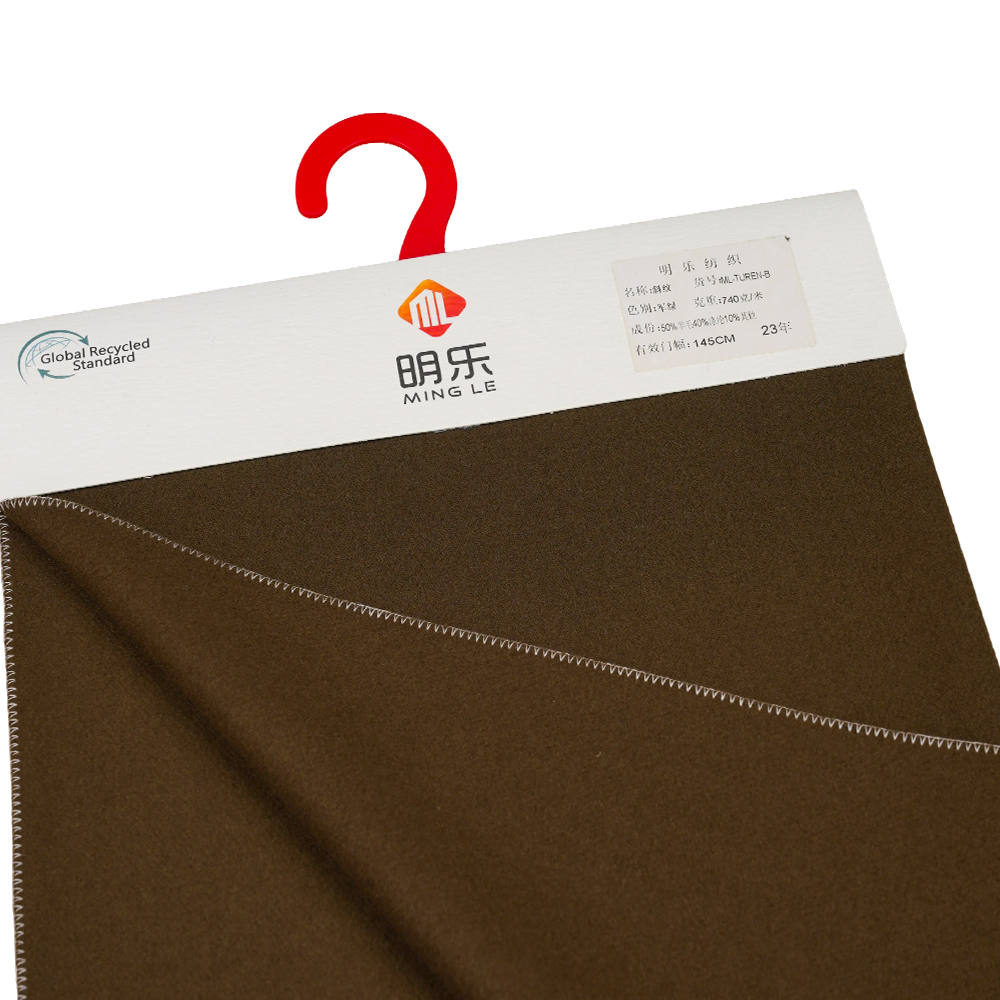
Military Green Twill Fabric: 740g Wool Blend, Suitable for Versatile UseThis mil...
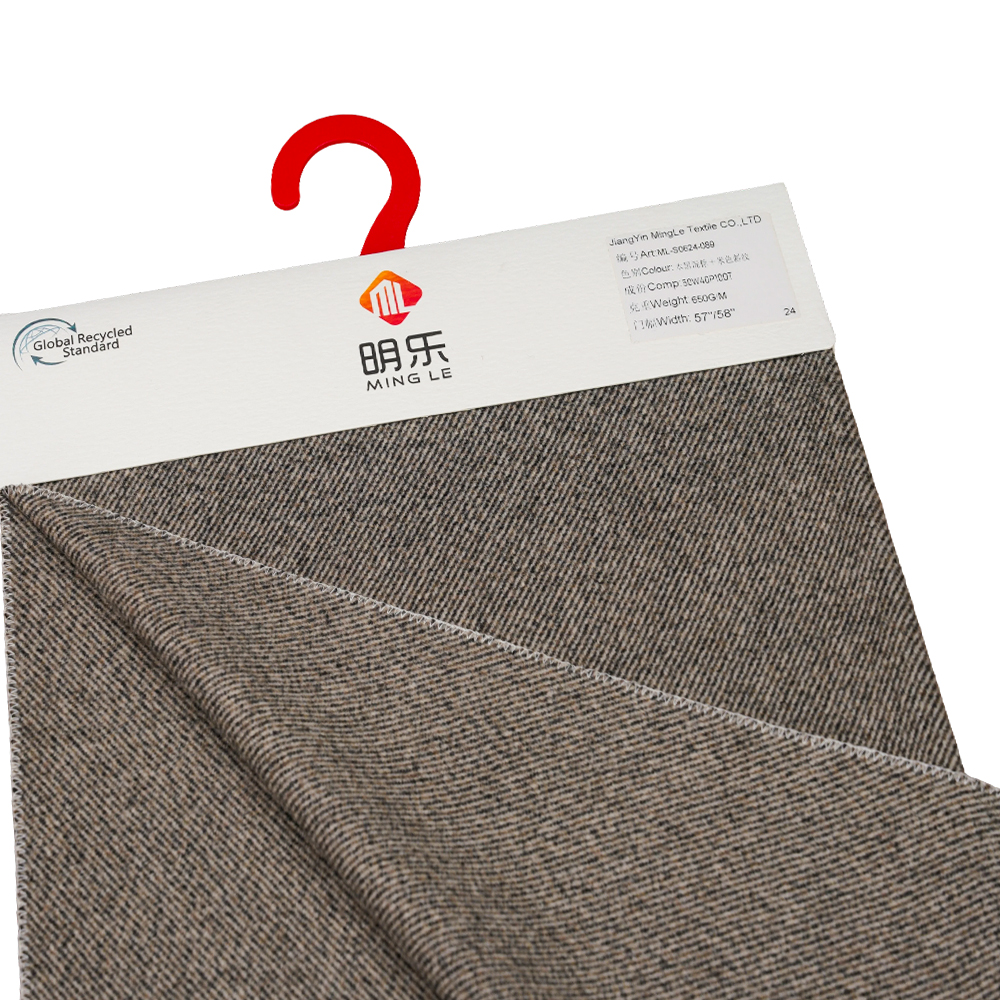
ML-S0624-089 650g/m Off-Black Blend Brown + Beige Twill Wool Fabric: Classic bla...
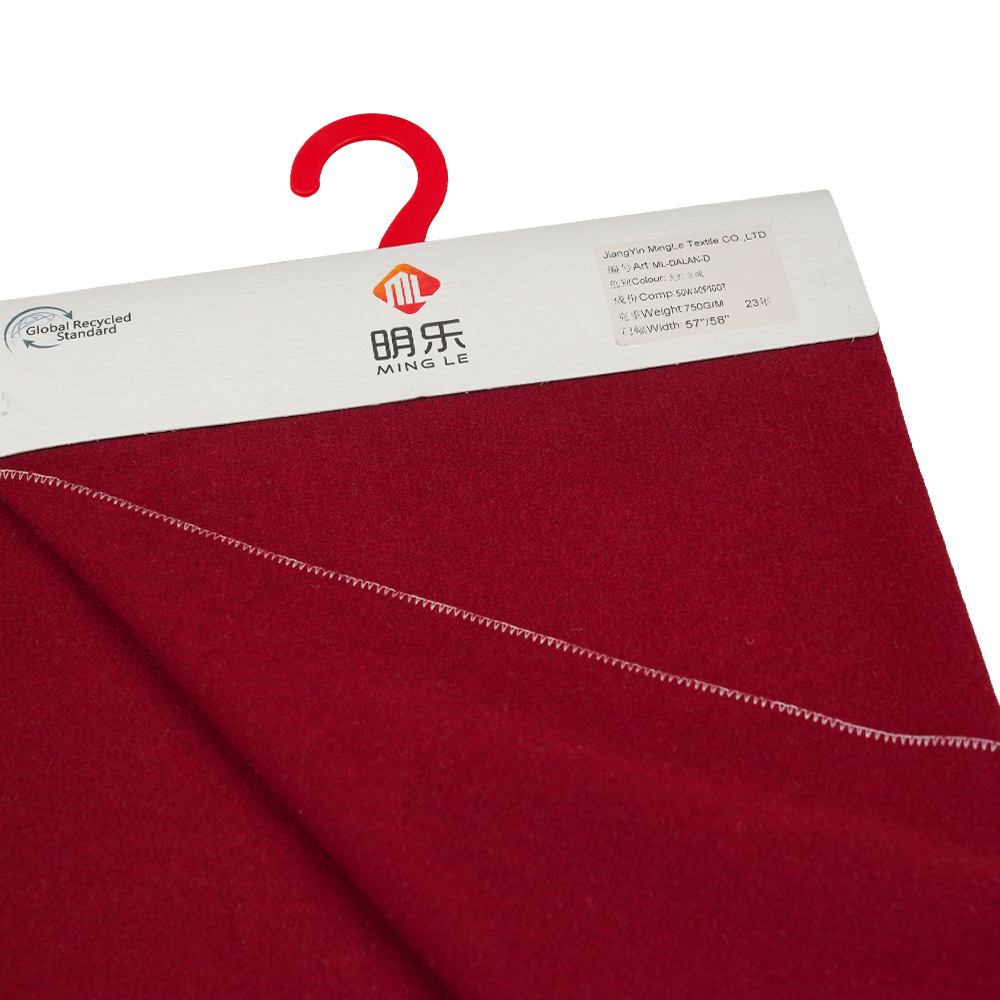
50% Wool 40% Polyester 10% other fiber 750G/M Bright Red Pile Fabric – Professio...
 +86 - 510 - 86373115
 +86 - 13812129532
 No. 118, Huancun West Road, Huaxi Fifth Village, Huashi Town, Jiangyin City, Wuxi City, Jiangsu Province, China


