Few textiles carry the breadth of technical performance, aesthetic versatility, and heritage market positioning that wool flannel fabric commands across the global apparel industry. From tailored suiting and premium outerwear to luxury casualwear and high-end uniform programs, wool flannel fabric occupies a foundational role in any apparel manufacturer's material library — one that demands technical understanding far beyond surface-level descriptions of "soft" or "warm."
For textile buyers, apparel R&D teams, sourcing managers, and wholesale distributors, selecting the right wool flannel fabric involves navigating a complex matrix of fiber science, yarn construction, weave architecture, wet-finishing chemistry, and end-use performance requirements. This article provides an engineer-grade analysis of the complete wool flannel fabric value chain — from raw fiber selection and spinning to finishing protocols, sustainability credentials, and OEM/ODM sourcing frameworks — designed to support B2B procurement decisions at every scale.
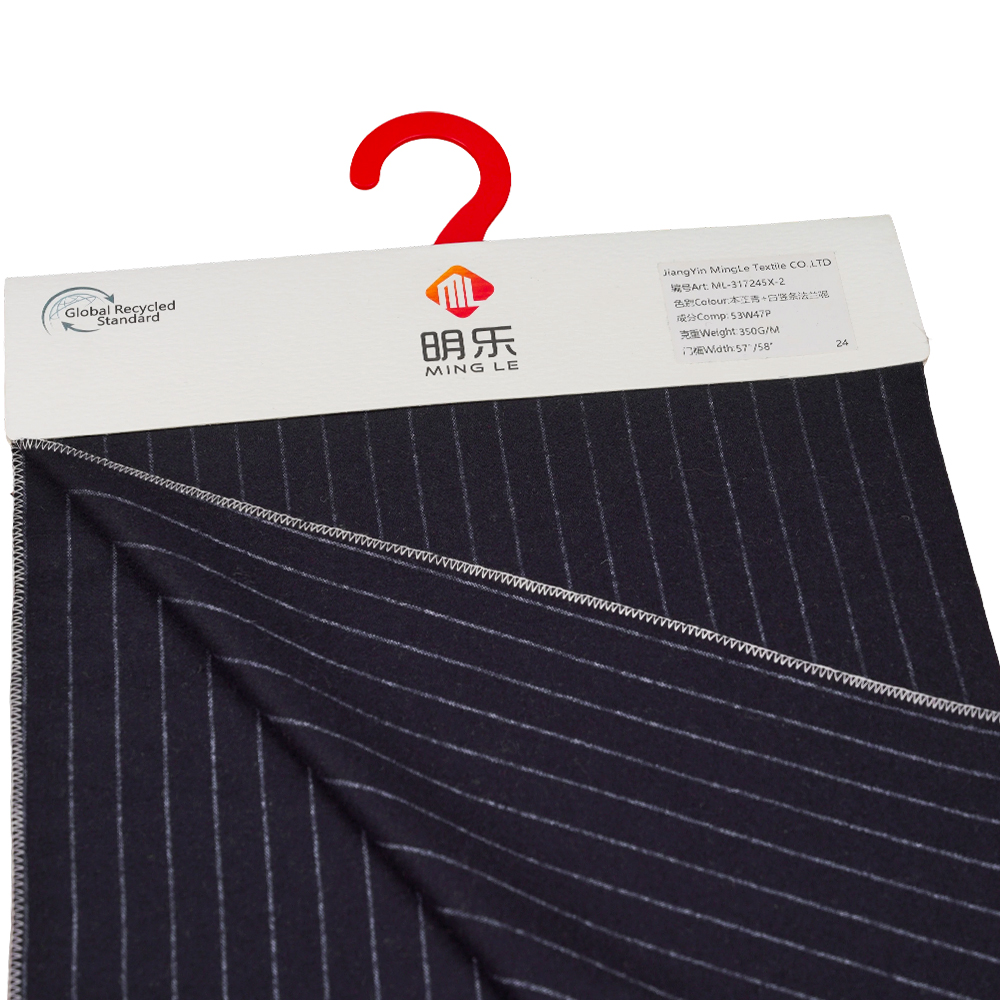
Step 1: Five High-Traffic, Low-Competition Long-Tail Keywords
| # |
Long-Tail Keyword |
Search Intent |
| 1 |
heavyweight wool flannel fabric for outerwear |
Technical specification / coat/jacket production sourcing |
| 2 |
custom wool flannel fabric manufacturer |
OEM/ODM product development / brand collaboration |
| 3 |
recycled wool flannel fabric wholesale |
Sustainable sourcing / ESG procurement |
| 4 |
double-faced wool flannel fabric supplier |
Premium outerwear / unlined coat material sourcing |
| 5 |
wool flannel fabric for suits and trousers |
Tailoring / bespoke garment procurement |
Section 1: Fiber Science and Raw Material Specification in Wool Flannel Fabric
1.1 Wool Fiber Classification and Its Impact on Flannel Performance
The performance profile of any wool flannel fabric is fundamentally determined by the fiber grade used in its construction. Wool fiber is classified by mean fiber diameter (MFD), measured in microns (µm), using either the Bradford Count system or the direct µm designation verified by IWTO-12 (optical fiber diameter analyzer — OFDA) or IWTO-47 (airflow method) standardized testing:
- Merino wool (15.5–22.5 µm): The premium category for wool flannel fabric for suits and trousers. Superfine Merino (15.5–18.5 µm) produces fabrics with the drape, handle, and next-to-skin comfort required for tailored suiting. Critical threshold: fibers above 25 µm MFD generate perceptible prickling sensation on skin (measured by prickling threshold testing per AATCC 202); Merino wool below 22 µm is considered itch-free for most consumers. Merino Wool flannel suits typically carry "Super 100s" to "Super 180s" designations, where the Super number approximates the reciprocal of the MFD (e.g., Super 130s ≈ 16.5 µm MFD).
- Crossbred wool (26–34 µm): The workhouse fiber category for heavyweight wool flannel fabric for outerwear. Lower cost than Merino, higher fiber diameter produces a more robust, durable fabric construction. Crossbred wool flannel is preferred for overcoating, uniform fabrication, and industrial outerwear where durability and dimensional stability under mechanical stress are prioritized over hand softness.
- Coarse/carpet wool (35–45+ µm): Used in tweed, melton, and heavy industrial wool fabrics rather than apparel flannel. High felting propensity enables dense, fulled fabric constructions but precludes comfortable skin contact.
- Recycled wool fiber (shoddy/mungo): Recovered from post-consumer or post-industrial wool waste, re-opened mechanically into fiber form. MFD is heterogeneous (typically 25–50 µm blended range) due to multi-source origin. Used in recycled wool flannel fabric wholesale offerings. Performance is lower than virgin wool across tensile strength, pilling resistance, and color consistency — but life cycle assessment (LCA) data demonstrates 40–70% lower carbon footprint per kg vs. virgin wool production, driving adoption among sustainability-committed brands.
- Wool blends (wool/polyester, wool/nylon, wool/cashmere, wool/alpaca): Blending modifies performance across multiple axes. Wool/polyester (typically 80/20 or 55/45 by weight) improves abrasion resistance (Martindale 20,000–40,000 cycles vs. 8,000–15,000 for pure wool equivalent) and reduces production cost. Wool/cashmere (typically 90/10 or 80/20) elevates luxury handle and softness without full cashmere pricing. Wool/nylon improves seam slippage resistance, critical for trousers and structured garments subjected to high dynamic loading at seat and knee.
1.2 Yarn Construction for Wool Flannel: Woolen vs. Worsted Spinning Systems
The spinning system used to convert wool fiber into yarn is the primary determinant of the surface character and structural performance of the resulting wool flannel fabric:
- Woolen (coarse) spinning system: Fiber is carded but not combed. Short and variable-length fibers remain randomly oriented, producing a bulky, lofty yarn with a hairy surface profile. Woolen-spun yarns create the characteristic soft, raised, napped surface of traditional wool flannel fabric. Metric count (Nm) range: typically Nm 1/1 to Nm 2/48 for flannel applications. Higher bulk factor improves thermal insulation (trapped air per unit weight) but reduces tensile strength relative to equivalent worsted constructions. This is the system used by coarse spun fabric specialists — the technical core of mills such as Jiangyin Mingle Textile, where flannel, melton, and smooth wool are produced on woolen system equipment.
- Worsted spinning system: Fiber is carded, combed (removing short fibers below 40 mm staple length), and drafted to produce a smooth, parallel-fiber yarn with minimal surface hairiness. Worsted-spun flannel (sometimes called "worsted flannel" or "flannel suiting") has a finer, smoother surface than woolen flannel, higher yarn tensile strength, and better dimensional stability under dry cleaning. Metric count range: Nm 2/40 to Nm 2/100 for suiting flannel applications.
- Semi-worsted (French system): Intermediate process — fiber is combed but not fully drawn to worsted standard. Used for mid-weight wool fabrics combining elements of woolen softness with worsted dimensional control. Common in double-faced wool flannel fabric constructions where both faces must be napped to equivalent density.
1.3 Fabric Weight Classification and Construction Parameters
Fabric weight (grams per square meter, g/m²) is the most commonly specified parameter in wool flannel fabric procurement, but it must be read in conjunction with weave structure and yarn count to fully characterize construction:
| Weight Category |
Typical g/m² |
Primary Application |
Recommended Weave Structure |
Yarn Count Range (Nm) |
| Lightweight suiting flannel |
180–260 g/m² |
Spring/summer suits, trousers, unlined jackets |
2/2 twill, plain weave variant |
Nm 2/48–2/64 |
| Mid-weight flannel |
260–380 g/m² |
Autumn/winter suiting, structured jackets, skirts |
2/2 twill, 2/1 twill |
Nm 2/28–2/48 |
| Heavyweight flannel for outerwear |
380–600 g/m² |
Overcoats, peacoats, winter outerwear |
2/2 twill, plain weave, leno variant |
Nm 1/12–2/28 |
| Double-faced flannel |
450–700 g/m² |
Unlined coats, reversible garments, premium outerwear |
Double cloth construction (face + back weave) |
Nm 1/8–2/20 (each layer) |
| Melton-adjacent heavy flannel |
550–900 g/m² |
Military-grade outerwear, heavy uniform programs |
Plain or twill base, heavily milled/fulled |
Nm 1/4–1/10 |
Section 2: Heavyweight Wool Flannel Fabric for Outerwear — Technical Construction and Performance
2.1 Weave Architecture and Its Effect on Outerwear Performance
For heavyweight wool flannel fabric for outerwear, weave architecture determines drape behavior, seam strength, dimensional recovery after distortion, and susceptibility to pilling and surface abrasion:
- 2/2 twill weave: Each warp thread floats over two weft threads before passing under two — creating a diagonal rib pattern at 45° to the fabric axis. Float length of two threads produces a softer, more flexible fabric vs. plain weave at equivalent yarn count and fabric weight. Better drape coefficient (measured by Cusick Drapemeter per BS 5058) than plain weave equivalents. Preferred for heavyweight wool flannel fabric for outerwear where a clean, structured silhouette with controlled drape is required.
- 2/1 twill (herringbone variant): Produces the characteristic V-shaped herringbone pattern when warp direction is reversed at regular intervals. Herringbone flannel is a signature construction in British and Italian outerwear traditions, associated with a degree of visual texture that differentiates it from plain flannel. Structural properties similar to 2/2 twill.
- Plain weave: Maximum interlacing frequency — every warp thread passes alternately over and under every weft thread. Produces the stiffest, most dimensionally stable construction at equivalent weight. Less common in apparel flannel due to reduced drape, but used in technical outerwear applications where dimensional stability under compression (e.g., bonded or laminated outerwear constructions) is prioritized.
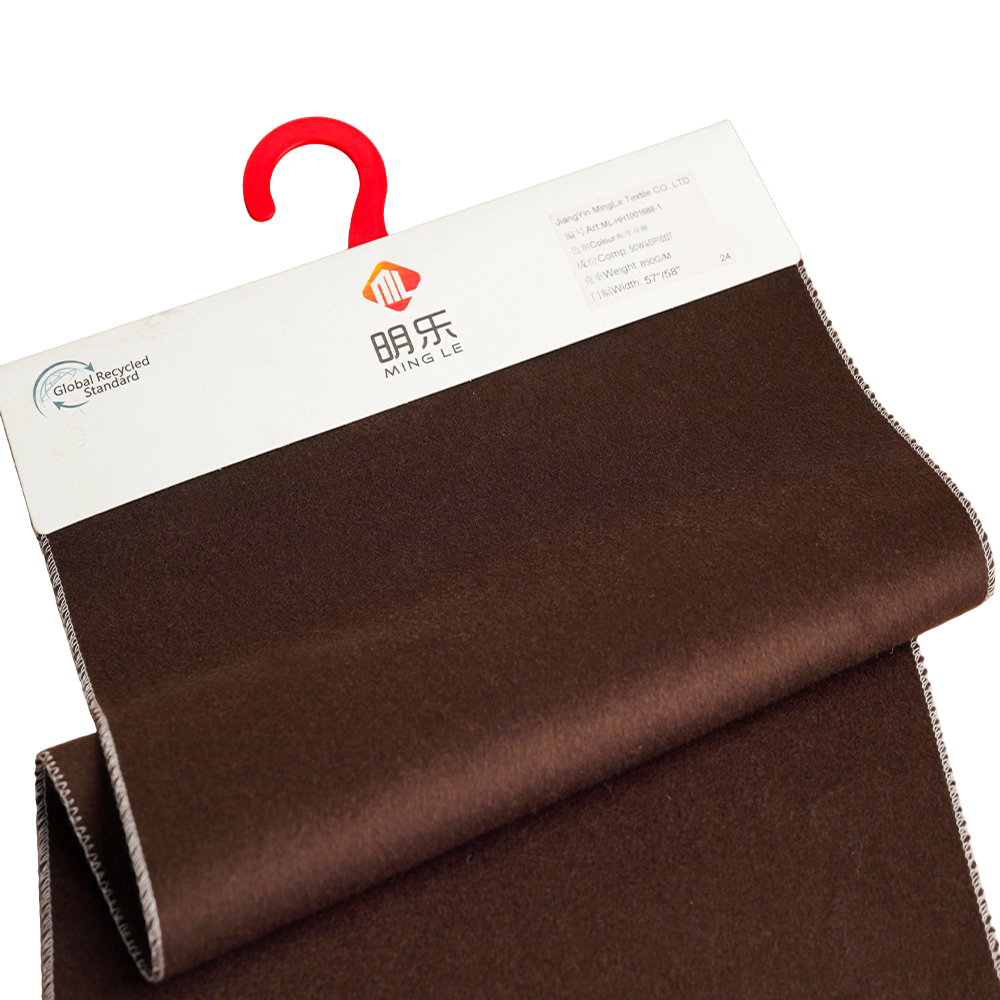
- Double cloth construction: Two separate fabric layers woven simultaneously on a dobby or jacquard loom, bound together at intervals by binding picks or a shared weft. Produces the double-faced wool flannel fabric construction — with two distinct, independently napped face surfaces — enabling unlined outerwear with full garment reversibility or clean finishing on both interior and exterior faces. Construction complexity and loom setup cost is significantly higher than single-layer constructions, reflected in fabric price premium of 40–120% vs. equivalent-weight single-faced flannel.
2.2 Thermal Performance Engineering
The thermal insulation performance of heavyweight wool flannel fabric for outerwear is governed by the fabric's ability to trap still air within its fiber matrix. Key physical parameters:
- Thermal resistance (Rct, m²·K/W): Measured per ISO 11092 (sweating guarded hotplate method). For heavyweight wool flannel (400–600 g/m²), typical Rct values range from 0.045 to 0.085 m²·K/W — comparable to 80–150 g/m² polyester insulation batting at equivalent thickness. The raised nap of flannel contributes significantly to thermal resistance by increasing effective fabric thickness (and therefore trapped air volume) relative to equivalent-weight smooth fabrics. A 500 g/m² napped wool flannel with 3.5 mm pile height achieves 25–40% higher Rct than a 500 g/m² smooth wool fabric of identical fiber composition and weave structure.
- Moisture vapor resistance (Ret, m²·Pa/W): Also per ISO 11092. Wool fiber's hygroscopic properties (absorbing up to 35% of its dry weight in moisture vapor without feeling wet) give wool flannel a fundamentally lower Ret than equivalent synthetic fabrics, maintaining wearer comfort across a wider range of activity levels. Ret for 400 g/m² wool flannel: typically 4–8 m²·Pa/W — indicating good breathability, significantly better than equivalent-weight woven polyester (Ret 12–20 m²·Pa/W).
- Wind resistance: Fabric air permeability (measured per ISO 9237, Frazier method) is a critical secondary performance parameter for outerwear end-use. Heavily milled or felted heavyweight flannel achieves air permeability as low as 5–15 L/m²/s at 100 Pa — providing meaningful wind-blocking performance. Less heavily milled constructions (20–50 L/m²/s) require a wind-resistant shell or lining layer in final garment construction.
2.3 Dimensional Stability and Shrinkage Control
Dimensional stability after garment care is a critical technical requirement for outerwear wool flannel fabric. Untreated wool fabrics exhibit felting shrinkage of 15–35% in relaxation and 5–15% in residual shrinkage after repeated laundering — rendering them unsuitable for washable outerwear without appropriate finishing treatment:
- Shrink-resist treatment (chlorine-Hercosett process): The industry-standard treatment for machine-washable wool. Chlorination (oxidative removal of cuticle scale tips) followed by polymer resin coating (nylon-based Hercosett 57 or equivalent) reduces felting propensity to <3% area shrinkage after 5× Woolmark TM31 machine wash cycles. Limitation: chlorination generates adsorbable organohalogen (AOX) effluent — subject to tightening regulatory controls in EU (Directive 2000/60/EC, Water Framework Directive) and increasingly restricted by leading fashion brands in their supplier environmental codes of conduct.
- Ozone treatment (chlorine-free shrink resist): Ozone oxidation of cuticle scale tips as a chlorine-free alternative. Achieves Woolmark TM31 compliance with zero AOX effluent. Processing speed is lower than chlorination and capital cost of ozone generation equipment is higher — resulting in a cost premium of 8–15% vs. chlorine-treated equivalents. Adopted by mills supplying sustainability-committed brands.
- Plasma surface treatment: Low-temperature plasma (oxygen or argon) modification of wool fiber surface, altering scale morphology without wet chemistry. Laboratory performance is comparable to chlorination, but commercial scale-up remains challenging. Positioned as a future technology rather than current production standard.
- Dry-clean-only specification: For heavyweight outerwear flannel where machine-washability is not required, dimensional stability under dry cleaning (perchloroethylene or hydrocarbon solvent) is the relevant performance standard. Wool flannel typically performs well under dry cleaning without shrink-resist treatment, with <1.5% dimensional change per ISO 3175-2 dry cleaning cycle.
Section 3: Custom Wool Flannel Fabric Manufacturer — R&D, Customization, and Technical Collaboration
3.1 What True Customization Capability Requires
For apparel brands and garment manufacturers working with a custom wool flannel fabric manufacturer, customization depth varies significantly between mills. True customization capability — as opposed to minor color or weight variation within a standard product range — requires:
- Integrated fiber-to-fabric production: Mills that control spinning, weaving, and finishing within a single production system can optimize fiber blend composition, yarn count, fabric construction, and finishing parameters as a coordinated system. Mills that only weave (sourcing yarn externally) have limited ability to customize yarn character — a significant constraint on fabric handle and performance differentiation. The integration of recycled fiber processing, spinning, and weaving into a single enterprise — as practiced by Jiangyin Mingle Textile Co., Ltd. — provides the technical flexibility required for genuine product customization at fabric-construction level.
- Dobby and jacquard weaving capability: Customization of weave pattern (beyond standard 2/2 twill and plain weave options) requires dobby-controlled looms for geometric patterns (herringbone, houndstooth, windowpane check, small geometrics) or jacquard-controlled looms for large-scale pattern repeats and complex pictorial designs. Confirm that the manufacturer's loom fleet includes the capability required for the target pattern complexity.
- Color development and dyeing infrastructure: Custom colorways require either piece dyeing (fabric dyed as woven greige — produces solid colors) or yarn dyeing (fiber or yarn dyed before weaving — enables multi-color pattern constructions). Piece dyeing offers faster development cycles (3–5 days vs. 10–20 days for yarn-dyed constructions) but limits design to solid or heather effects. Confirm dye class compatibility: reactive dyes for cellulosic blends, acid dyes for wool. Color matching accuracy: ΔE <1.0 (CIE Lab, D65 illuminant, 10° observer) for production vs. approved standard.
- Sample-to-production traceability: A technically capable custom wool flannel fabric manufacturer maintains fabric development records (construction specification sheets, loom setup parameters, finishing recipe records) that enable exact replication of an approved sample in subsequent production runs. Request evidence of this documentation system during supplier qualification.
3.2 Jiangyin Mingle Textile Co., Ltd. — Manufacturing Profile
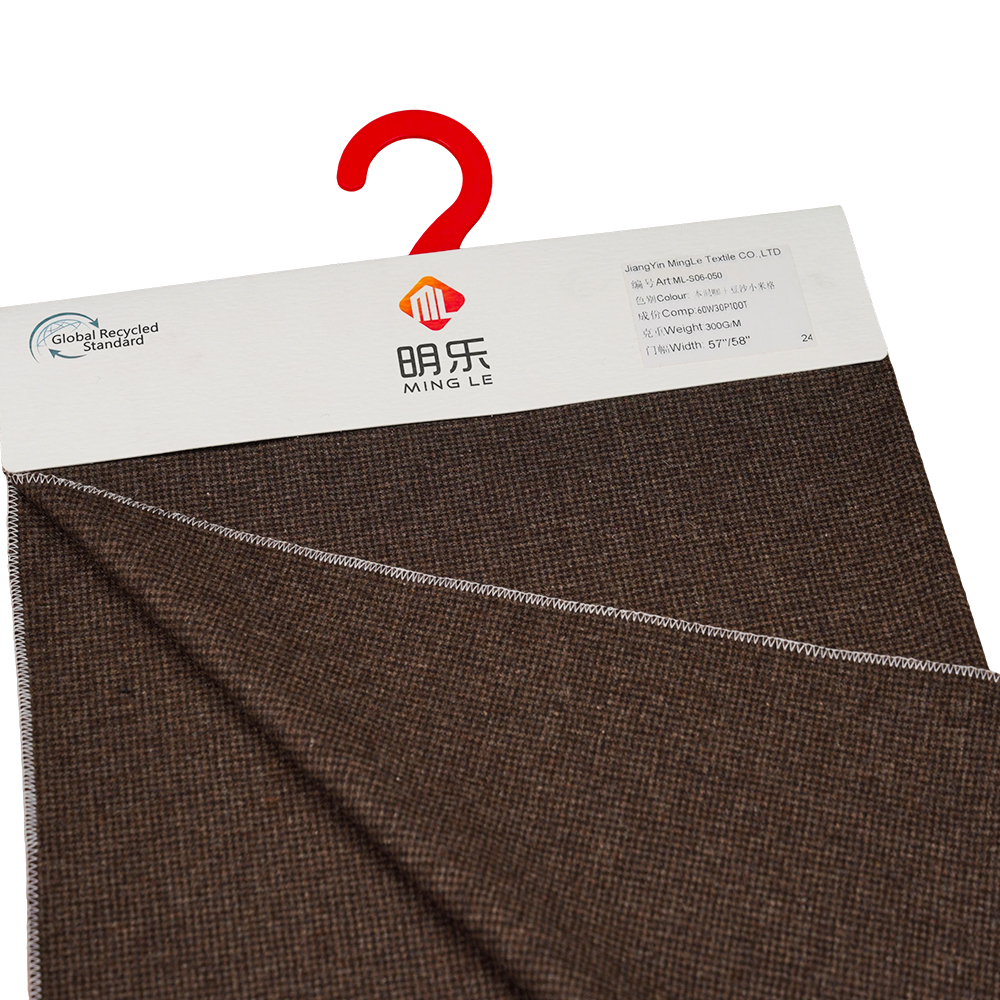
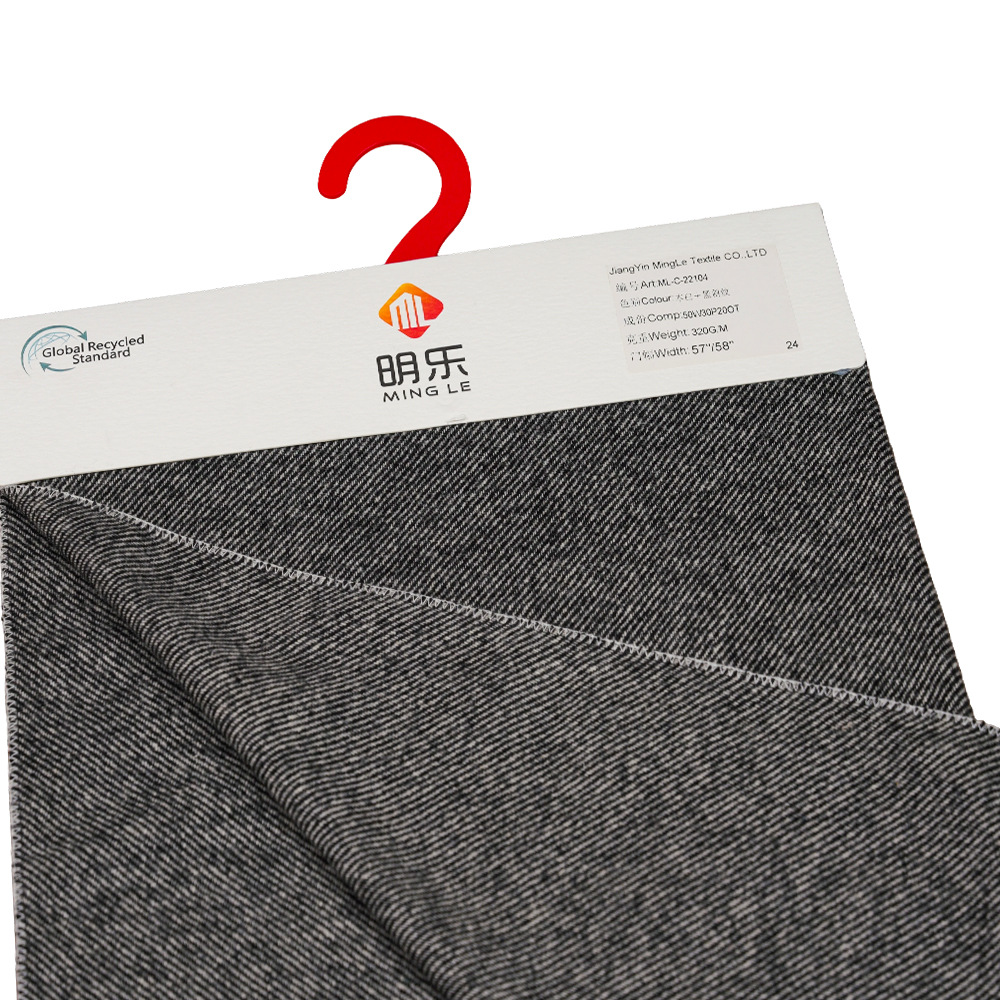
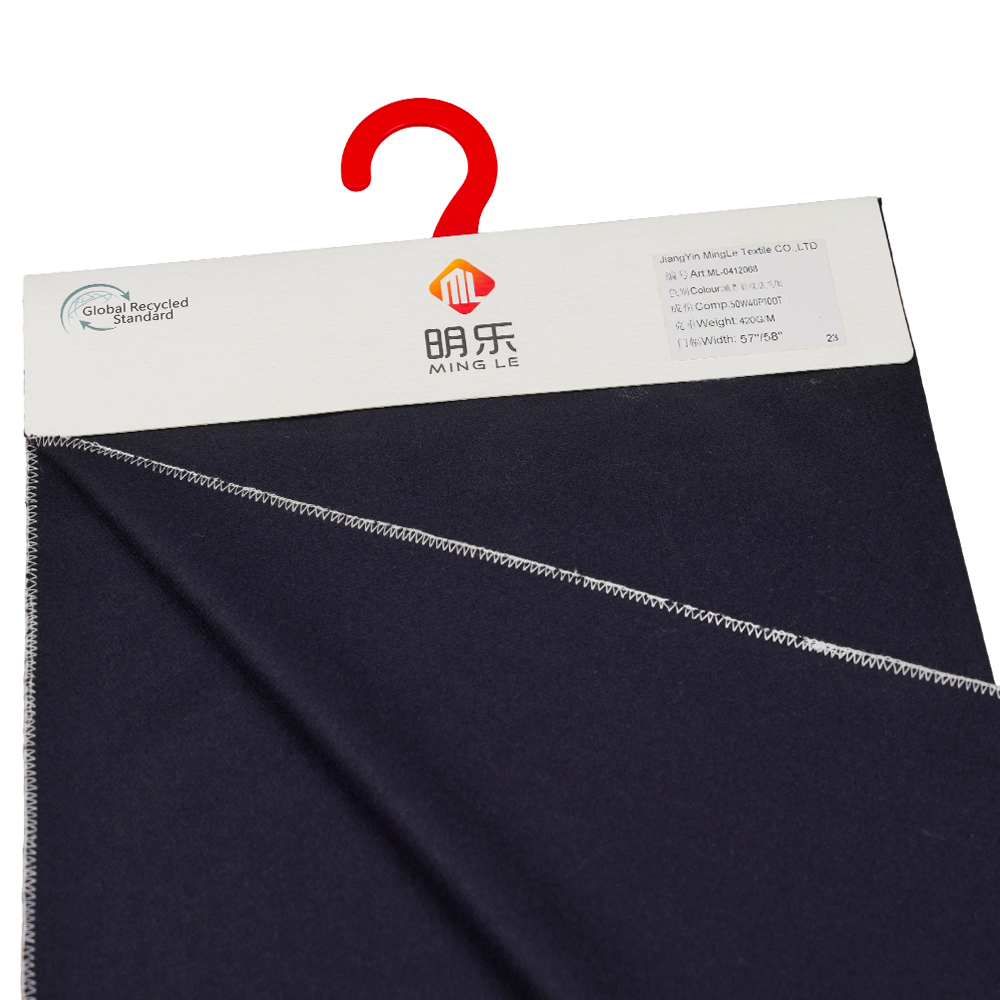
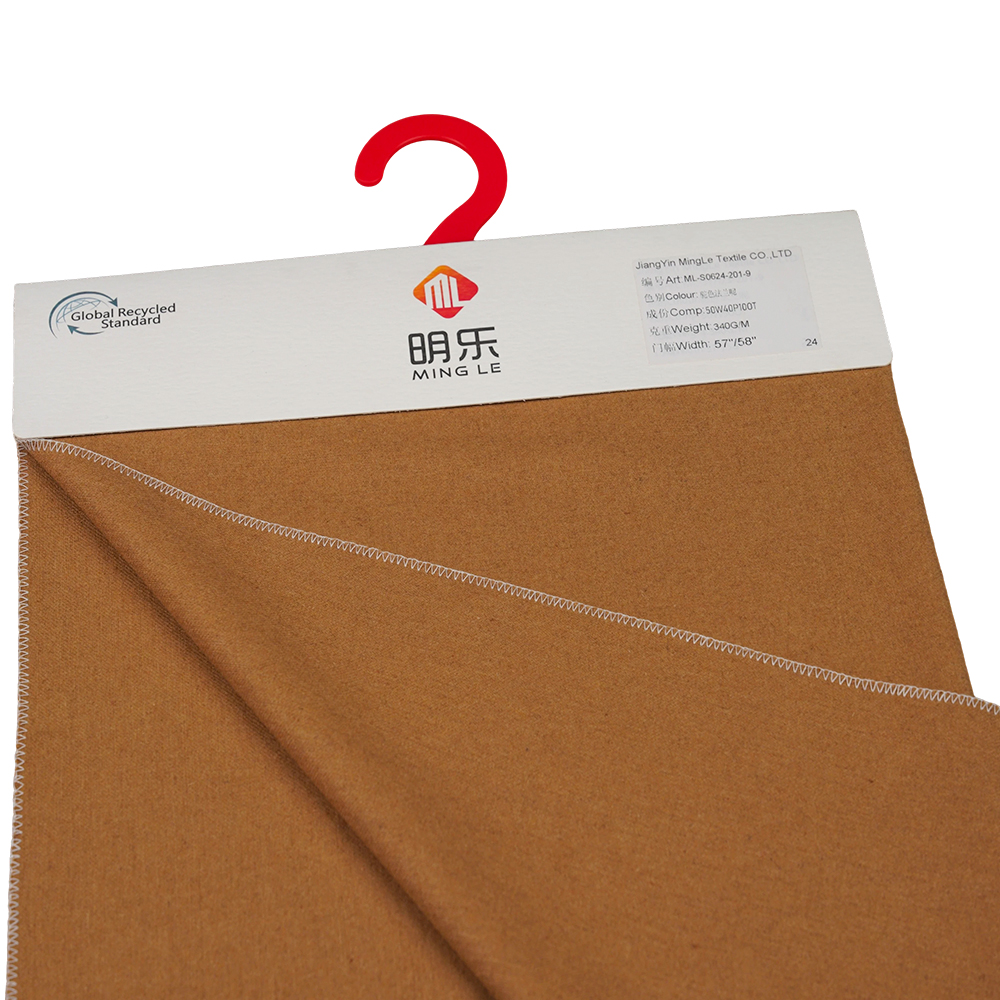
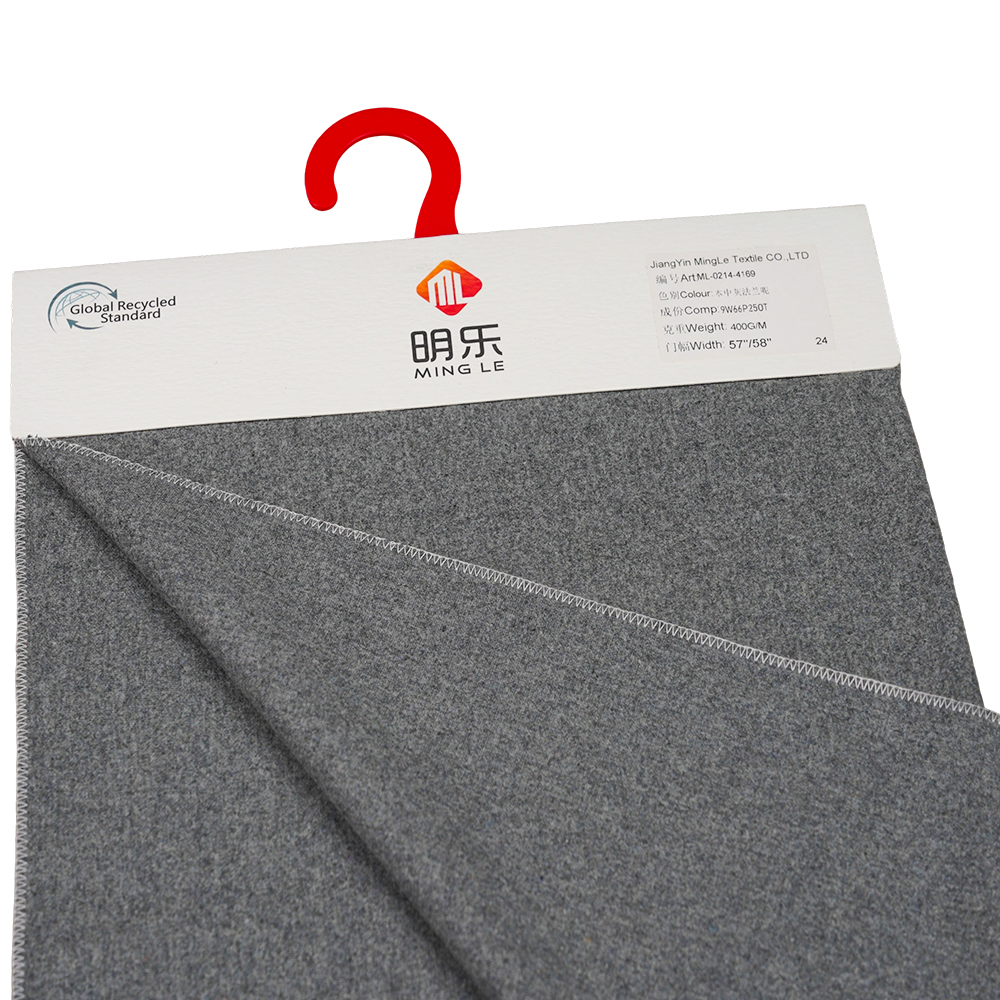
Established in October 2006, Jiangyin Mingle Textile Co., Ltd. has built its technical identity around the coarse spun fabric segment — producing flannel, melton, smooth wool, various double-faced wool flannel fabric, and tweed from an integrated manufacturing base in Jiangyin, Jiangsu Province, China's most significant concentration of wool textile manufacturing capacity.
The company's evolution from a dedicated weaving enterprise into a specialized integrated textile enterprise encompassing recycled fiber processing, spinning, and weaving gives it a material advantage in the development of custom wool flannel fabric constructions: fiber blend composition, yarn count, and surface character can all be optimized simultaneously within the same production system, rather than being constrained by externally sourced yarn specifications.
This integrated capability has supported the development of long-term collaborative relationships with global fast-fashion and contemporary brands — including H&M, ZARA, MANGO, CK, and GAP — that demand consistent quality across high-volume production runs, rapid response to seasonal development calendars, and technical flexibility to develop fabric constructions matched to specific garment design briefs. The company's ability to customize products based on customer samples and specific technical requirements positions it as a genuine development partner rather than a catalog supplier.
Operating under the philosophy of "Customer First, Quality as the Foundation, and Integrity as the Core," Mingle Textile's export reach — spanning Japan, Korea, Europe, and the United States — reflects the international quality standard its products consistently achieve. For textile buyers seeking a custom wool flannel fabric manufacturer combining technical depth, production scale, and commercial reliability, Jiangyin Mingle Textile represents a benchmark supplier in the coarse spun wool fabric segment.
Section 4: Recycled Wool Flannel Fabric Wholesale — Sustainability Science and Commercial Architecture
4.1 The Material Science of Recycled Wool Fiber
Recycled wool flannel fabric wholesale sourcing has expanded significantly as major apparel brands have committed to recycled fiber content targets in their sustainability strategies (e.g., H&M's commitment to 100% recycled or sustainably sourced materials by 2030; Inditex's commitment to 100% more sustainable cotton and fibers by 2025). Understanding the technical limitations and performance trade-offs of recycled wool fiber is essential for procurement teams specifying recycled wool flannel fabric constructions:
- Mechanical recycling process (garnetting / opening): Post-consumer wool garments or post-industrial wool cutting waste are sorted by color and fiber content, then mechanically opened through garnetting machines (rotating pin-studded rollers that pull fibers apart). The process shortens fiber length from an original staple of 60–150 mm (in virgin wool) to 20–60 mm in recycled fiber — significantly reducing the ability to form high-twist, high-tenacity yarns. Shorter fiber length increases hairiness and reduces yarn tensile strength at equivalent count.
- Fiber length compensation strategies: To compensate for reduced recycled fiber staple length, recycled wool is typically blended with virgin wool (20–40% virgin wool addition restores tenacity to near-virgin equivalent at equivalent count) or with polyester fiber (15–30% polyester addition improves abrasion resistance and dimensional stability). Pure 100% recycled wool flannel fabric is commercially available but commands compromises in pilling resistance (Martindale 3,000–8,000 cycles vs. 8,000–18,000 for virgin wool equivalent) and surface consistency.
- Prato recycled wool system (Italy): The Prato district of Tuscany has operated the world's most sophisticated industrial recycled wool system for over 150 years. "Biella-style" recycled wool (from the neighboring Biella district) represents the premium tier of recycled wool production globally. When sourcing recycled wool flannel fabric wholesale, fiber origin documentation (Prato system vs. lower-grade recycled fiber sources) is relevant to quality prediction.
- Life cycle assessment (LCA) data: Peer-reviewed LCA studies (Textile Exchange Preferred Fiber & Materials Report, 2023; Quantis Apparel LCA Database) indicate that recycled wool production generates approximately 40–70% lower greenhouse gas emissions per kg of fiber vs. virgin Merino wool production (which carries a significant methane emission burden from sheep). Water consumption is reduced by 70–90%. These figures support GHG reduction claims in apparel brands' Scope 3 reporting frameworks.
4.2 Certification Landscape for Recycled Wool Flannel
Credible sustainability claims for recycled wool flannel fabric wholesale products require third-party certification. Key applicable standards:
- Global Recycled Standard (GRS), Textile Exchange: The leading certification for recycled content claims in textiles. Requires chain-of-custody verification from post-consumer or post-industrial waste source through all processing stages to finished fabric. Minimum 20% recycled content required for product certification; "made with GRS-certified recycled content" claim requires minimum 20% recycled input; "GRS certified" product claim requires ≥50% recycled content. Audited annually by approved certification bodies (Control Union, Ecocert, Bureau Veritas, etc.).
- Recycled Claim Standard (RCS), Textile Exchange: Less stringent than GRS — certifies recycled content claim without the full social and environmental facility audit requirements of GRS. Accepted by some brands as minimum evidence for recycled content marketing claims.
- Cradle to Cradle Certified (C2C): Material health assessment + recyclability verification. Not recycled content-specific, but relevant for brands positioning products as circular economy compatible.
- Oeko-Tex Standard 100: Tests for harmful substances (REACH SVHCs, pesticide residues, heavy metals, formaldehyde, pH) rather than recycled content per se. Important for skin-contact textile applications regardless of fiber origin. Request Oeko-Tex 100 certificate for all wool flannel fabric used in consumer-facing garments.
- Bluesign system: Chemical management and resource efficiency certification for textile wet processing. Ensures that dyeing, finishing, and chemical treatment processes meet environmental and worker safety standards. Relevant for mills producing recycled wool flannel fabric that undergoes wet-finishing processes.
Section 5: Double-Faced Wool Flannel Fabric Supplier — Construction Engineering and Premium Market Applications
5.1 Double Cloth Construction Mechanics
Double-faced wool flannel fabric is among the most technically demanding constructions in the woolen weaving sector. The engineering principles behind its construction:
- Double cloth weave structure: Two independent fabric layers are woven simultaneously on the same loom, using separate warp beams for face and back layers. The layers are bound together at defined intervals by binding picks — supplementary weft threads that pass between the layers to create structural integrity. Binding interval determines the rigidity of the layer-to-layer connection: closely spaced binding picks create a stiffer, more unified fabric body; widely spaced binding creates a softer hand with more independent layer mobility, enabling edge-cutting (separating the two layers at garment edges for a clean unlined finish).
- Face-to-back weight ratio: In reversible or equal-face double-cloth constructions, both layers are specified at equivalent weight and fiber content. In premium-face constructions, the face layer uses finer, more expensive fiber (e.g., Merino or cashmere blend) while the back layer uses a coarser, lower-cost specification — optimizing material cost while maintaining exterior luxury performance.
- Edge finishing and seam construction requirements: The defining advantage of double-faced wool flannel fabric in outerwear is the ability to produce finished, unlined garments with clean edges where both fabric faces are visible. This requires the garment maker to separate the two fabric layers at seam allowances and edge margins (typically 15–25 mm), fold each layer independently, and slip-stitch or bond the separated edges together. This construction technique demands fabric with adequate layer separation at the binding picks and sufficient layer thickness to create a clean folded edge. Fabric suppliers should provide garment construction guidance with fabric specification sheets for double-faced wool flannel fabric products.
- Napping and finishing of double cloth: Each face of a double-faced wool flannel fabric must be napped to equivalent height and density — requiring the finishing department to nap both fabric faces through sequential processing. Nap raising direction, wire type (bent wire for soft nap; straight wire for dense, upright nap), and napping intensity must be calibrated independently for each face to achieve a matched surface character. This doubles the finishing equipment requirement and processing time vs. single-faced flannel, contributing to the significant price premium of double-faced constructions.
5.2 Market Applications and Specification Requirements
Double-faced wool flannel fabric is primarily used in premium and luxury outerwear applications where unlined construction is both a design choice and a quality signal:
- Unlined winter coats: The primary market. Fabric weight 500–700 g/m². Face fiber: Merino 18–22 µm or wool/cashmere blend. Back fiber: crossbred wool 24–28 µm or wool/polyester blend. Width: typically 150 cm for efficient panel nesting in standard pattern-making systems. Required performance: dimensional stability <2% warp and weft after dry cleaning (ISO 3175-2); pilling resistance ≥3 Martindale grade after 2,000 cycles (ISO 12945-2).
- Luxury casualwear (overshirts, robes, premium knitwear adjacents): Lighter double-faced constructions (320–450 g/m²), softer hand, often incorporating cashmere, alpaca, or mohair in the face layer. Dry hand-feel and drape are primary selection criteria over thermal performance.
- High-end uniform and corporate wear programs: Where garment longevity, consistent color across multiple production runs, and professional appearance after repeated wear are critical. Dimensional stability and color fastness (minimum Grade 4 wash fastness per ISO 105-C06; minimum Grade 4 light fastness per ISO 105-B02) are mandatory specification parameters for uniform programs.
Section 6: Wool Flannel Fabric for Suits and Trousers — Tailoring Performance Standards
6.1 Tailoring Performance Parameters
Wool flannel fabric for suits and trousers is evaluated against a distinct set of performance criteria from outerwear flannel, reflecting the mechanical stresses and aesthetic standards of tailored garment construction:
- Seam slippage resistance (ISO 13936-2): Measures the force required to produce a 6 mm seam opening under standardized loading conditions. Minimum acceptable values for suiting: 160 N (warp direction) and 120 N (weft direction). Fabrics failing this threshold are prone to seam bursting at high-stress points (armhole, crotch, knee) during normal wear. Weave interlacing frequency and yarn sett (ends per cm × picks per cm) are the primary determinants of seam slippage performance.
- Pilling resistance (ISO 12945-2, Martindale method): Minimum Grade 3–4 after 2,000 Martindale cycles for suiting flannel. Pilling is primarily driven by short fiber shedding and fiber entanglement at the fabric surface — managed through fiber staple length specification (minimum 60 mm mean staple for woolen-spun suiting flannel), yarn twist factor, and anti-pilling finishing treatments (enzyme treatment or singeing).
- Bursting strength (ISO 13938-2, ball burst method): Minimum 350 N for trouser weight flannel (<300 g/m²); minimum 450 N for suit weight (300–380 g/m²). Critical for trouser seat, knee, and waistband seam areas subjected to cyclic biaxial loading during sitting and walking.


 English
 中文简体
中文简体
 +86 - 510 - 86373115
 +86 - 13812129532
 No. 118, Huancun West Road, Huaxi Fifth Village, Huashi Town, Jiangyin City, Wuxi City, Jiangsu Province, China


