

 English
 中文简体
News
Home > News > Industry News > How to Compare Wool Fabric Specifications Before Placing an Order: 6 Fields

Content
Six fields make two wool fabrics comparable: fibre composition, mass per unit area, weave construction, finish, performance test data and commercial terms. Fix those six rows on one sheet before the first sample request goes out, and every quote you receive afterwards can be scored instead of admired.
A supplier who leaves a field blank is not offering a cheaper version of the same cloth. The gap is where a substitution hides, usually in the unnamed fibre percentage or in an unwritten tolerance clause.
Run the same sheet against three suppliers and the comparison takes an afternoon rather than a week of email threads.
Fibre composition drives cost and handle more than any other field, so compare the blend fibre by fibre instead of accepting a summary phrase such as wool-rich.
Two overcoatings can sit within 20 g/m2 of each other and still be completely different products. A 70% wool, 10% cashmere, 10% polyester, 10% other fibre melton at 670 g/m2 gives a dry hand and high loft. A 30% wool, 60% polyester, 10% other fibre single-face at 680 g/m2 is denser, more abrasion resistant and far cheaper to produce. The weights are almost identical, and only one of them belongs in a premium coat programme.
| Blend | Composition | Weight | Hand and performance | Typical programme |
| Premium melton | 70% wool, 10% cashmere, 10% polyester, 10% other | 670 g/m2 | Dry, soft, high loft, strong insulation | Better retail coats |
| Reversible double-face | 50% wool, 5% cashmere, 35% polyester, 10% other | 750 g/m2 | Firm structure, clean edges, no lining needed | Mid to high end overcoats |
| Volume single-face | 30% wool, 60% polyester, 10% other | 610 g/m2 | Dense, abrasion resistant, flatter hand | Cost driven programmes |
Always ask what sits inside the other fibre line. In coarse-spun overcoating it is normally recycled wool, viscose or acrylic, and that answer moves the price by a wide margin. A named declaration is worth far more than a category label.
A mid-range double-face quality at 50% wool, 5% cashmere, 35% polyester and 10% other fibre, running 750 g/m2, is a useful benchmark: it shows how a blend is built when the mill optimises for structure and drape rather than for headline wool content.
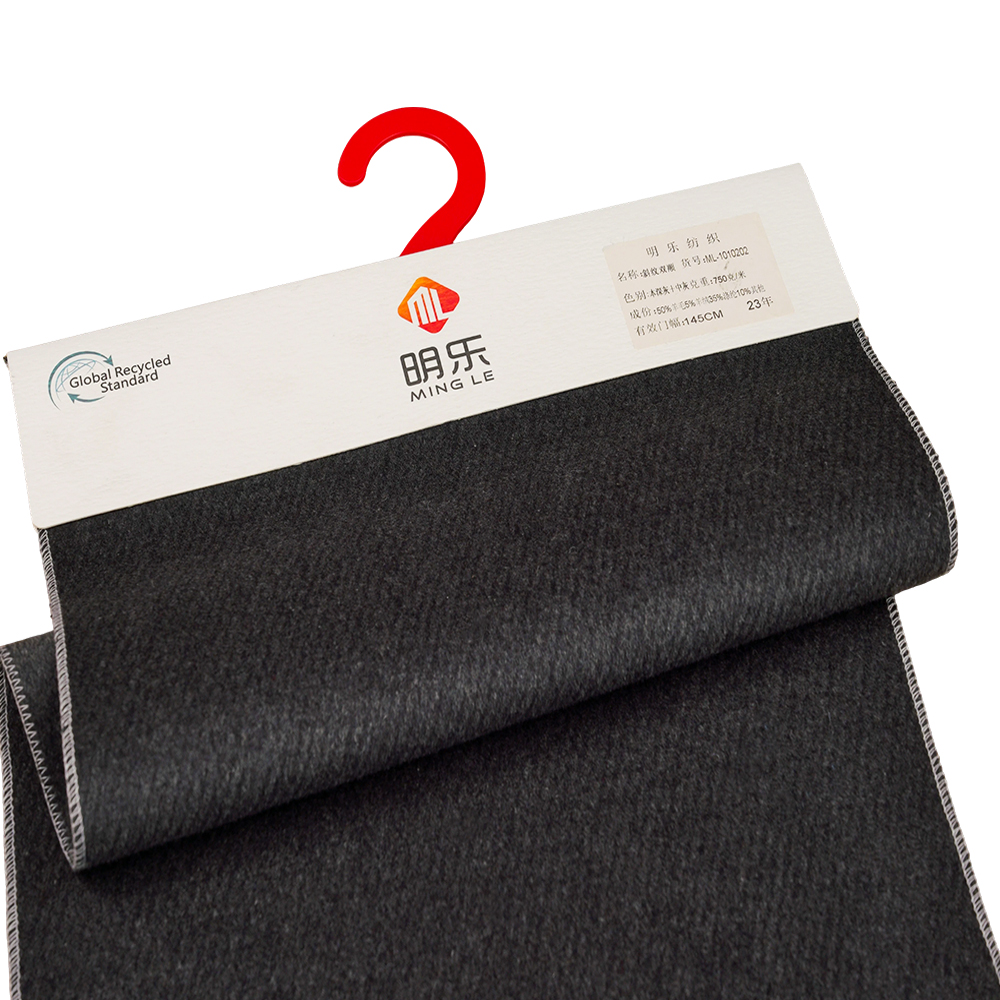 50% Wool, 5% Cashmere, 35% Polyester, 10% Other, Fiber 750G/M, Dark Gray + , Medium Gray, ·Double-sided brushed structure provides consistent surface texture and hand feel. ·Low-saturation neutral tones facilitate easy pairing with different fashion styles....View Product →
Mass per unit area is the fastest indicator of how much fibre sits in the cloth, and it is the one specification you can verify in your own office without a laboratory.
A 750 g/m2 overcoating carries roughly 34% more material per metre than a 560 g/m2 quality. That difference appears as drape, wind resistance and warmth, and it appears in the price as well. To check it, cut a 10 cm by 10 cm square from the swatch, weigh it on a 0.01 g scale and multiply by 100. A 7.6 g square equals 760 g/m2. Most mills work to a tolerance of plus or minus 5%, so anything outside that range is a commercial conversation rather than a rounding error.
The weight band also tells you which construction you are looking at. A quality quoted at 340 g/m2 is a flannel or a light single-face, whatever the page title claims. Understanding what GSM means for a wool coating order saves a long conversation about a cloth that was never going to carry a structured coat.
Melton sits in the middle of that chart, and a quality built on 70% wool, 10% cashmere, 10% polyester and 10% other fibre at 670 g/m2 is the classic compromise: dense enough to hold a tailored shoulder, light enough to press and cut without fighting the machine.
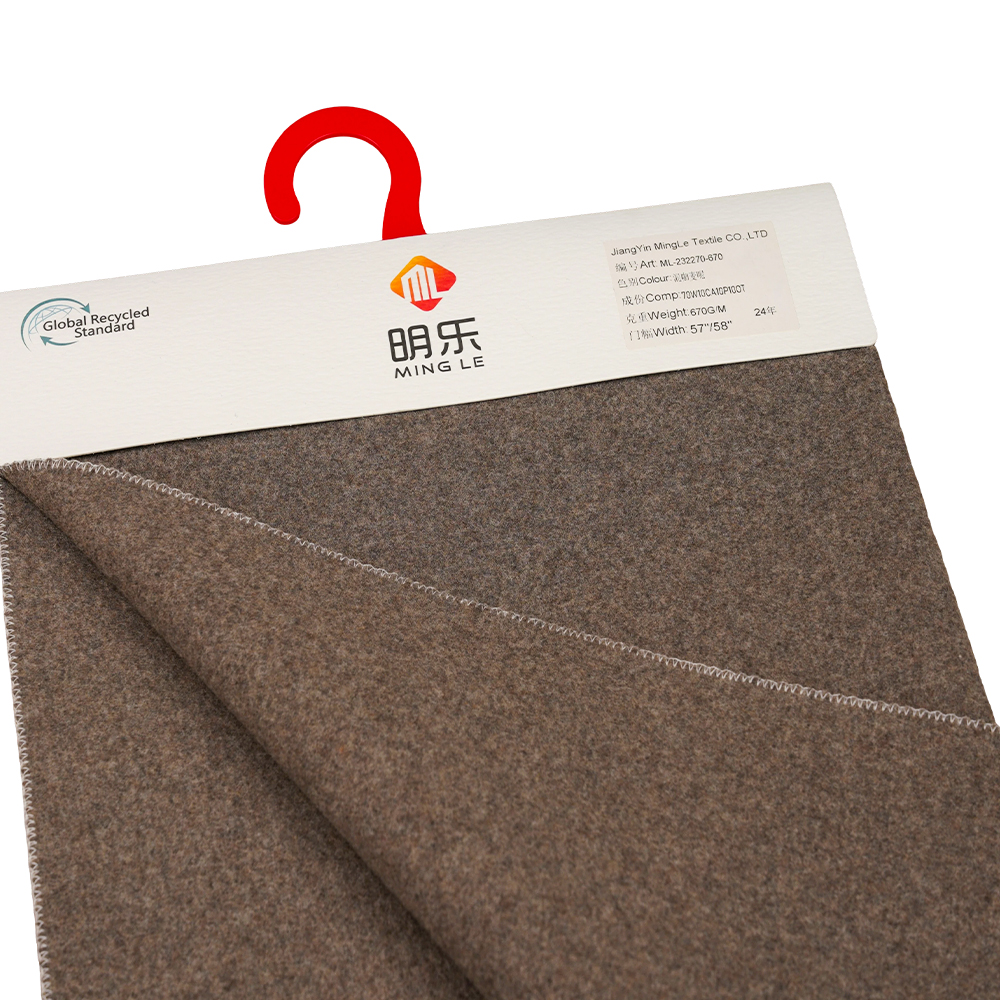 70% Wool, 10% Cashmere, 10% Polyester, 10% Other Fiber, 670G/M, Mixed Coffee, Melton Fabri·Cashmere component increases softness and comfort ·Blended ratio optimizes durability and wrinkle resistance ·Earth tone colors facilitate easy matching with multiple...View Product →
Weave structure and finish control durability, drape and seam behaviour, and neither can be judged from a weight figure on its own.
Two woven layers are bound together during weaving, producing a reversible cloth that needs no lining and finishes cleanly at the edge. Coarse-spun double-face overcoating usually runs 720 to 870 g/m2. It is also less forgiving to cut: double-face overcoating fabric placed on the bias moves more than a laminated equivalent, so confirm the grain line before the marker is made.
Melton is milled hard and pressed, which closes the surface, raises wind resistance and hides seam bulk. Weights run 560 to 800 g/m2. Twill melton adds a diagonal structure that makes the same weight slightly more pliable, which helps on narrow lapels and stand collars.
Flannel is brushed, lighter and normally 300 to 420 g/m2, which makes it a lining or autumn-coat cloth rather than a deep-winter shell. A striped quality such as 53% wool and 47% polyester at 350 g/m2 needs one extra check: stripe direction and repeat must be confirmed on a physical sample, because a reversed stripe across a panel cannot be fixed after cutting. Upright pile runs heavier at 645 to 860 g/m2, with a raised surface that adds loft and warmth.
 53% Wool, 47% Polyester, 350G/M, Zhiqing + White, Vertical Striped Flannel Fabric, ML-3172·Wool and polyester blend balances warmth and wrinkle resistance. ·Vertical stripe design visually elongates lines and refines the silhouette. ·Unit weight of 350G/M o...View Product →
Five test reports cover nearly every risk in a wool coating order, and a mill that cannot produce them within a week should not stay on the shortlist.
Commercial terms are part of the specification, because the same 750 g/m2 cloth can be quoted at two prices when tolerance, MOQ and inspection standards differ.
Two mills quote 750 g/m2 double-face overcoating at prices 12% apart. One states weight tolerance at plus or minus 5%, ships plus or minus 1 m per roll and approves colour from digital images. The other measures within plus or minus 3%, records roll length and width, and approves colour on a physical lab dip. The second quote is not more expensive. It is more specific, and in coat fabric sourcing the specification is the product.
Six checks close the gap between a promising swatch and a repeatable bulk order, and they take about two hours in total.
Keep that sealed sample. It settles most disputes about shade, weight and hand without a third-party laboratory.
Plus or minus 3% is a reasonable commercial target, and plus or minus 5% is common for coarse-spun qualities. Anything beyond 5% should trigger a price adjustment, because a 750 g/m2 overcoating delivered at 690 g/m2 is 8% less fibre for the same money.
No. Wool percentage drives warmth, hand and cost, while polyester adds abrasion resistance and shape retention. A 50% wool, 40% polyester blend at 720 g/m2 can outperform a thinner 70% wool quality in a hard-wearing commuter coat, and it costs noticeably less per metre.
Between 560 and 870 g/m2 for structured overcoats. Melton, twill melton and double-face qualities sit inside that band. Flannel runs 300 to 420 g/m2 and suits lighter coats, linings and transitional outerwear.
At least three qualities across two weight bands. That is usually enough to see whether a price difference comes from fibre content, weight or finish, rather than from a supplier's overhead structure.
A wool fabric order is only as safe as the field you left blank. Write the six fields down, weigh the swatches yourself, request dated test reports, and pin tolerance, MOQ and lead time into the quotation. Suppliers who can answer all of that on a single page are the ones whose bulk shipments match the sample that won you the order.
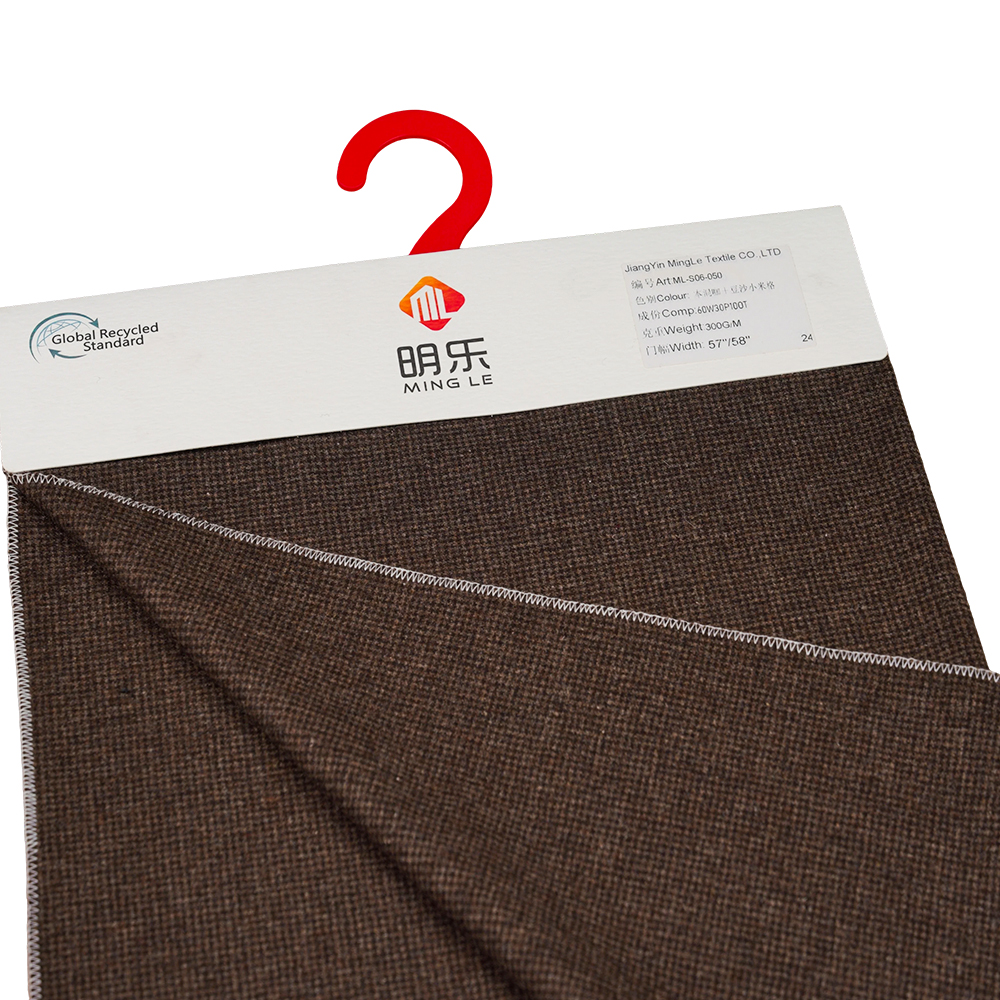
ML-S06-050 Flannel Fabric: 300g/m Wool Blend, Classic Brown CheckThis flannel f...
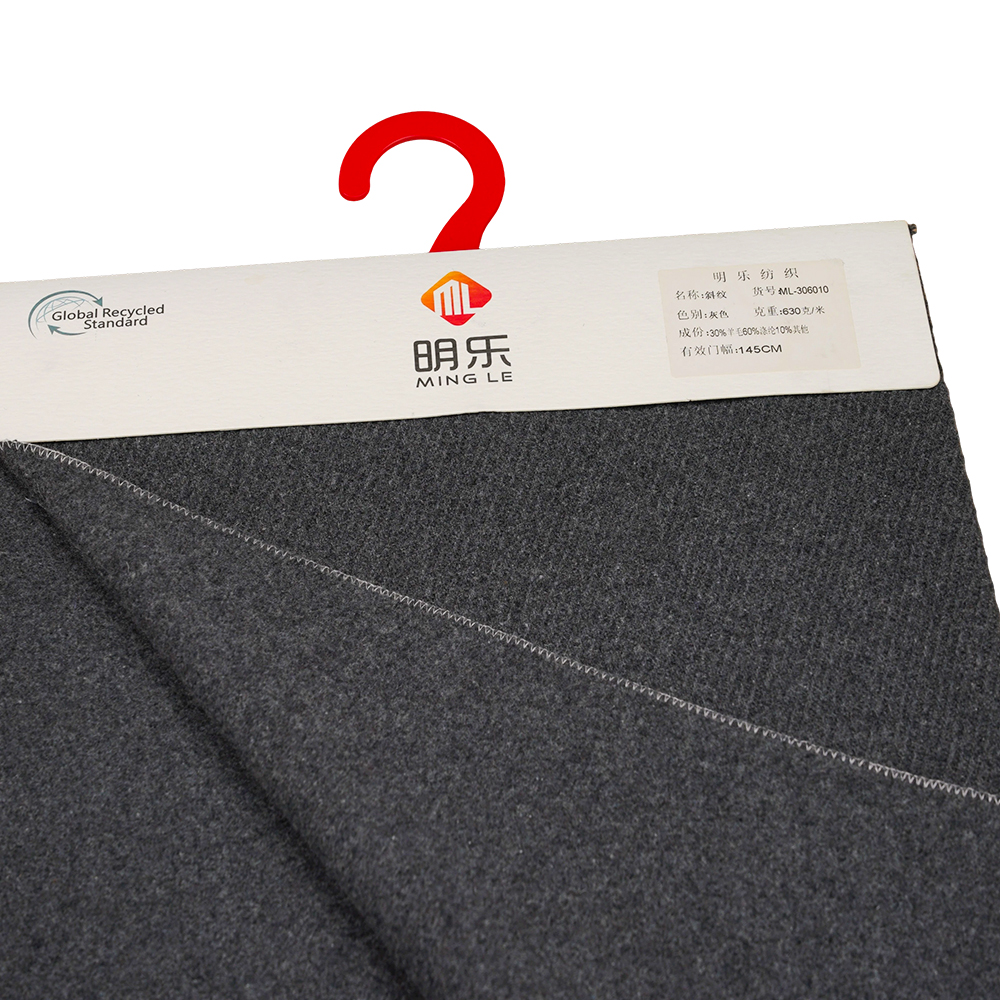
Gray Twisted Wool-Melton Fabric: 630g Weight Wool Blend for Versatile Business a...
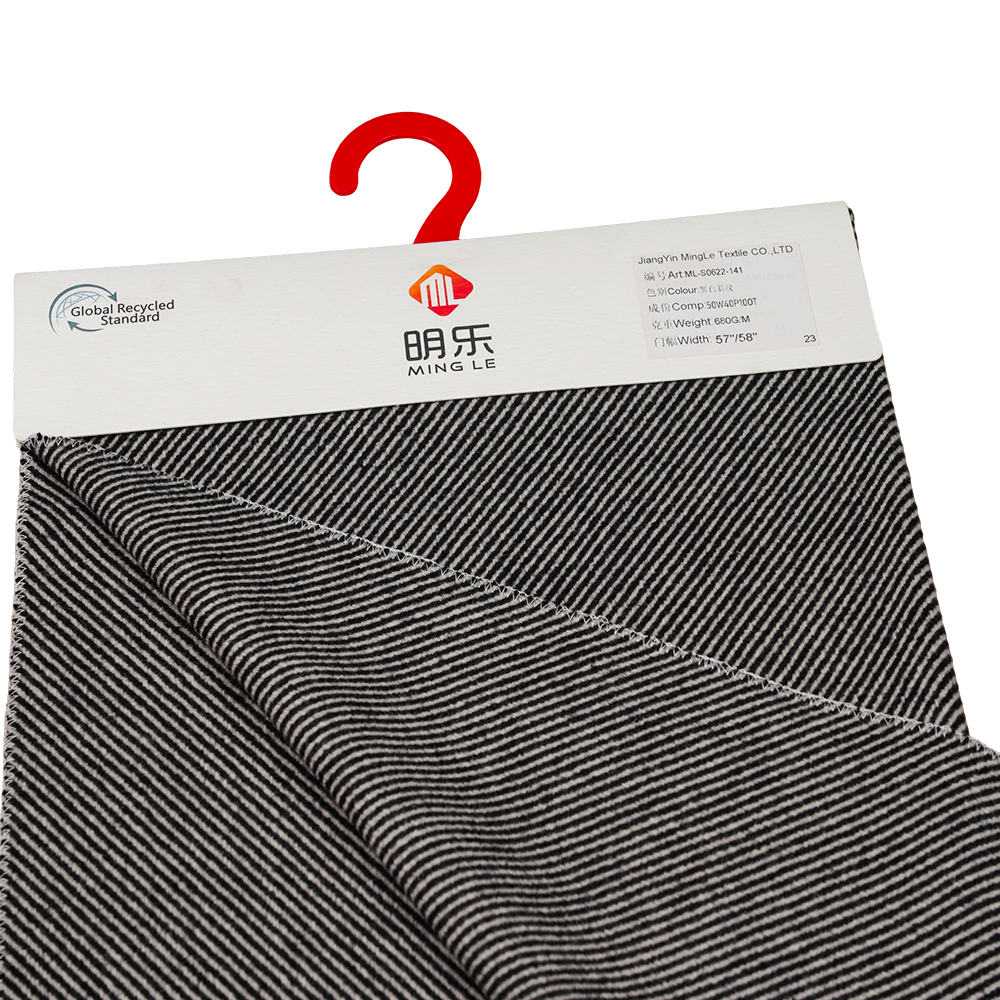
50% Wool 40% Polyester 10% other fiber680G/M Black White Twill Melton Fabric | S...
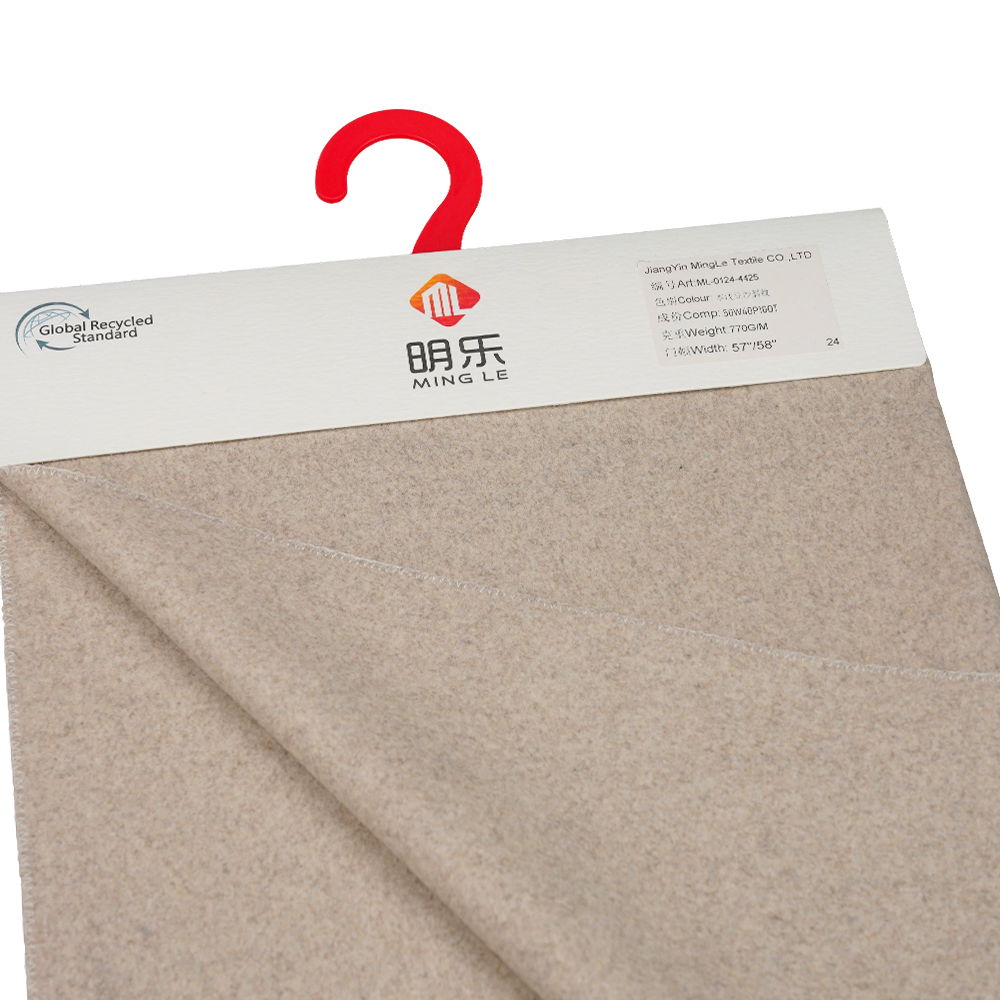
50% Wool, 40% Polyester, 10% other fiber, 770g/m Natural Light Bean Paste Twill ...
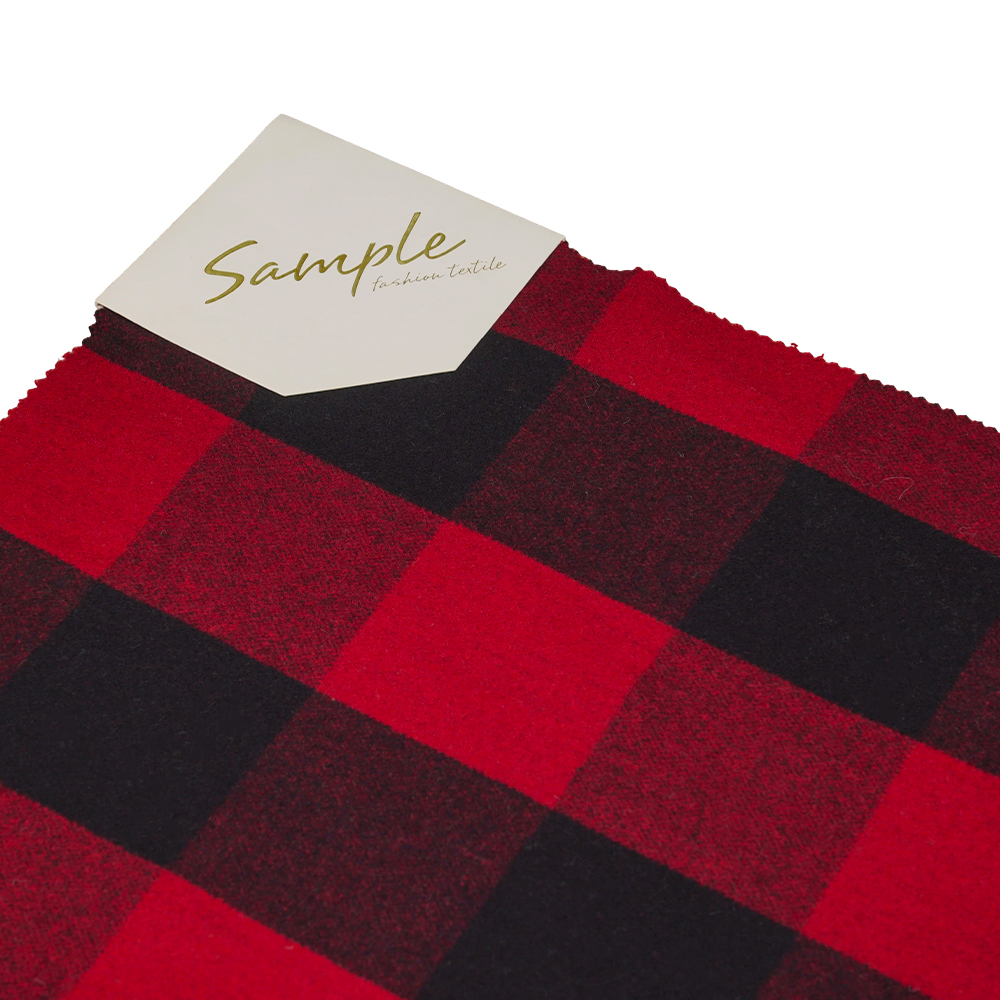
Black Red Plaid Wool Blend Fabric: 760gsm Wool Mix MaterialThis wool blend fabri...
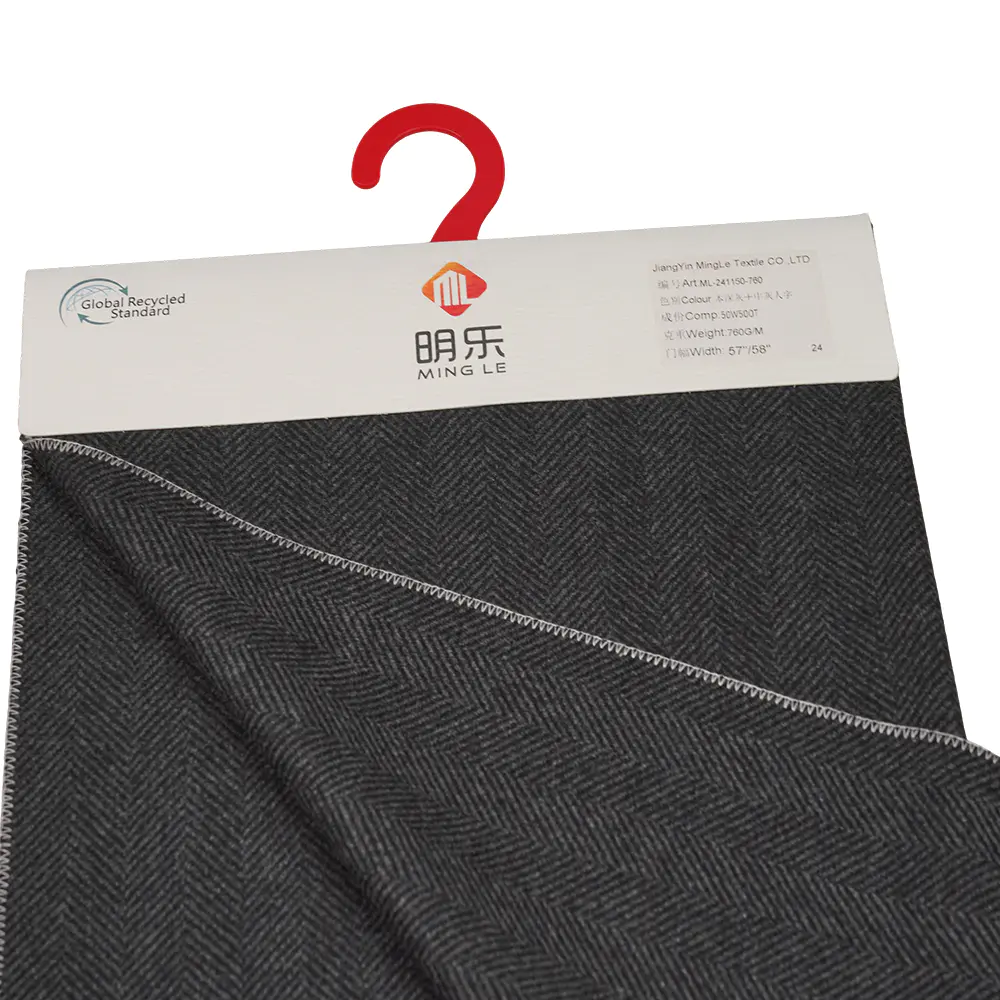
Classic Dark Gray Check Herringbone Melton Fabric – 50% Wool 50% other fiber, 76...
 +86 - 510 - 86373115
 +86 - 13812129532
 No. 118, Huancun West Road, Huaxi Fifth Village, Huashi Town, Jiangyin City, Wuxi City, Jiangsu Province, China


