News
Home > News > Industry News > Engineering Durability: Structural Integrity and Loft Retention of Fluffy Double Knit Wool

Engineering Durability: Structural Integrity and Loft Retention of Fluffy Double Knit Wool

Mechanical Architecture of Double-Knit Interlocking Systems

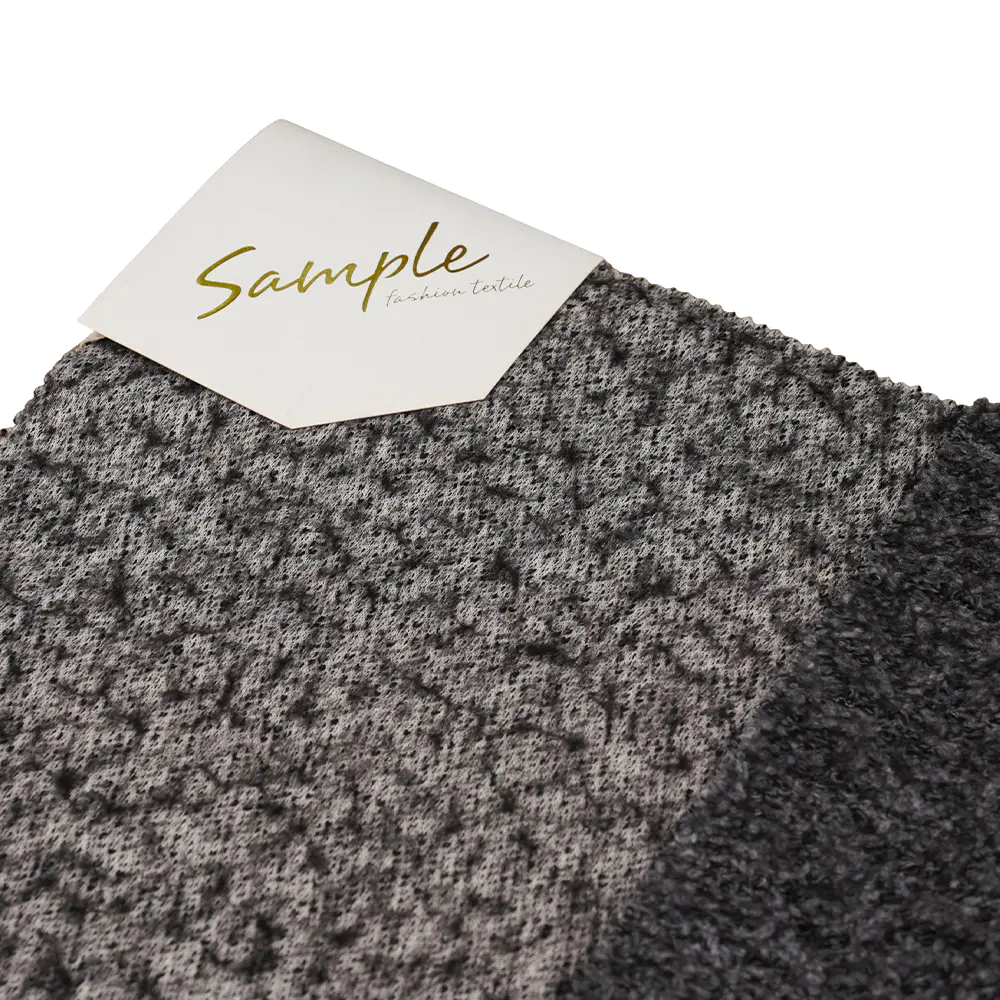
  1. The primary factor allowing fluffy double knit wool to maintain its structural height is the specialized interlocking loop configuration. Unlike single-jersey constructions, this fabric utilizes two sets of needles to create two integrated layers. This dual-face geometry acts as a mechanical truss system, significantly improving the dimensional stability of knit wool under external pressure.
  2. When considering how fluffy double knit wool maintains loft, engineers analyze the yarn displacement within the stitch. The double-knit structure creates a series of internal chambers that trap air. Because the two layers are tethered by crossover stitches, the fabric resists the flattening effect common in less complex knits. This ensures the long-term loft of woolen textiles remains consistent even after extensive periods of storage or wear.
  3. The elastic recovery of double knit wool is a direct result of the combined mechanical stretch of the knit and the natural resilience of the wool fiber. Each loop acts like a micro-spring; when compressed, the stored energy in the fiber's cortex facilitates a return to the original 3D state. This shape retention of fluffy wool is measured by the percentage of thickness recovered after a standard 24-hour compression test under ISO 5085-1.

Fiber-Level Resilience: Crimp Dynamics and Micromodule Stability

  1. At a microscopic level, the resilience of wool fibers in knitwear is governed by the bilateral structure of the ortho-cortex and para-cortex. This natural crimp is what provides the "fluffy" tactile response. In a double-knit configuration, these crimped fibers are less constrained than in a woven fabric, allowing for superior air trapping in double knits while maintaining a dense, protective barrier.
  2. The pilling resistance of fluffy knit wool is often a concern due to the raised surface fibers. However, by optimizing the twist multiplier of the yarn and the tightness factor of the double-knit machine, manufacturers can lock the fibers into the yarn core. This technical balance ensures that the durability of fluffy wool fabrics meets industrial standards (typically Grade 3-4 on the Martindale scale) without sacrificing the soft, voluminous hand-feel.
  3. To understand the compression recovery of technical wool, it is necessary to evaluate the yarn's micron count. Using wool fibers with a diameter of 19.5 to 21.5 microns provides the optimal balance between softness and the structural rigidity required to support the double-knit architecture against permanent deformation.
Structural Parameter Fluffy Double Knit Wool Standard Single Knit Wool
Air Chamber Volume High (Double-layer Void) Low (Surface Only)
Compression Recovery Rate Greater than 85% Less than 65%
Fabric Density (GSM) 350 - 600 150 - 300
Dimensional Skewing Potential Minimal (Balanced Torque) High (Unbalanced Loops)

Performance Metrics for Industrial Garment Manufacturing

  1. The breathability of double knit wool remains high despite the increased thickness. The vertical channels between the two layers of the fluffy double knit wool allow for efficient moisture vapor transmission (MVTR), preventing heat saturation during physical activity. This makes it an ideal material for technical mid-layers where both thermal insulation and moisture management are required.
  2. For industrial production, the weight to warmth ratio of wool knits is a key metric. Double-knit technology allows for the creation of high-volume fabrics with relatively low mass. By manipulating the "tuck" stitches within the double-knit cycle, engineers can increase the "fluffiness" or loft without increasing the total yarn consumption per square meter.
  3. Finally, the wrinkle resistance of fluffy double knit structures is significantly higher than that of woven alternatives. The inherent flexibility of the interlocking loops means that the fabric can be folded or compressed without sustaining permanent crease lines, supporting the garment's aesthetic longevity in high-frequency usage scenarios.

Engineering FAQ

  1. How is the loft of fluffy double knit wool measured? Loft is typically quantified using a thickness gauge under specified pressures (e.g., 0.1 kPa vs 10 kPa) to determine the fabric's compression modulus.
  2. Does the double-knit structure prevent the fabric from curling? Yes, the balanced tension between the face and back layers eliminates the edge-curling phenomenon found in single-jersey knits.
  3. What is the typical GSM for a mid-weight fluffy double knit? A standard mid-weight technical wool knit usually falls between 380 GSM and 450 GSM.
  4. How does washing affect the fluffiness? If washed according to ISO 6330 (wool cycle), the fibers re-swell and the double-knit structure helps the loops return to their original three-dimensional orientation.
  5. Is double-knit wool more wind-resistant? Due to the overlapping loop structure of the two layers, it offers significantly higher wind resistance than single-knit fabrics of the same fiber composition.

Technical References

  1. ISO 5085-1: Determination of thermal resistance - Low thermal resistance textiles.
  2. ASTM D3887: Standard Specification for Tolerances for Knitted Fabrics.
  3. BS EN 14971: Textiles - Knitted fabrics - Determination of number of stitches per unit length and unit area.