

 English
 中文简体
News
Home > News > Industry News > Matching Wool Fabric Weight and Fiber Composition to Coat Designs: A Guide

Content
A coat pattern drafted for 780 GSM double-face wool will sag at the shoulder if the mill substitutes 620 GSM melton, even when both rolls carry the same 100% wool label. The pattern does not read the fibre label. It reads the weight, the thickness and the recovery of the cloth laid on the cutting table.
Knowing how to match wool fabric weight and fiber composition to coat designs means treating cloth as a structural decision rather than a swatch decision. Weight sets drape, seam construction, interfacing and lining. Composition sets hand-feel, warmth per gram, pilling behaviour after a season of wear, and unit cost. Solve the weight band first, then choose the blend that fits the price target inside that band.
The reference numbers in this guide come from the production range of Jiangyin Mingle Textile Co., Ltd., a coarse spun wool coating manufacturer in Jiangyin, Jiangsu, whose overcoating lines run from 300 GSM flannel to 870 GSM double-face cloth. That 2.9x spread covers nearly every coat silhouette, and the matching rules below are what separate a sample that sells from a sample that gets returned.
Weight and composition are not interchangeable levers. Weight controls the architecture of the coat; composition controls how that architecture feels, ages and prices out.
Shift a design 100 GSM lighter and the shoulder loses its roll, the front edge needs a lighter fusible, and the sleeve head has to be re-shaped. Shift it 100 GSM heavier without touching the pattern and the same coat gains roughly 350 g of total garment weight, which reads as drag at the neckline and a stiffer break at the waist.
GSM is the mass of one square metre of finished cloth, measured after milling, drying and pressing. Two rolls woven from the same yarn can land 40-60 GSM apart after different finishing routes, so coating weight is always specified on the finished piece, never on the greige.
Composition cannot rescue a wrong weight. A 70% wool melton at 620 GSM will not hold a structured shoulder drafted for 780 GSM double-face cloth, no matter how much wool sits in the blend. Weight cannot rescue a wrong composition either: a 780 GSM coating with 30% wool can feel boardy in the hand and pill along the sleeve within a month of wear.
Read the GSM on the finished roll, then let the silhouette choose the weight band. Price targets are applied inside the band, never across it.
Each coating family sits at a different mid-range weight, and the gap between families is wide enough that one coat pattern cannot simply be cut in two different cloths without a re-fit. Flannel runs light at 320-420 GSM; double-face cloth runs 720-870 GSM, roughly twice the mass per square metre.
Weight bands are tighter than most buyers expect. A 60 GSM gap between ordered and delivered cloth is usually recoverable through pressing and a small allowance change. A 150 GSM gap is a re-cut, a new fusible and a new lining, and it normally surfaces after the sample has already been signed off.
| Coat silhouette | Working weight band | Matched structure |
| Lightweight spring overcoat | 320-420 GSM | Single-face flannel with a bonded front |
| Tailored city topcoat | 560-680 GSM | Single-face overcoating or twill melton, half canvas |
| Compact winter coat | 650-800 GSM | Melton with a pressed or loden finish |
| Structured double-face coat | 720-870 GSM | Double-face cloth, unlined, hand-finished seams |
| Oversized blanket coat | 750-870 GSM | Upright pile or heavy double-face cloth |
The 320-420 GSM band is where flannel lives, and it is the band most often mismatched to a structured coat pattern. A 340 GSM camel flannel works as a light overcoat shell, but it needs a bonded front and a heavier lining once the wearer expects city-coat warmth.
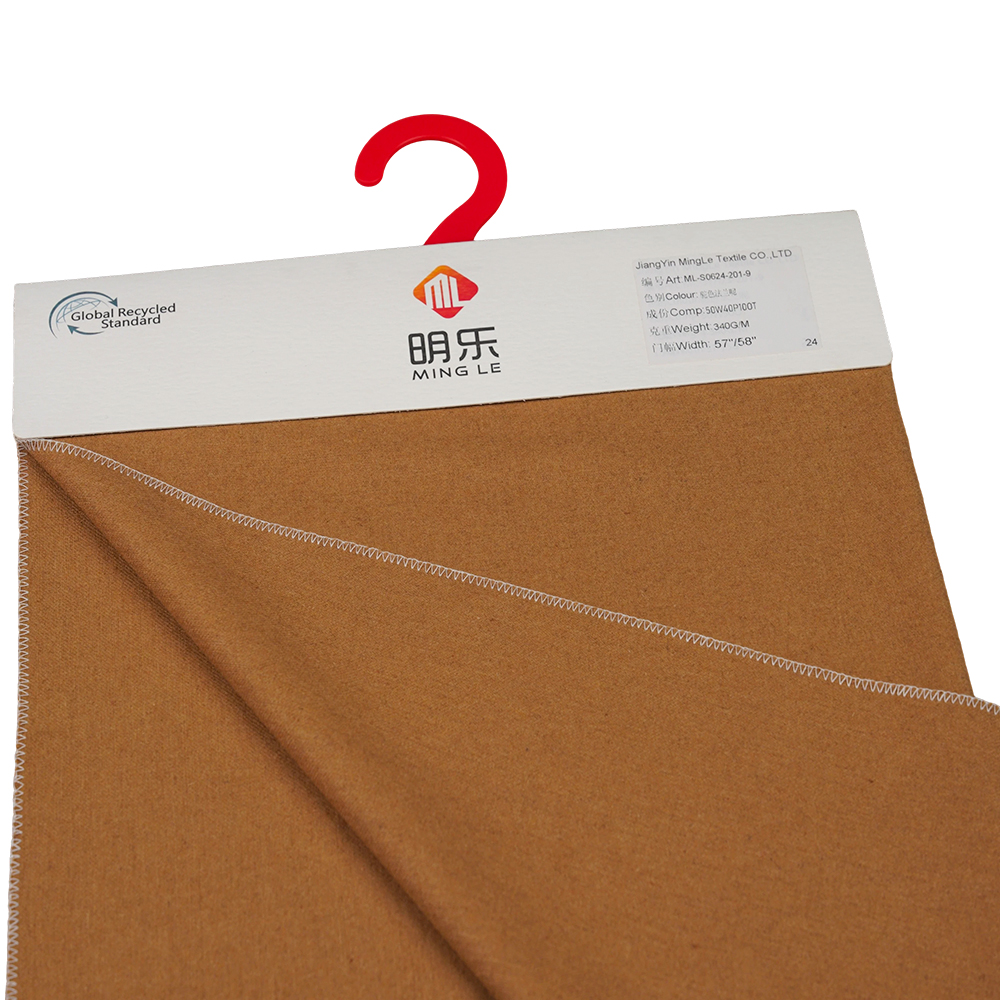 50% Wool, 40% Polyester, 10% Other Fiber, 340G/M, Camel, Flannel Fabric, ML-S0624-201-9·Balanced blend composition: Wool provides warmth, polyester enhances durability, and other fiber improves cost-effectiveness. ·Moderate weight: 340 GSM specification ...View Product →
Every figure above is measured on finished cloth. For the measurement method itself, including why the same yarn can finish 40-60 GSM apart, this guide to GSM in wool coating fabric selection explains the verification side.
Wool content buys recovery and hand-feel, polyester buys dimensional stability and price, and cashmere buys softness in small doses.
Composition is usually decided by the target retail price, but the practical limits are tighter than the price grid suggests. Below about 30% wool, a coating loses the elastic recovery that keeps elbows and seat panels from bagging. Above about 50% wool, breathability and hand-feel improve quickly, and so does the cost of every metre.
| Composition | Typical weight | Coat program fit | Effect on the coat |
| 30% wool / 60% polyester / 10% other | 560-630 GSM | Entry single-face and melton coats | Stable and low cost, drier hand, less drape |
| 50% wool / 40% polyester / 10% other | 680-770 GSM | Mid-tier structured topcoats | Workhorse blend with a strong cost-to-drape ratio |
| 70% wool / 10% cashmere / 10% polyester / 10% other | 670 GSM | Premium compact melton coats | Denser hand, stronger recovery, higher unit cost |
| 50% wool / 5% cashmere / 35% polyester / 10% other | 750 GSM | Soft double-face coats | Softer surface, suits unlined construction |
| 20% wool / 70% polyester / 10% other | 800 GSM | Upright pile and blanket coats | Colour clarity and volume, less warmth per gram |
The category listed as other fiber is not a rounding error. In most coarse spun coatings it is viscose, acrylic or reclaimed wool, and that mix changes pilling performance, colour depth and how the cloth behaves after the first dry clean. Ask for the exact breakdown before a bulk order is approved.
A 10% cashmere substitution rarely changes how a coat wears. A 20% drop in wool content almost always does.
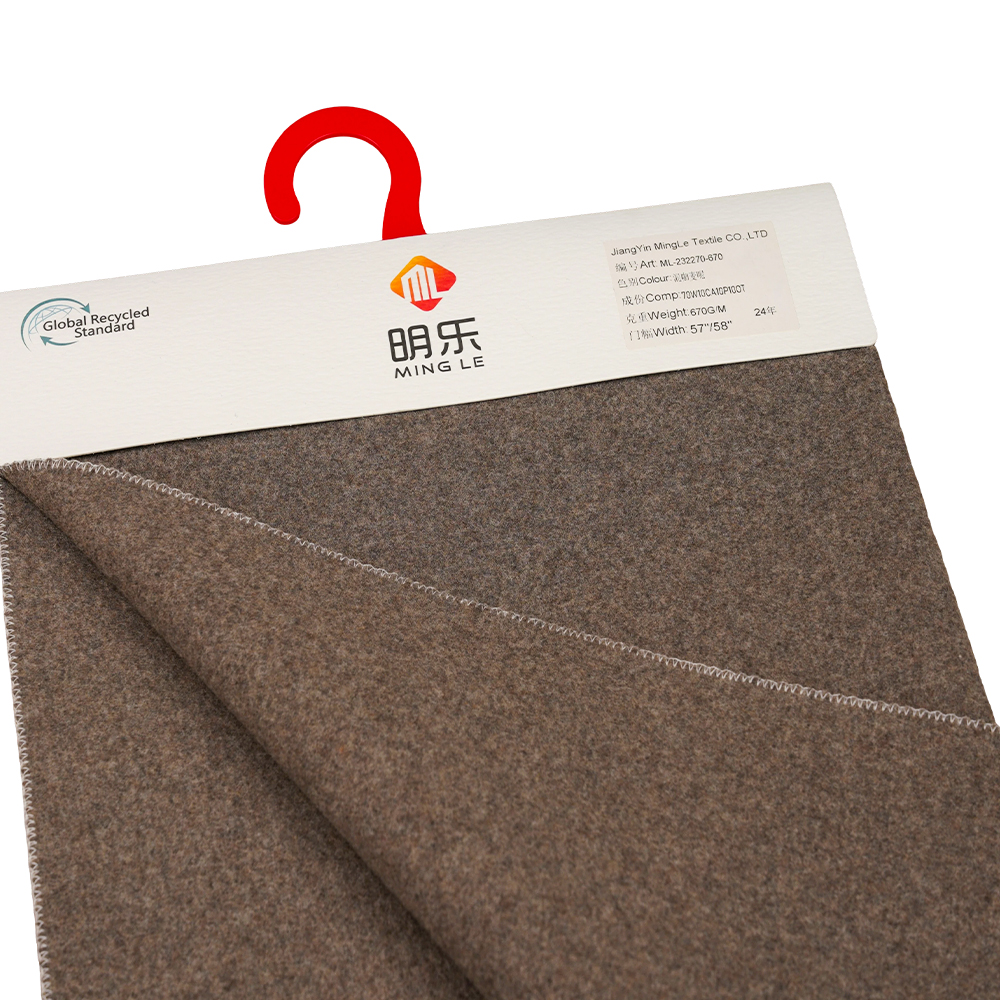 70% Wool, 10% Cashmere, 10% Polyester, 10% Other Fiber, 670G/M, Mixed Coffee, Melton Fabri·Cashmere component increases softness and comfort ·Blended ratio optimizes durability and wrinkle resistance ·Earth tone colors facilitate easy matching with multiple...View Product →
The same coat design needs roughly 80-120 GSM more cloth when it is built double-face, because the two bonded layers replace the lining and much of the canvas that a single-face coat depends on.
Double-face construction
Single-face construction
The practical consequence is a cloth budget swing of 15-25% per coat. Design teams that match a 620 GSM single-face fabric to a double-face pattern usually end up adding a lining to save the sample, which removes the reason the double-face pattern existed in the first place.
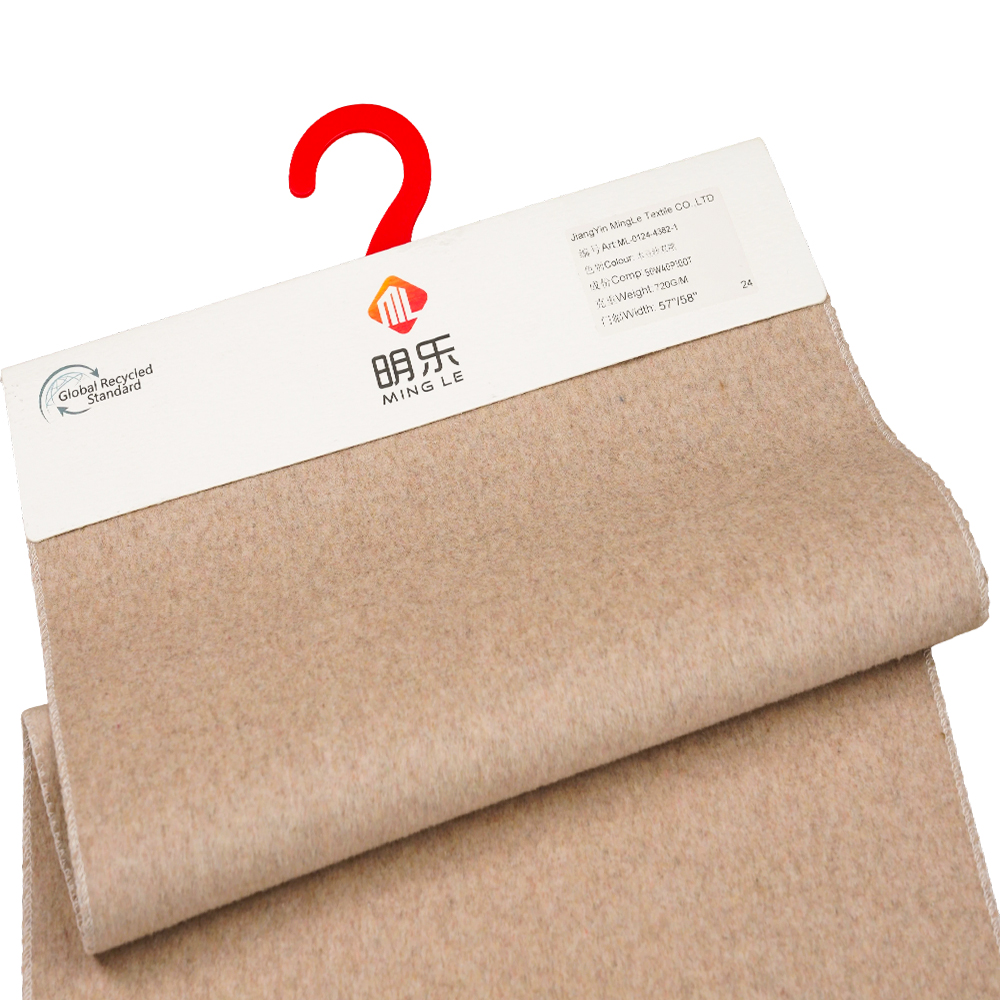 50% Wool , 40% Polyester , 10% Other Fiber, 720G/M, Bean Paste Color, Thick Double-Sided W·Gentle Color: The bean paste hue is soft and versatile, complementing the skin tone and highlighting the wearer's elegant demeanor. Thick and Comfortable: 720g/m high...View Product →
Match in four steps: lock the silhouette, convert it into a weight band, shortlist two blends inside that band, and test on a sewn sample rather than a swatch.
Fix the silhouette and the target garment weight
Decide whether the coat is a 900 g city topcoat or a 1.4 kg oversized layer. Lining, canvas and trim choices all follow from that single number.
Convert garment weight into a fabric band
Divide by consumption per coat, then add 8-10% for shrinkage and seam loss. A 1.1 kg coat at 2.0 m consumption lands in the 560-620 GSM band.
Shortlist two compositions inside the same band
Order both in the same colourway. Comparing a 50% wool blend against a 70% wool blend at identical weight shows the buyer exactly what the extra wool content buys.
Test on a finished sample, not a swatch
Dry clean it, hang it for 24 hours, then check shoulder drop, pilling and seam impression. Swatch cards never show how a coating behaves under a fusible or a press.
No. Warmth depends on trapped air rather than mass. An 800 GSM upright pile fabric with 20% wool can feel warmer than a 700 GSM compact melton with 70% wool, because the pile structure holds more still air. Weight predicts drape and durability far more reliably than it predicts warmth.
Not for every coat program. Blends in the 50% wool / 40% polyester range hold their shape after pressing, resist pilling in high-friction areas, and cost less per metre. Pure wool earns its premium in hand-feel and breathability, which matter most on unlined double-face coats.
Plan for 8-10% on weight and 40-60 GSM on the finished roll. The weight allowance covers shrinkage and seam loss; the GSM tolerance covers normal finishing variation between dye lots.
Yes, as a light overcoat or a mid-layer piece, but not as a standalone winter coat in a cold climate. Pair it with a bonded front and a heavier lining, or move up to the 560-680 GSM single-face band.
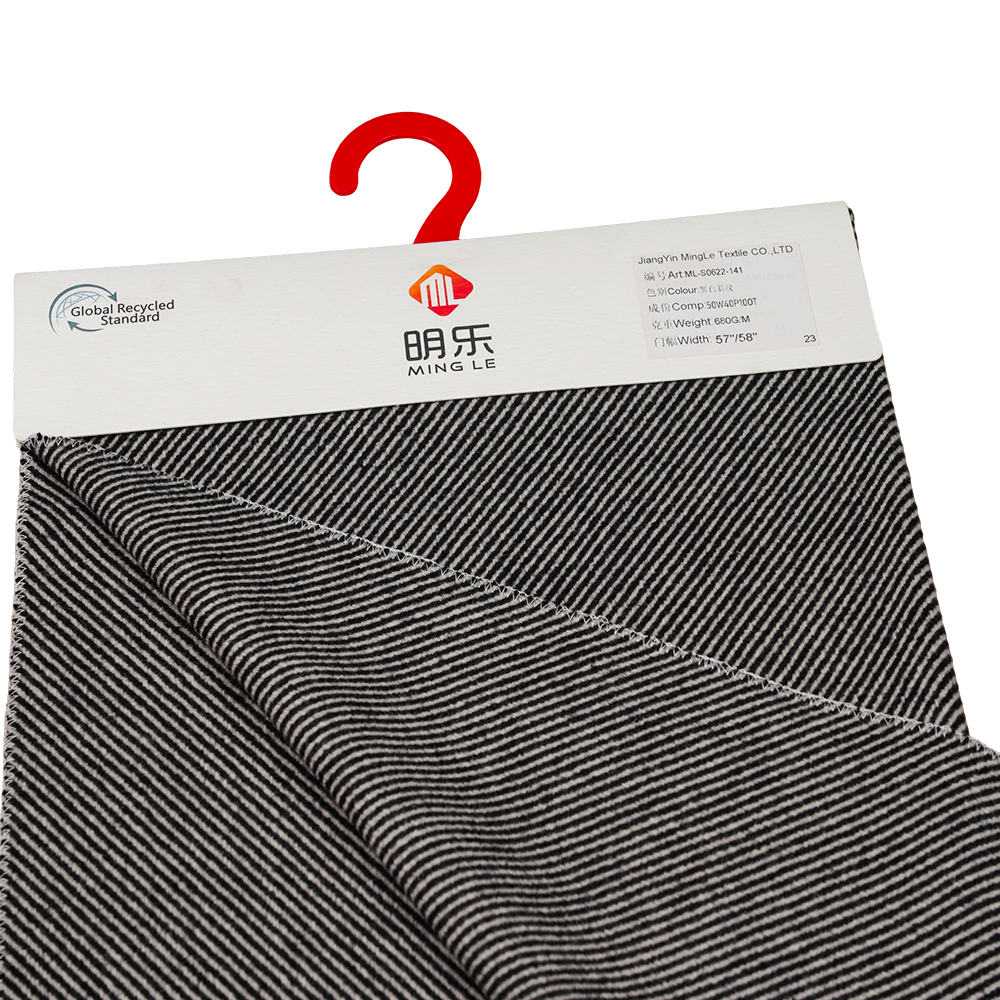
50% Wool 40% Polyester 10% other fiber680G/M Black White Twill Melton Fabric | S...
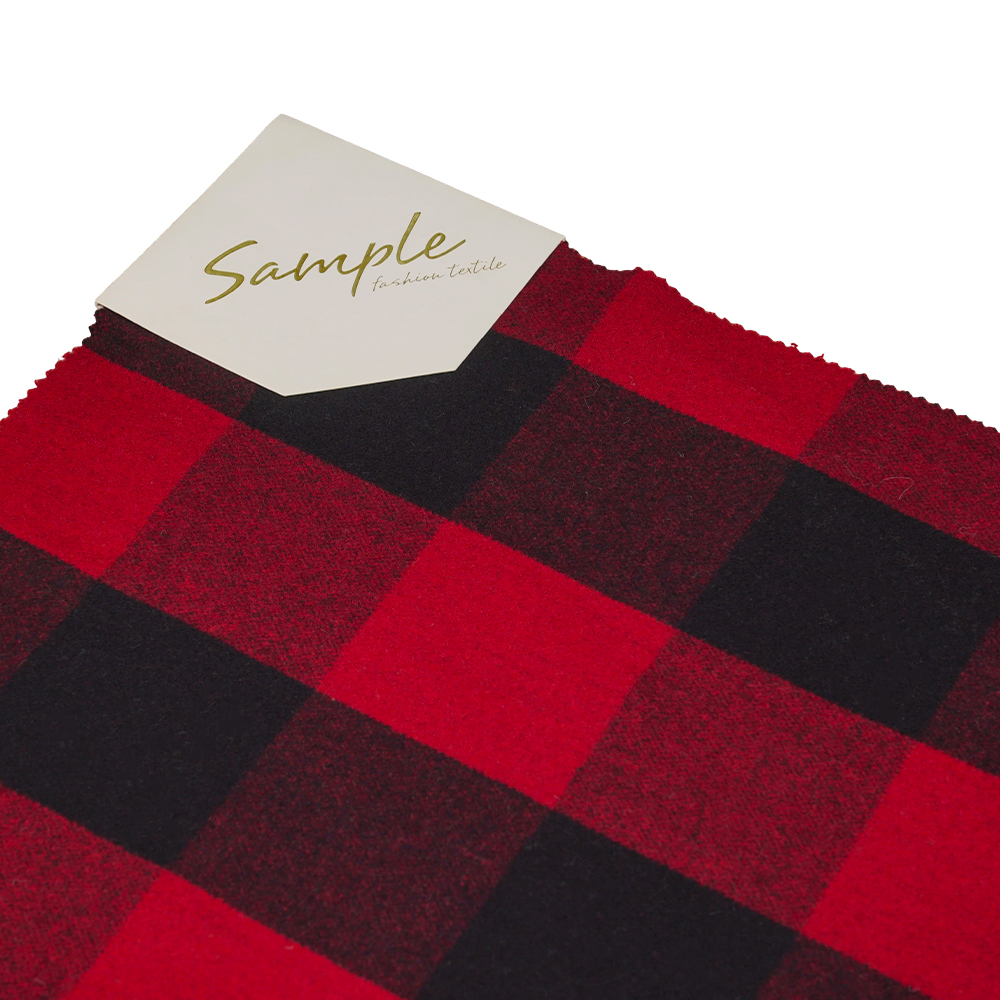
Black Red Plaid Wool Blend Fabric: 760gsm Wool Mix MaterialThis wool blend fabri...
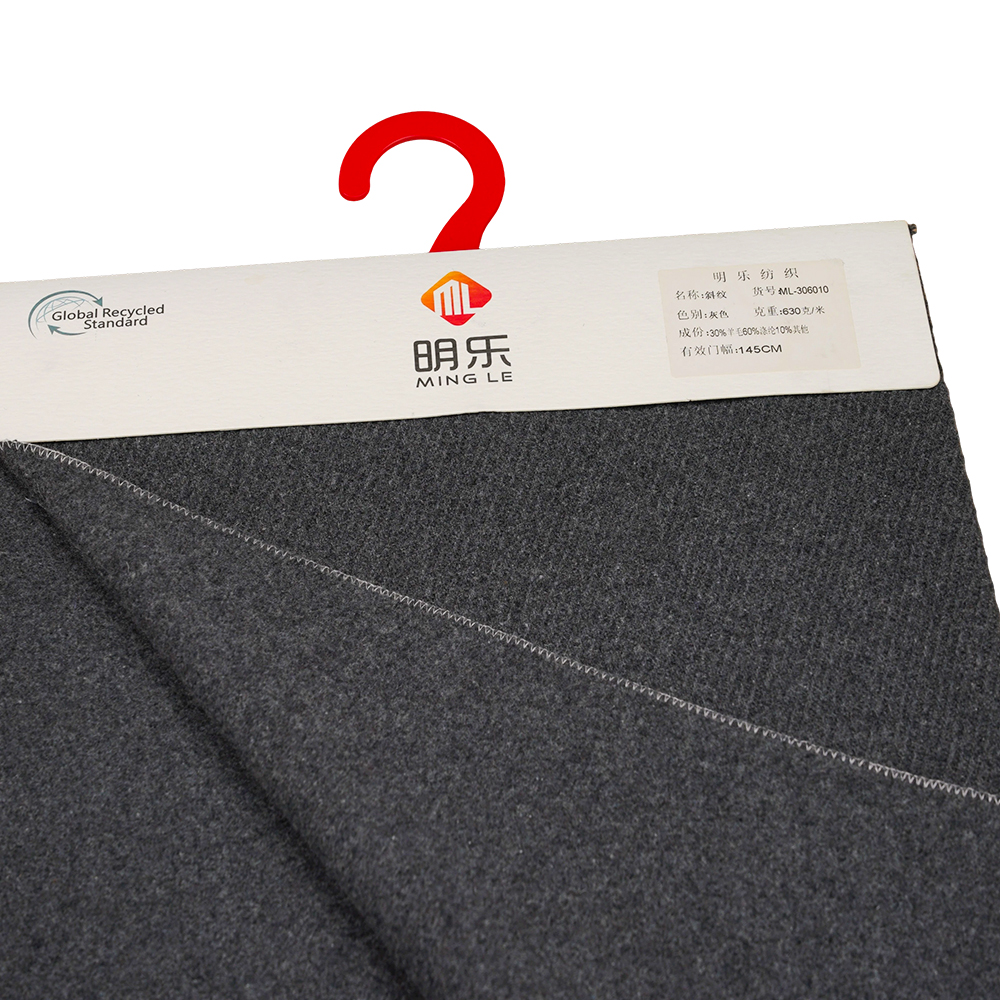
Gray Twisted Wool-Melton Fabric: 630g Weight Wool Blend for Versatile Business a...
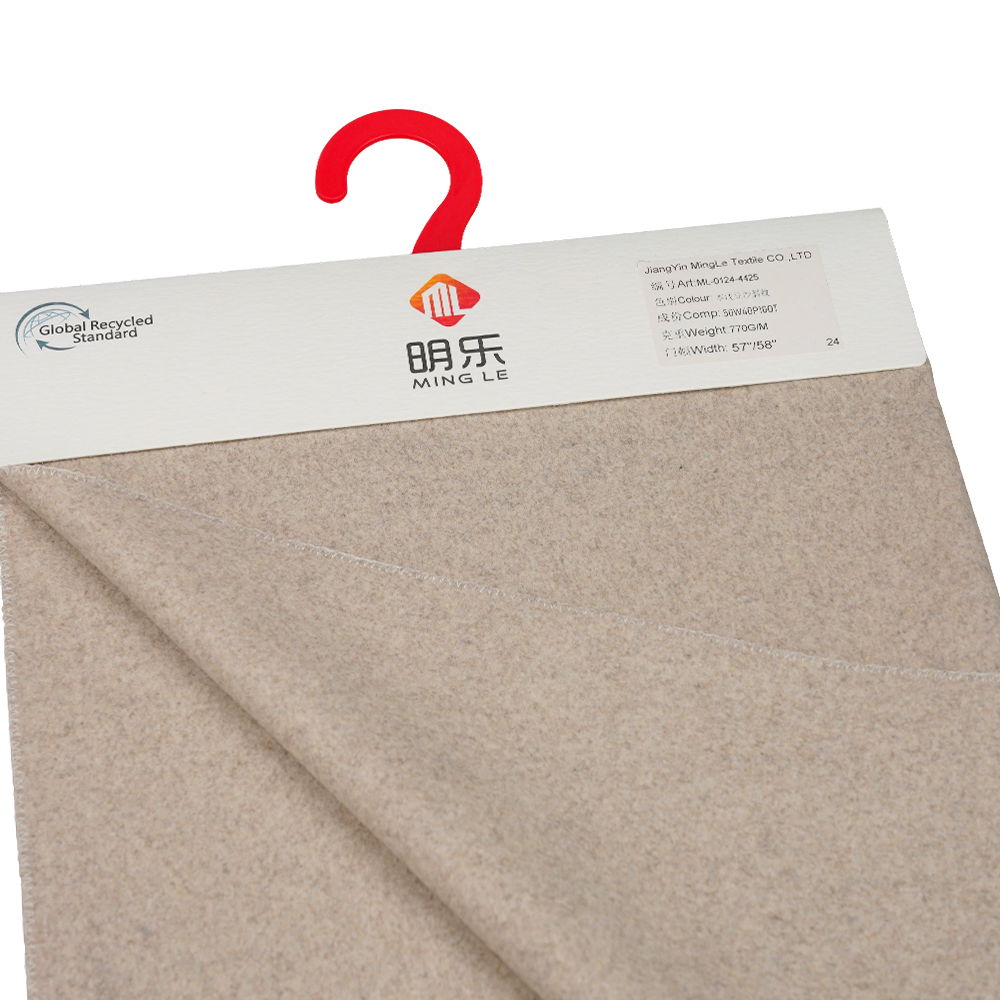
50% Wool, 40% Polyester, 10% other fiber, 770g/m Natural Light Bean Paste Twill ...
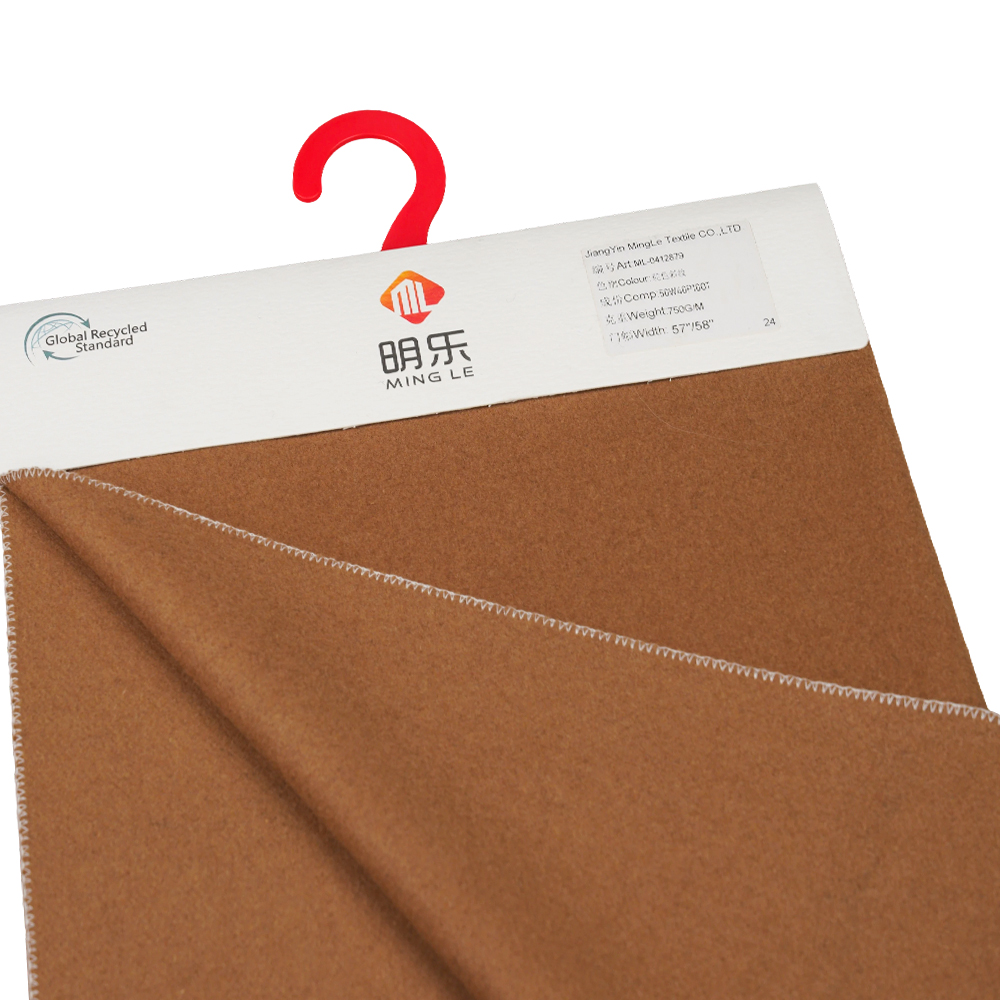
ML-0412879 Camel Twill Fabric: 730g/m 50% Wool, 50% other fiberThis ML-0412879 f...
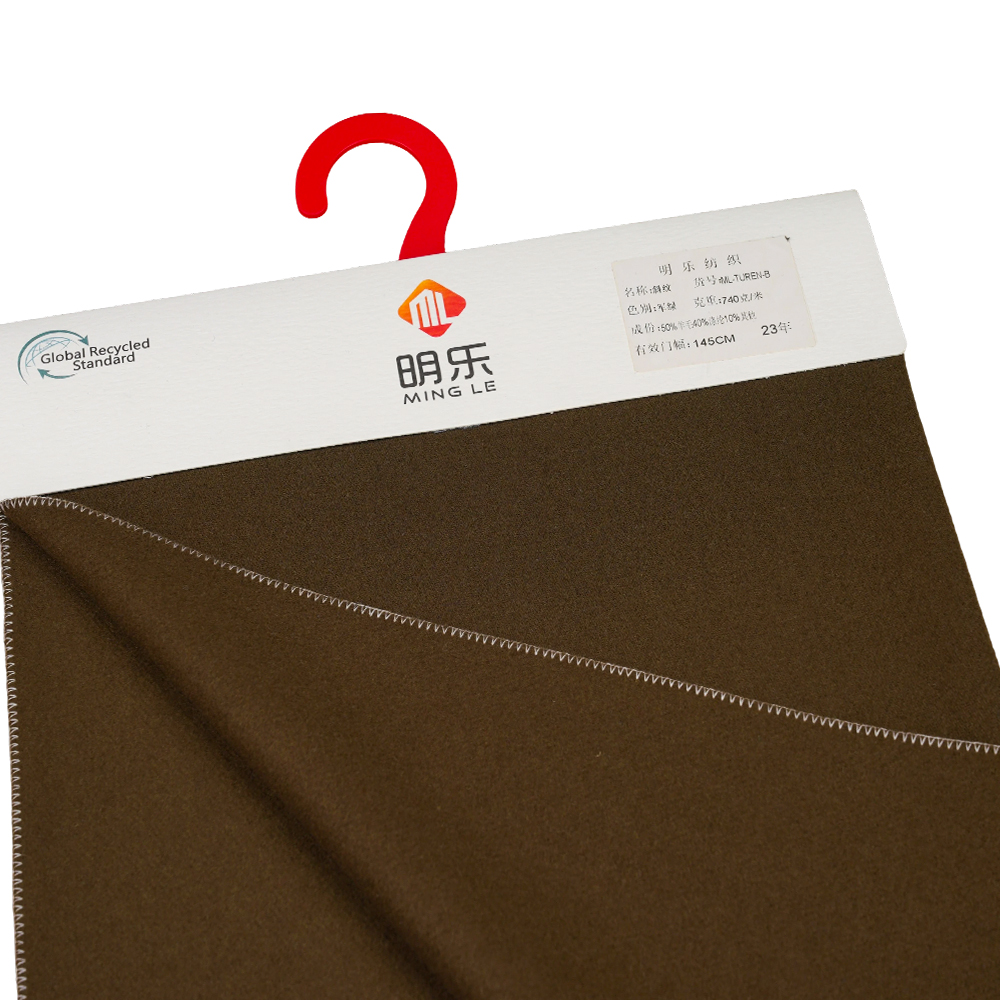
Military Green Twill Fabric: 740g Wool Blend, Suitable for Versatile UseThis mil...
 +86 - 510 - 86373115
 +86 - 13812129532
 No. 118, Huancun West Road, Huaxi Fifth Village, Huashi Town, Jiangyin City, Wuxi City, Jiangsu Province, China


