

 English
 中文简体
中文简体News
Home > News > Industry News > Double-Face Construction Explained: Comparing Fancy Double-face Overcoating Fabric with Single-Face and Conventional Double Cloths

Content
The global outerwear market has witnessed a fundamental shift in consumer expectations. Buyers no longer accept garments that look finished on the outside but reveal raw seams, exposed linings, or unfinished edges on the inside. The modern customer expects luxury on every surface. This expectation has driven exceptional growth in the demand for double-face fabrics, particularly in the premium overcoating segment.
Among the various options available to garment manufacturers, the Fancy Double-face Overcoating Fabric stands apart. Unlike conventional single-face woolens that require a separate lining to hide internal construction, double-face fabrics present two finished surfaces, each of which can be worn as the exterior. This unique characteristic enables the creation of fully reversible coats, jackets, and capes without the weight or complexity of attached linings.
This article provides a comprehensive technical comparison between fancy double-face overcoating fabrics and other common outerwear textiles. We will examine weave structures, fiber compositions, finishing techniques, and the specific advantages that fancy double-face constructions offer to garment producers. For sourcing managers and product developers, this guide serves as a reference for selecting the appropriate fabric construction for different price points and performance requirements.
Before comparing different fabric types, it is essential to understand what defines a double-face fabric. A true double-face fabric is a textile structure with two distinct finished surfaces, each designed to serve as the exterior face of a garment. This is fundamentally different from a lined garment, where a separate piece of fabric is sewn to the inside of the outer shell.
In double-face overcoating, two layers of fabric are joined together during the weaving or knitting process. These two layers may share the same fiber composition and color, creating a uniform appearance on both sides. Alternatively, they may be completely different, with one side featuring a woolrich surface and the other side presenting a smooth worsted finish, or one side in a solid color and the other in a coordinating pattern.
The key characteristic that distinguishes high-quality double-face fabric is the absence of visible internal seams. When a garment is cut and sewn from double-face material, the seam allowances are hidden between the two fabric layers. This requires specialized construction techniques, including hand-stitching or blind-stitching, to ensure that no raw edges are exposed.
The fancy designation in our product series refers to decorative elements incorporated into the fabric structure. These may include jacquard patterns, color effects, textured weaves, or contrasting fiber blends that create visual interest on one or both faces of the fabric. Unlike basic double-face cloth that presents a plain or twill surface on both sides, fancy double-face fabrics offer design complexity that appeals to fashion-forward brands.
The most fundamental comparison in the overcoating market is between double-face and conventional single-face woolen fabrics. This distinction affects everything from garment construction to thermal performance and pricing.
Single-face woolen fabrics are the traditional choice for coats and jackets. These fabrics have a finished face side, which receives the mill finish, brushing, or pressing, and a back side that remains unfinished. The back side typically shows the weave structure, may have loose fibers, and is not designed for public view. Consequently, garments made from single-face fabric require a lining, usually made from viscose, cupro, polyester, or acetate, to cover the unfinished interior.
This lining requirement has several implications. First, it adds weight to the finished garment, typically between 80 and 120 grams per square meter for the lining material alone. Second, it adds production cost, including the cost of the lining fabric, the labor to cut and sew the lining, and the time to attach it to the outer shell. Third, it creates additional points of potential failure, as linings can tear, seams can split, and the lining can become detached from the outer fabric over time.
Double-face woolen fabrics eliminate the need for a separate lining entirely. Because both sides of the fabric are finished to the same standard, the interior of the garment is as attractive as the exterior. This allows for unlined or self-lined garment construction, which is lighter, more breathable, and more comfortable against the skin.
The table below summarizes the key differences between these two fabric categories.
| Feature | Double-Face Overcoating Fabric | Single-Face Woolen Fabric with Lining |
|---|---|---|
| Number of Finished Surfaces | Two | One |
| Lining Required | No | Yes |
| Garment Weight | Lighter (no lining weight) | Heavier (lining adds 80-120 gsm) |
| Breathability | High (no synthetic lining barrier) | Moderate (lining reduces airflow) |
| Production Complexity | High (specialized sewing techniques) | Moderate (standard construction) |
| Aesthetic Interior | Finished fabric surface | Lining fabric surface |
| Typical Price Point | Premium | Mid-range to premium |
For brands targeting the luxury market, double-face construction offers a clear competitive advantage. The absence of a lining signals quality and attention to detail. The garment hangs differently, moves with the body more naturally, and provides a tactile experience that single-face lined garments cannot match.
The technical foundation of any double-face fabric is its weave structure. For woven double-face overcoating, several structural approaches are available, each producing different performance characteristics.
The simplest method for producing double-face fabric uses a double-layer weave structure. In this construction, two separate sets of warp and weft yarns are woven simultaneously. One set forms the face layer of the fabric. The second set forms the back layer. These two layers are connected at intervals by stitch yarns or by interlacing points where the face yarns cross into the back structure.
This double-layer construction allows each face of the fabric to have completely different characteristics. The face layer may use a higher quality wool, a different color, or a different weave pattern than the back layer. For example, a fancy double-face overcoating fabric might have a herringbone twill face in charcoal gray and a plain weave back in light gray. Both sides are fully finished and suitable for external wear.
An alternative construction method uses backed weaves, also known as warp-backed or weft-backed structures. In this approach, one set of yarns forms the face of the fabric while a second set of yarns is tucked behind the face structure, appearing only on the back surface. This method produces a fabric that is thicker and heavier than a single-layer cloth but with less independent design flexibility on the two faces.
For fancy effects, including patterns, stripes, and color blocks on both faces, the double-layer construction with stitch integration is necessary. This method enables the creation of figured double-face jacquard fabrics, where both sides can display independent pattern effects. The design process for such fabrics is complex, requiring specialized CAD systems to manage the relationship between face weave, back weave, and the stitch weaves that hold the two layers together.
The choice of fibers in double-face overcoating fabric directly affects the fabric weight, warmth, hand feel, and price. Different fiber compositions serve different market segments and end-use applications.
Wool is the traditional fiber for premium overcoating. Merino wool, lambswool, and Australian wool are common choices for double-face constructions. Wool offers natural elasticity, moisture management, and flame resistance. Wool double-face fabrics typically range from 600 to 900 grams per linear meter, making them suitable for autumn and winter outerwear.
Cashmere blends are positioned at the highest price point. Adding cashmere to the wool base reduces the fabric weight while increasing softness and thermal insulation. A typical cashmere blend double-face might contain 5 to 20 percent cashmere, with the balance being fine merino wool. These fabrics are used for luxury coats destined for high-end department stores and designer labels.
Wool-polyester blends offer a balance between performance and price. Polyester adds durability, wrinkle resistance, and dimensional stability to the fabric. However, high polyester content reduces breathability and can create a less natural hand feel. For entry-level double-face overcoating, a 40 percent wool and 60 percent polyester blend is common, producing a fabric that is more affordable and easier to care for than pure wool.
Alpaca and camel hair are specialty fibers used in premium double-face fabrics. These fibers are softer than sheep wool and provide exceptional warmth without weight. Alpaca double-face fabrics are particularly valued for their silky luster and thermal efficiency.
The table below presents typical fiber compositions for double-face overcoating by market segment.
| Market Segment | Typical Fiber Composition | Weight Range (gsm) | Key Characteristics |
|---|---|---|---|
| Luxury | 90% Wool 10% Cashmere | 550-700 | Ultra-soft, lightweight, premium hand feel |
| Premium | 100% Merino Wool | 600-800 | Classic structure, good elasticity, natural finish |
| Mid-Range | 70% Wool 30% Polyamide | 700-850 | Durable, wrinkle resistant, value oriented |
| Entry Level | 40% Wool 60% Polyester | 800-950 | Affordable, easy care, heavier weight |
| Specialty | Alpaca or Camel Hair blends | 500-650 | High warmth-to-weight ratio, silky luster |
For exporters, offering a range of fiber compositions allows you to serve different target markets. European buyers typically prefer higher wool content, while buyers in warmer climates may accept wool-polyester blends for lighter weight garments.
Not all double-face fabrics are created equal. The term fancy in our product series refers to specific aesthetic enhancements that distinguish these fabrics from standard double-face overcoating.
Standard double-face overcoating fabric typically presents a uniform appearance on both sides. The face and back may have slightly different textures, such as a twill face and a plain back, but the overall color and pattern are consistent. This type of fabric is suitable for classic, timeless garments where subtlety is valued.
Fancy double-face overcoating fabric incorporates decorative elements that go beyond basic structure. These may include jacquard-woven patterns that appear on one or both faces of the fabric. For example, a jacquard double-face might feature a geometric pattern on the face and a coordinating or contrasting pattern on the back.
Color effects are another dimension of fancy double-face construction. By using different colored yarns in the face and back layers, the fabric can present one color on the outside of the garment and a different color on the inside. When the garment is worn with sleeves rolled or collars turned up, the contrasting interior color becomes visible, adding design interest.
Textured effects differentiate fancy double-face from standard cloth. These may include ribbed surfaces, boucle yarns, slub effects, or brushed finishes that create visual and tactile complexity. Fancy double-face fabrics often undergo additional finishing steps, such as raising, shearing, or pressing, to achieve the desired surface effect.
The key advantages of fancy double-face over standard double-face are threefold. First, the visual interest allows garment brands to command higher retail prices. Second, the design complexity creates differentiation in a crowded market. Third, the reversible potential of fancy double-face fabrics enables two garments in one, with the wearer able to choose which face to display.
For manufacturers sourcing double-face overcoating fabric, understanding the garment construction requirements is essential. Double-face fabrics cannot be sewn using conventional single-layer techniques. Specialized methods are required to preserve the clean, unlined appearance that defines the double-face aesthetic.
The first critical technique is edge finishing. In a standard single-face garment, seam allowances are left raw or overlocked and hidden inside the lining. In a double-face garment, there is no lining to hide these allowances. Instead, the fabric edges must be opened, split, and folded into the interior of the garment.
This process begins with cutting the fabric panels with precision. The seam allowances are then split using a specialized machine or by hand, separating the two fabric layers for a controlled distance from the cut edge. The split layers are folded inward and joined using a blind stitch or slip stitch that does not penetrate to the exterior face of the fabric.
The quality of this handwork or machine work determines the final appearance of the garment. In high-end double-face coats, the stitching is completely invisible from the outside. The folded edges lie flat and do not create bulk at the seams. This level of craftsmanship requires skilled operators and increases the labor cost of the finished garment.
Buttonholes and pockets present additional challenges. Buttonholes on double-face fabric must be constructed so that the interior fabric layer does not show through the opening. This requires careful cutting and hand stitching around the buttonhole perimeter. Pockets must be constructed as self-welt pockets, where the pocket opening is framed by the double-face fabric itself rather than by a separate facing material.
For garment factories that specialize in double-face construction, these techniques are standard operating procedures. For factories without this expertise, the learning curve can be steep. As a fabric supplier, providing technical support and construction guidelines to your customers can differentiate your service offering and build long-term relationships.
Double-face overcoating fabrics are produced in a range of weights to suit different seasonal requirements and garment types. Understanding these weight categories helps buyers select the appropriate fabric for their target market.
Lightweight double-face fabrics, typically 400 to 550 grams per linear meter, are suitable for spring and autumn coats, capes, and lightweight jackets. These fabrics drape well and are comfortable in transitional weather. They are often made from fine wool or wool-cashmere blends with a smooth, pressed finish.
Mid-weight double-face fabrics, ranging from 550 to 750 grams per meter, are the most versatile category. These fabrics provide sufficient warmth for winter while remaining manageable for tailored silhouettes. They are used for single-breasted coats, pea coats, and car coats. A 600 to 700 gram double-face fabric in 80 percent wool and 20 percent polyamide is a standard choice for European and North American winter markets.
Heavyweight double-face fabrics, above 750 grams per meter, are designed for severe winter conditions. These fabrics are dense, warm, and substantial. They are used for military-style coats, trench coats with double-face construction, and outerwear for Nordic markets. The high weight provides excellent wind resistance and thermal insulation but reduces drape and flexibility.
When selecting a weight, consider the end-use climate and the garment design. A fitted, tailored coat requires a fabric with sufficient body to hold its shape, typically in the mid-weight range. A loose, oversized silhouette can accommodate a heavier fabric. A lightweight cape or duster coat needs a fabric that flows, suggesting a lighter weight.
The finishing process transforms greige fabric into a finished textile ready for garment cutting. For double-face overcoating, finishing is particularly important because both faces of the fabric will be visible in the final garment.
The primary finishing step for wool-rich double-face fabrics is milling or fulling. This process involves subjecting the fabric to moisture, heat, and mechanical action. The wool fibers interlock and the fabric shrinks, becoming denser and more compact. Milling improves the fabric warmth, wind resistance, and hand feel. The degree of milling is controlled to achieve the desired surface density without making the fabric boardy.
Raising or napping creates a soft, brushed surface on the fabric. In this process, rotating rollers covered with wire brushes lift fibers from the yarn surface to create a velvety texture. For double-face fabrics, raising may be applied to one face only or to both faces, depending on the desired finish. A fully raised double-face fabric has a soft, fuzzy surface on both sides, similar to a melton cloth.
Shearing follows raising to create a uniform surface height. The fabric passes over a spiral blade that cuts the raised fibers to a consistent level. This produces a clean, even finish. The combination of raising and shearing can be repeated multiple times to achieve different surface effects, from a low, dense nap to a higher, loftier finish.
Pressing or decating sets the fabric finish and stabilizes the dimensions. In this process, the fabric is wound onto a perforated roller with interleaving wrapper fabric. Steam is passed through the roll, relaxing the fibers and setting the weave structure. Decating improves the fabric handle, removes creases, and ensures that the finished garment will not shrink or distort during wear.
For fancy double-face fabrics with jacquard patterns, special attention is paid during finishing to avoid distorting the pattern. Uneven tension during raising or pressing can pull the pattern off-grain, creating a skewed appearance that makes the fabric unusable for tailored garments.
For exporters and manufacturers, adherence to established quality standards builds credibility with international buyers. Several standards apply to double-face overcoating fabrics and the garments made from them.
In the Chinese market, the T/CASME 1219-2023 standard for double-sided woolen coats establishes requirements for fiber content, dimensional stability, colorfastness, and construction quality. This standard specifies that wool must be the primary fiber and sets tolerances for dimensional change after dry cleaning at minus 1.0 to plus 1.0 percent for length and minus 0.8 to plus 0.8 percent for chest measurement.
For handcrafted double-face cashmere coats, the T/BCDY 001-2024 standard provides specific guidance on stitch types and densities. The standard distinguishes between hidden stitch and exposed stitch construction methods. For hidden stitch, which conceals the seam thread between the fabric layers, the required stitch density is 4 stitches per 3 centimeters.
International buyers will expect compliance with relevant standards for their region. For the European Union, compliance with REACH regulations regarding chemical content is essential. For the United States, the Textile Fiber Products Identification Act requires accurate labeling of fiber percentages. Providing test reports from accredited laboratories, such as SGS or Intertek, builds buyer confidence.
Certifications such as GRS (Global Recycled Standard) and RWS (Responsible Wool Standard) are increasingly requested by brands with sustainability commitments. These certifications verify that the wool comes from farms practicing responsible animal welfare and land management and that recycled content is accurately claimed.
While this article focuses primarily on woven double-face overcoating, it is useful to understand the alternative of knitted double-face construction for comparison purposes.
Woven double-face fabrics are produced on weaving looms using the double-layer or backed weave structures described earlier. These fabrics have low stretch, high dimensional stability, and a crisp hand feel. They are ideal for tailored garments such as structured coats, blazers, and trousers. Woven double-face holds a press well, allowing for sharp creases and shaped lapels.
Knitted double-face fabrics are produced on double needle bar warp knitting machines. In this process, two separate fabric layers are knitted simultaneously, connected by pile yarns that extend between the layers. After knitting, the connecting yarns are cut, producing two separate fabrics each with a pile surface on one side and a knit surface on the other. The knit surface can then be napped to create a fleece finish.
Knitted double-face fabrics have natural stretch, higher breathability, and a softer drape than woven fabrics. They are suitable for cardigans, open-front jackets, and casual coats. However, knitted double-face lacks the structure and stability required for fully tailored, fitted garments. It is also more prone to dimensional change during laundering.
For the premium overcoating market, woven double-face remains the preferred choice. The structure, durability, and tailoring properties of woven fabrics align with the expectations of formal and business outerwear. Knitted double-face is better suited to the casual and comfort-oriented segments of the market.
For buyers sourcing double-face overcoating fabric for export, proper storage and handling during transit are important considerations. Double-face fabrics, particularly those with brushed or raised surfaces, are susceptible to damage from moisture, pressure, and friction.
Fabrics should be rolled rather than folded whenever possible. Folding creates crease lines that may become permanent in wool-rich fabrics. If folding is necessary for container loading, the folds should be placed on tissue paper or fabric tubes to distribute pressure and reduce creasing.
Moisture protection is essential. Wool double-face fabrics can absorb up to 30 percent of their weight in moisture without feeling wet. However, prolonged exposure to high humidity can cause mildew growth, staining, and dimensional change. Export cartons should be lined with moisture barrier materials, and containers should be fitted with desiccant packs.
For long-term storage, double-face fabrics should be kept in a cool, dry environment away from direct sunlight. Ultraviolet exposure can fade colors, particularly in darker shades and natural dyes. Rodent and insect protection is also important, as wool is a natural protein fiber attractive to moths and carpet beetles.
When you source the Fancy Double-face Overcoating Fabric, you can request detailed storage and handling guidelines specific to your fabric composition and finish.
Q1: What is the difference between double-face fabric and reversible fabric?
A: Double-face fabric has two finished surfaces created during the weaving or knitting process. Reversible fabric is a broader term that includes double-face constructions as well as fabrics where two separate pieces are laminated or sewn together. True double-face fabric has no visible seam or lamination line between the two faces.
Q2: Can double-face overcoating fabric be dry cleaned?
A: Yes, professional dry cleaning is the recommended care method for wool-rich double-face overcoating. The dry cleaning solvent does not cause shrinkage or felting when the fabric is properly finished. Water washing is not recommended as it can cause differential shrinkage between the two fabric layers. Always provide care labels that specify dry clean only.
Q3: What is the minimum order quantity for fancy double-face overcoating fabric?
A: Minimum order quantities vary by manufacturer and fabric complexity. Standard solid color double-face fabrics in popular weights may be available with MOQs of 300 to 500 meters. Fancy jacquard double-face fabrics with custom patterns typically require higher MOQs of 1000 meters or more due to the complexity of loom setup.
Q4: How do I prevent seam pucker when sewing double-face fabric?
A: Seam pucker is caused by differential feed between the two fabric layers. Use a walking foot machine that feeds both layers evenly. Reduce presser foot pressure. Use a longer stitch length, approximately 3 to 4 millimeters. For hand finishing, use a slip stitch and maintain consistent tension without pulling the thread tight.
Q5: Is double-face overcoating fabric warmer than single-face fabric of the same weight?
A: Yes, double-face fabric provides superior thermal insulation compared to single-face fabric of the same weight. The two-layer structure traps air between the fabric faces, creating an insulating barrier. Additionally, there is no cold lining fabric against the wearers body, as the double-face fabric itself forms the interior surface. This results in a warmer garment without additional weight.
Title:
Fancy Double-face Overcoating Fabric | Premium Wool & Cashmere Blends for Outerwear
Keywords:
Fancy Double-face Overcoating Fabric, double face wool fabric, reversible overcoating, jacquard double cloth, double faced coating fabric, wool cashmere blend, unlined coat fabric, double layer woven fabric
Description:
Technical comparison of Fancy Double-face Overcoating Fabric versus single-face and conventional double cloths. Analyze weave structures, fiber compositions including wool and cashmere, finishing processes, and garment construction requirements. A professional sourcing guide for outerwear manufacturers and global fabric buyers.
Single-Face Wool Overcoat
The outerwear industry has long understood that the raw fiber is only the beginning of the fabric story. Two bolts of cloth made from identical wool fibers can perform completely differently based solely on how they are finished. The surface treatment applied to a Single-Face Wool Overcoat Fabric determines its wind resistance, pilling behavior, drape, and even the way it accepts dye.
For garment manufacturers and procurement professionals, understanding these finish differences is essential for selecting the right fabric for each end use. A military style coat requires a dense, felted surface that blocks wind and resists abrasion. A fashion overcoat destined for a luxury boutique demands a smooth, lustrous surface that drapes elegantly. A casual jacket needs a soft, warm hand feel that invites touch.
This article provides a comprehensive technical comparison of the three primary surface finishes available in Single-Face Wool Overcoat Fabric: Melton, Smooth Wool, and Flannel. We will examine the mechanical processes that create each finish, the resulting performance characteristics, and the specific applications where each finish excels. For sourcing managers and product developers, this guide serves as a reference for matching fabric finish to garment requirements.
Before comparing surface finishes, it is essential to understand what defines a single-face wool overcoat fabric. Unlike double-face constructions that present two finished surfaces, single-face fabric has one designated exterior face that receives the mill finish, brushing, or pressing. The reverse side remains unfinished, typically showing the weave structure and intended to be hidden by a lining.
Single-face wool overcoat fabric is the traditional choice for tailored outerwear. It is produced on weaving looms using coarse spun yarns, which are created from shorter staple wool fibers. This coarse spinning process produces a yarn with a slightly fuzzy surface, which responds well to subsequent finishing treatments.
The absence of a second finished face allows single-face constructions to achieve surface densities and finishes that would be impossible in double-face fabrics. The fulling process, for example, can be applied aggressively to the face side without distorting a second finished surface. This makes single-face fabric the preferred choice for high performance outerwear requiring wind resistance or extreme durability.
For manufacturers, single-face wool overcoat fabric also offers a cost advantage over double-face alternatives. Only one surface requires intensive finishing, reducing production time and chemical consumption. The fabric can be paired with a wide range of lining materials, from budget polyester to premium cupro or viscose, allowing brands to hit different price points.
All wool overcoat fabrics begin as greige fabric, which is the unfinished cloth straight off the weaving loom. Greige fabric is loose, soft, and unstable. It lacks the density, hand feel, and appearance required for finished garments. The transformation from greige to finished fabric occurs in the finishing department through a sequence of mechanical and chemical processes.
The first major finishing step for most wool fabrics is scouring. This process uses warm water and detergent to remove natural oils, dirt, and spinning lubricants from the fibers. Scouring prepares the fabric for subsequent wet processing and ensures that dyes will penetrate evenly.
After scouring, the fabric enters the milling or fulling stage. This is a controlled shrinking process where the fabric is subjected to moisture, heat, and mechanical agitation. The wool fibers interlock and the fabric dimensions reduce, typically by 15 to 30 percent depending on the target density. Milling is the key operation that creates the dense, felted surface of Melton wool.
Following milling, the fabric may be raised or napped. Raising uses rotating rollers covered with wire brushes to lift fibers from the yarn surface to create a soft, fuzzy texture. This is the defining step for flannel finishes. For smooth wool finishes, the fabric may skip raising entirely or receive only a light brushing.
Shearing follows raising to create a uniform surface height. The fabric passes over a spiral blade that cuts the raised fibers to a consistent level. Shearing can be repeated multiple times to achieve different effects, from a low, dense nap to a higher, loftier finish.
Finally, the fabric is pressed or decated to set the finish and stabilize the dimensions. Steam is passed through the fabric, relaxing the fibers and locking the weave structure into place. Decating ensures that the finished garment will not shrink or distort during wear or dry cleaning.
Melton wool is the most dense and wind resistant of all single-face wool overcoat finishes. The defining characteristic of Melton is its felted, almost rubbery surface that blocks air penetration effectively. This finish is achieved through aggressive milling, where the fabric is shrunk by 25 to 35 percent of its original dimensions.
The intense fulling process causes the wool fibers to migrate from the yarn surface and become physically entangled with neighboring yarns. The result is a fabric where individual yarns are no longer distinguishable. Instead, the surface presents a uniform, solid appearance similar to felt but with greater tensile strength.
Melton finishes typically have a pilling resistance rating of 4.0 to 4.5 on the standard 1 to 5 scale. This high rating means the fabric resists the formation of unsightly fiber balls even under significant abrasion. The dense surface also provides excellent wind resistance, making Melton the traditional choice for pea coats, military greatcoats, and cold weather uniforms.
The trade off for this density is reduced drape. Melton fabrics are stiff and hold their shape rather than flowing around the body. They are also heavier than other finishes, with typical weights ranging from 700 to 900 grams per linear meter. Melton is best suited to structured garments where the fabric should stand away from the body.
| Characteristic | Melton Finish | Smooth Wool Finish | Flannel Finish |
|---|---|---|---|
| Milling Intensity | High (25-35% shrinkage) | Low (5-10% shrinkage) | Medium (15-20% shrinkage) |
| Surface Appearance | Felted, uniform | Directional, lustrous | Soft, fuzzy |
| Pilling Resistance | 4.0 to 4.5 | 3.0 to 3.5 | 3.5 to 4.0 |
| Wind Resistance | Excellent | Moderate | Good |
| Drape | Stiff, structured | Fluid, elegant | Soft, relaxed |
| Typical Weight | 700-900 gsm | 500-700 gsm | 600-800 gsm |
| Best Application | Military coats, pea coats | Business overcoats, car coats | Casual jackets, sport coats |
Smooth wool represents the opposite end of the finishing spectrum from Melton. Where Melton is dense and felted, smooth wool is open and lustrous. The goal of the smooth wool finish is to preserve the individual yarn structure while creating a directional nap that reflects light evenly.
To achieve a smooth wool finish, the fabric receives only light milling, typically shrinking by 5 to 10 percent. This minimal fulling keeps the weave structure visible and maintains the original hand feel of the yarn. After light milling, the fabric is brushed to lay the surface fibers in one direction, then sheared precisely to create a clean, even surface.
The most distinctive characteristic of smooth wool is its luster. When the surface fibers are aligned and cut to the same height, they reflect light uniformly, creating a subtle sheen. This luster is highly valued in business overcoats and formal wear, where a refined appearance is essential.
Smooth wool finishes typically have a pilling resistance rating of 3.0 to 3.5. This moderate rating reflects the fact that the surface fibers are less securely anchored than in a Melton fabric. With proper care and occasional dry cleaning, smooth wool garments maintain their appearance for many years. However, they are not recommended for high abrasion applications such as backpacks or heavy equipment contact.
The drape of smooth wool is excellent. The fabric flows around the body and responds well to tailoring techniques such as pad stitching and pressing. Smooth wool is the preferred choice for single breasted overcoats, topcoats, and any garment where a refined silhouette is required.
Flannel occupies the middle ground between Melton and smooth wool. The defining characteristic of flannel is its soft, fuzzy surface that feels warm to the touch. This finish is achieved through a combination of light milling followed by aggressive raising or napping.
In flannel production, the fabric is milled to a moderate level, shrinking by 15 to 20 percent. This partial fulling creates a stable base structure. The fabric then passes through raising rollers equipped with fine wire brushes. These brushes lift fibers from the yarn surface, creating a soft nap that stands away from the fabric plane.
After raising, the fabric may be sheared lightly to control the nap height. Too much shearing removes the soft hand feel that defines flannel. Too little shearing leaves an uneven surface that pills easily. The balance requires skilled operators and precise machine settings.
Flannel finishes typically have a pilling resistance rating of 3.5 to 4.0. The raised surface fibers are more vulnerable to entanglement than the dense Melton surface but less vulnerable than the exposed yarns of smooth wool. Flannel offers a good balance of softness and durability for casual outerwear applications.
The drape of flannel is soft and relaxed. The fabric does not hold a sharp crease like smooth wool and does not stand away from the body like Melton. Instead, flannel follows the contours of the wearer, making it comfortable for casual jackets, chore coats, and relaxed fit overcoats.
Pilling is one of the most common complaints about wool outerwear. Small balls of entangled fibers form on the fabric surface, creating an unsightly appearance. The propensity for pilling is determined largely by the surface finish.
Pilling occurs through a four stage process. First, loose fibers protrude from the yarn surface. Second, friction from wear causes these loose fibers to become entangled. Third, the entangled fibers form a small ball or pill. Fourth, the pill is held to the fabric by a few remaining anchored fibers until it eventually breaks off.
The surface finish of Single-Face Wool Overcoat Fabric directly affects the first stage of this process. In a Melton finish, the aggressive milling buries most loose fibers within the fabric structure. There are simply fewer protruding fibers available to form pills. In a smooth wool finish, the individual yarns are exposed, and many loose fibers remain on the surface. In a flannel finish, the raised nap consists of fibers that are deliberately lifted from the yarn, making them available for pill formation but also easy to remove through shearing.
Manufacturers can improve pilling resistance through three interventions. First, using longer staple fibers reduces the number of fiber ends per unit length. Second, increasing the twist in the yarn tightens the fiber bundle, making it harder for fibers to migrate to the surface. Third, applying a resin finish can bind surface fibers to the yarn core.
For buyers, specifying a minimum pilling resistance rating is the most reliable way to ensure performance. A rating of 3.5 or higher is suitable for most casual and business outerwear. A rating of 4.0 or higher is recommended for garments that will see heavy abrasion.
The weight of Single-Face Wool Overcoat Fabric is measured in grams per linear meter or grams per square meter. Different weights suit different seasonal requirements and garment types.
Lightweight wool overcoat fabrics, typically 400 to 550 grams per linear meter, are suitable for spring and autumn outerwear. These fabrics drape well and are comfortable in transitional weather. They are often produced with a smooth wool finish to maximize luster and drape. Lightweight wool is used for unlined or half lined jackets, car coats, and raincoat style outerwear.
Mid weight fabrics, ranging from 550 to 700 grams per meter, are the most versatile category. These fabrics provide sufficient warmth for winter while remaining manageable for tailored silhouettes. Smooth wool and flannel finishes are both common in this weight range. Mid weight wool is used for single breasted overcoats, peacoats in lighter weights, and casual sport coats.
Heavyweight fabrics, above 700 grams per meter, are designed for severe winter conditions. Melton finishes dominate this category due to their density and wind resistance. Heavyweight wool is used for military greatcoats, full length overcoats for Nordic markets, and protective workwear.
| Weight Category | Range (gsm) | Typical Finish | Best Application |
|---|---|---|---|
| Lightweight | 400-550 | Smooth wool | Spring and autumn jackets, car coats |
| Mid Weight | 550-700 | Smooth wool or flannel | Winter overcoats, sport coats |
| Heavyweight | 700-900 | Melton | Military coats, pea coats, workwear |
| Super Heavy | 900+ | Melton | Extreme cold weather garments |
Because single-face wool overcoat fabric has an unfinished reverse side, all garments made from it require a lining. The choice of lining material affects the comfort, durability, and price of the finished garment.
Polyester lining is the most economical option. It is durable, easy to care for, and resistant to abrasion. However, polyester does not breathe well and can create static electricity. It is suitable for budget priced garments and rental applications.
Viscose or rayon lining offers better breathability and a softer hand feel than polyester. Viscose is derived from natural cellulose and has a silk like appearance. It is the most common lining material for mid range wool overcoats. The trade off is lower abrasion resistance than polyester.
Cupro is a premium lining material made from cotton waste. It breathes well, feels smooth against the skin, and does not generate static. Cupro is the preferred lining for luxury wool overcoats. Its main disadvantage is higher cost.
For functional outerwear, manufacturers may choose a quilted or insulated lining. This adds thermal performance to the garment without increasing the weight of the outer fabric. Quilted linings are common in extreme cold weather coats and expedition wear.
When selecting a lining, consider the end use of the garment. A business overcoat worn over a suit needs a smooth lining that allows the jacket to slide over the wool suit fabric. A casual coat worn over sweaters can use a warmer, textured lining. The lining should always be cut from the same pattern as the outer fabric and attached with enough ease to prevent tearing during movement.
For international buyers, understanding the quality standards that apply to Single-Face Wool Overcoat Fabric is essential for ensuring consistent product quality.
Pilling resistance is typically tested according to ISO 12945 or ASTM D3512 standards. The Martindale abrasion tester rubs the fabric in a figure eight pattern for a specified number of cycles. The fabric is then rated on a scale of 1 to 5, where 5 indicates no pilling and 1 indicates severe pilling. For wool overcoat fabrics, a minimum rating of 3 is required for most commercial applications, while premium garments specify 3.5 or higher.
Dimensional stability is tested by measuring fabric samples before and after dry cleaning or washing. The tolerance for dimensional change is typically minus 1.0 to plus 1.0 percent for length and minus 0.8 to plus 0.8 percent for width. Fabrics that exceed these tolerances will cause garments to distort after cleaning.
Colorfastness is tested for several conditions. Colorfastness to dry cleaning is critical for wool overcoats. Colorfastness to light measures how well the fabric resists fading from sunlight exposure. Colorfastness to rubbing or crocking ensures that the dye does not transfer to lighter colored garments worn underneath.
Fiber content must be accurately labeled according to the regulations of the destination market. The United States requires compliance with the Textile Fiber Products Identification Act. The European Union requires compliance with Regulation EU 1007/2011. Accurate labeling builds buyer trust and avoids customs delays.
When you source the Single-Face Wool Overcoat Fabric, request test reports from accredited laboratories to verify that the fabric meets your specifications.
Buyers often ask whether single-face or double-face wool fabric is the better choice for their project. The answer depends on the garment type and target price point.
For structured, tailored garments such as business overcoats and military style coats, single-face fabric with a Melton or smooth wool finish is the traditional and preferred choice. The ability to aggressively mill the face side creates performance characteristics that double-face fabrics cannot match. The addition of a lining allows for brand differentiation through custom lining prints or colors.
For reversible garments or unlined jackets where the interior will be visible, double-face fabric is necessary. Double-face constructions also appeal to the luxury market segment where the absence of a lining is viewed as a mark of quality and craftsmanship.
For cost sensitive projects, single-face fabric with a polyester or viscose lining is almost always less expensive than double-face fabric of comparable quality. The finishing process for single-face fabric is simpler and faster, and lining materials cost less than finishing a second fabric face.
The table below summarizes the trade offs between these two construction types.
| Consideration | Single-Face with Lining | Double-Face Unlined |
|---|---|---|
| Wind Resistance | High (depends on finish) | Moderate |
| Pilling Resistance | 3.0 to 4.5 | 3.0 to 4.0 |
| Interior Appearance | Lining fabric | Finished wool |
| Weight | Heavier due to lining | Lighter |
| Production Cost | Lower | Higher |
| Best Application | Structured coats, workwear | Reversible jackets, luxury coats |
The selection of the correct surface finish for Single-Face Wool Overcoat Fabric is a critical decision that affects the performance, appearance, and cost of the finished garment.
For military coats, workwear, and any garment that will face heavy abrasion, the Melton finish with its dense, felted surface and high pilling resistance is the best choice. The trade off in drape is acceptable for these structured garments.
For business overcoats, car coats, and formal outerwear, the smooth wool finish offers the best combination of luster, drape, and tailored appearance. The moderate pilling resistance is acceptable for garments worn in low abrasion environments.
For casual jackets, sport coats, and relaxed outerwear, the flannel finish provides a soft, warm hand feel that consumers find appealing. The good pilling resistance and relaxed drape match the casual end use.
For all single-face wool garments, a properly selected lining is essential for comfort and durability. The lining protects the unfinished reverse side of the fabric, adds thermal performance, and provides a finished interior appearance.
By understanding these finish differences, procurement managers and product developers can confidently select the right Single-Face Wool Overcoat Fabric for each unique application.
Q1: What is the difference between Melton and smooth wool finishes on single-face wool overcoat fabric?
A: Melton undergoes aggressive milling that shrinks the fabric by 25 to 35 percent, creating a dense, felted surface with excellent wind resistance and pilling resistance of 4.0 to 4.5. Smooth wool receives only light milling of 5 to 10 percent, preserving the individual yarn structure and creating a lustrous surface with pilling resistance of 3.0 to 3.5. Melton is stiff and structured; smooth wool drapes fluidly.
Q2: Does single-face wool overcoat fabric require a lining?
A: Yes. Single-face wool overcoat fabric has an unfinished reverse side that is not designed for public view. A lining made from polyester, viscose, or cupro is required to protect the interior of the garment, provide comfort against the skin, and create a finished appearance. The exception is very casual garments where the unfinished side is intentionally exposed for aesthetic effect, but this is rare.
Q3: How is pilling resistance tested on wool overcoat fabric?
A: Pilling resistance is typically tested using the Martindale abrasion tester according to ISO 12945 or ASTM D3512 standards. The fabric is rubbed in a figure eight pattern for a specified number of cycles, then rated on a scale of 1 to 5. A rating of 5 indicates no pilling. For wool overcoat fabrics, a minimum rating of 3 is acceptable for most applications, while premium garments specify 3.5 or higher.
Q4: What weight of single-face wool overcoat fabric is best for a winter overcoat?
A: For a standard winter overcoat suitable for temperatures around freezing, a mid weight fabric of 550 to 700 grams per linear meter is recommended. For severe winter conditions with temperatures well below freezing, a heavyweight fabric of 700 to 900 grams is preferred. Lighter fabrics of 400 to 550 grams are suitable for spring and autumn outerwear only.
Q5: Can single-face wool overcoat fabric be washed at home?
A: No. Wool overcoat fabric should be dry cleaned only. Water washing can cause felting, shrinkage, and distortion of the fabric structure. The milling and finishing processes that create the desired surface characteristics are not stable in water. Always follow the care label instructions and use professional dry cleaning services for wool overcoat garments.
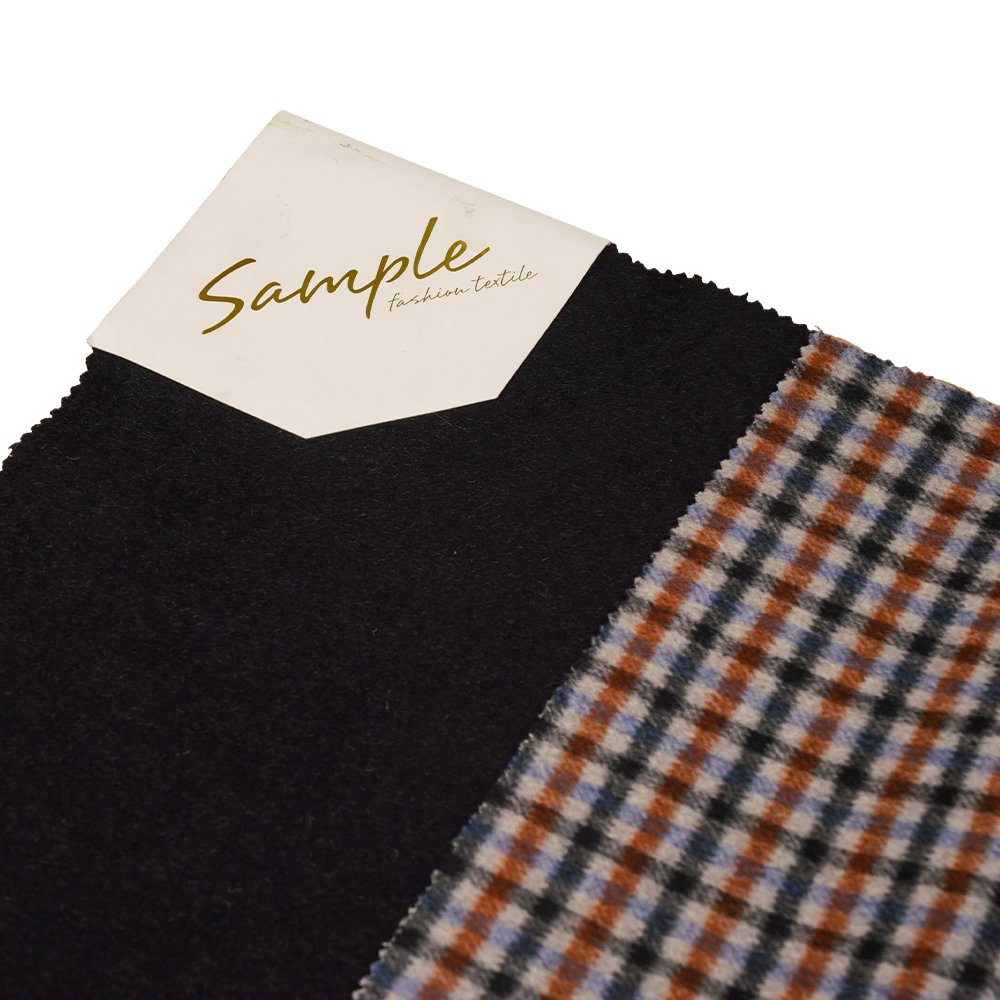
50% Wool 50% other fiber 780G/M Color Check Plaiddouble-face overcoating fabricF...
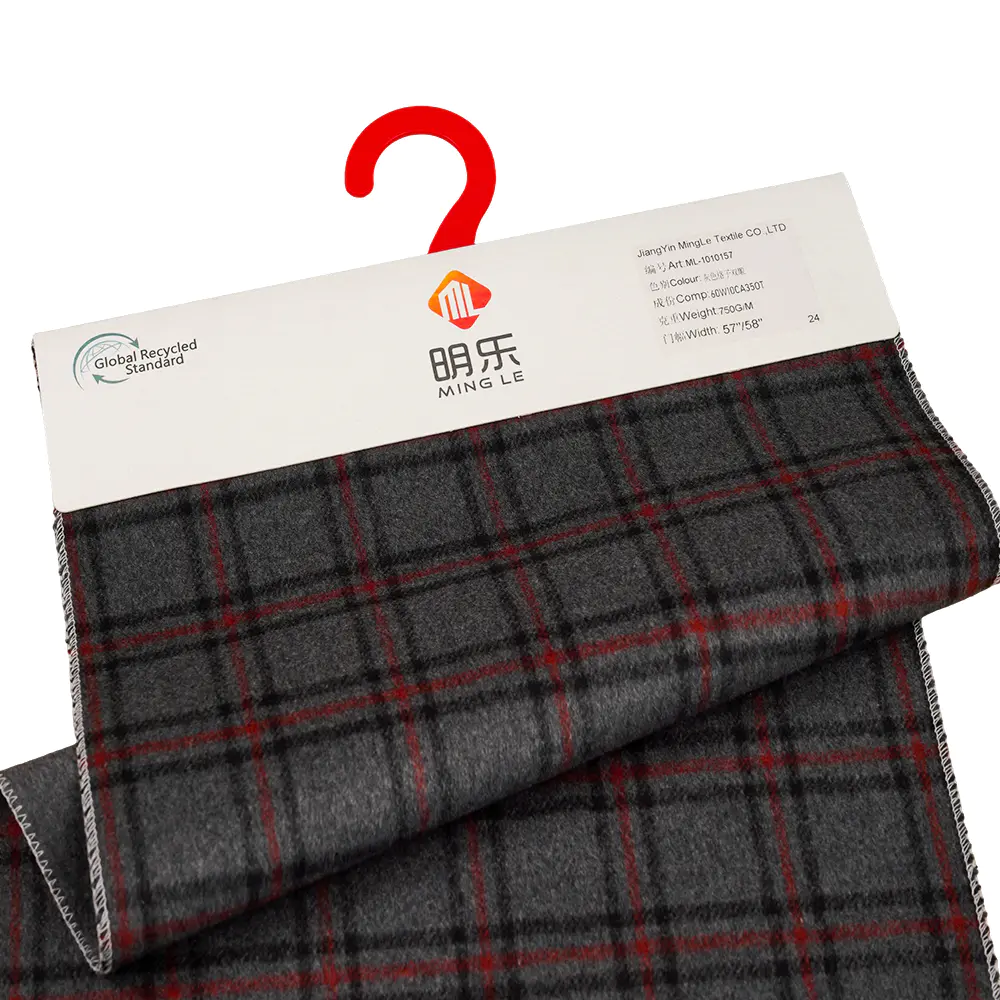
60% Wool 5% Cashmere 35% Synthetic Fabric Double-Sided Brushed Fabric: Gray Plai...
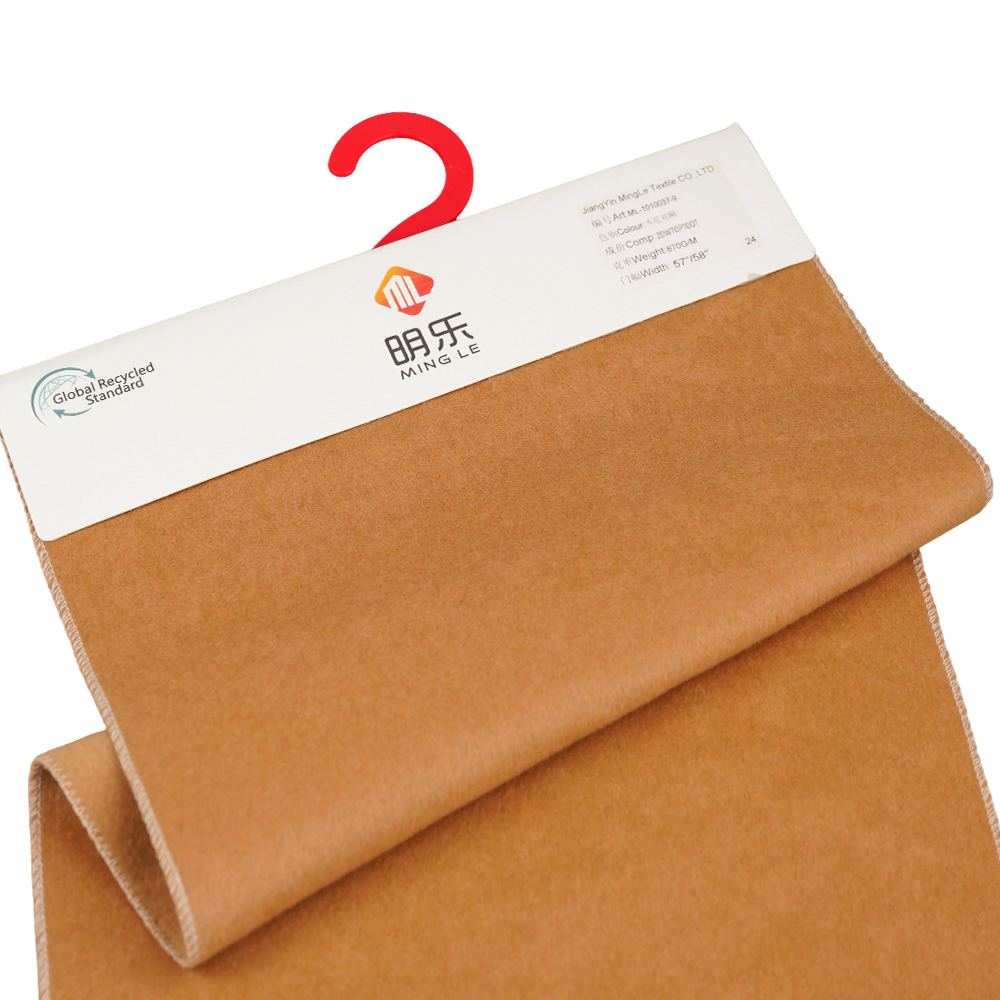
Bean Paste Double-Smooth: 720g/m thick, double-faced fleece fabric, gentle and e...
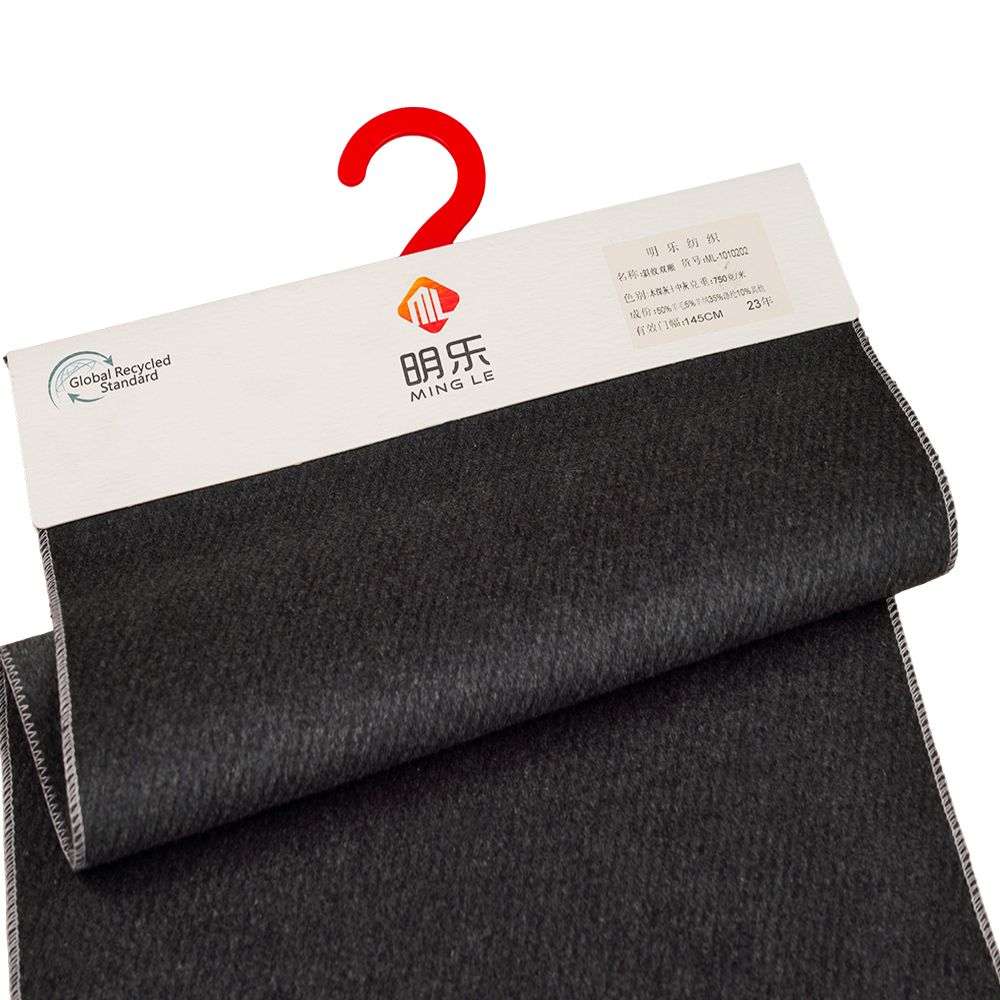
750g Double-Sided Brushed Fabric: Dark Gray and Medium Gray Twill Wool Cashmere ...
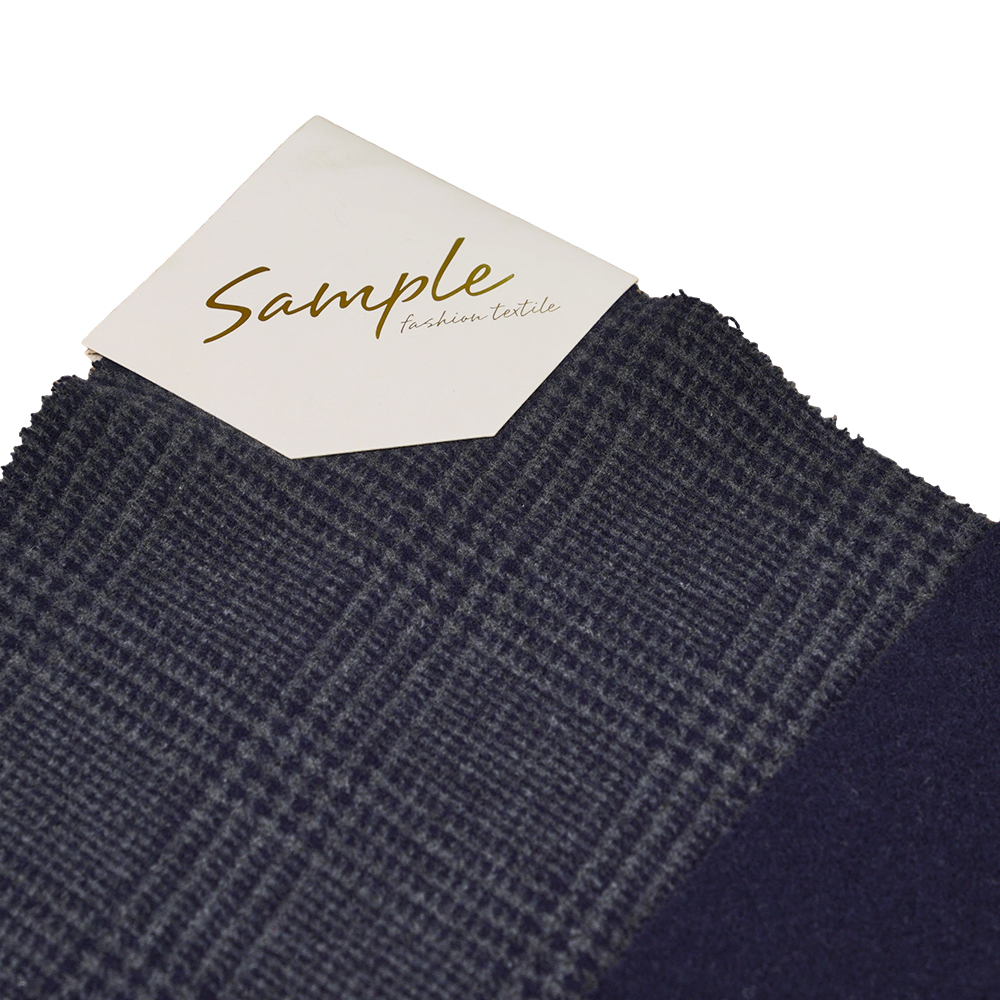
55% Wool 45% Other 645G/M Navy Blue Double-faced Velvet Fabric – Double-sided De...
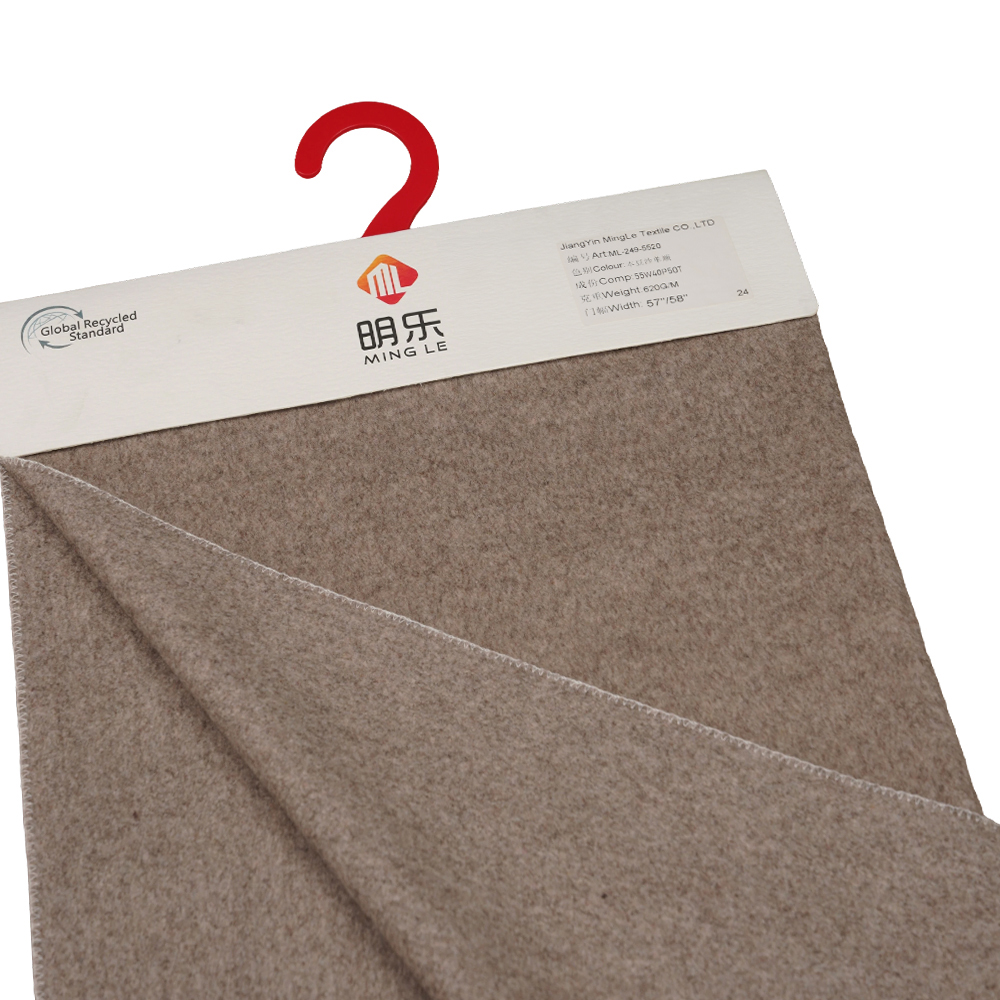
55% Wool 40% Polyester 5% other fiber620G/M Bean Sand single-face overcoating Fl...
 +86 - 510 - 86373115
 +86 - 13812129532
 No. 118, Huancun West Road, Huaxi Fifth Village, Huashi Town, Jiangyin City, Wuxi City, Jiangsu Province, China


