

 English
 中文简体
中文简体News
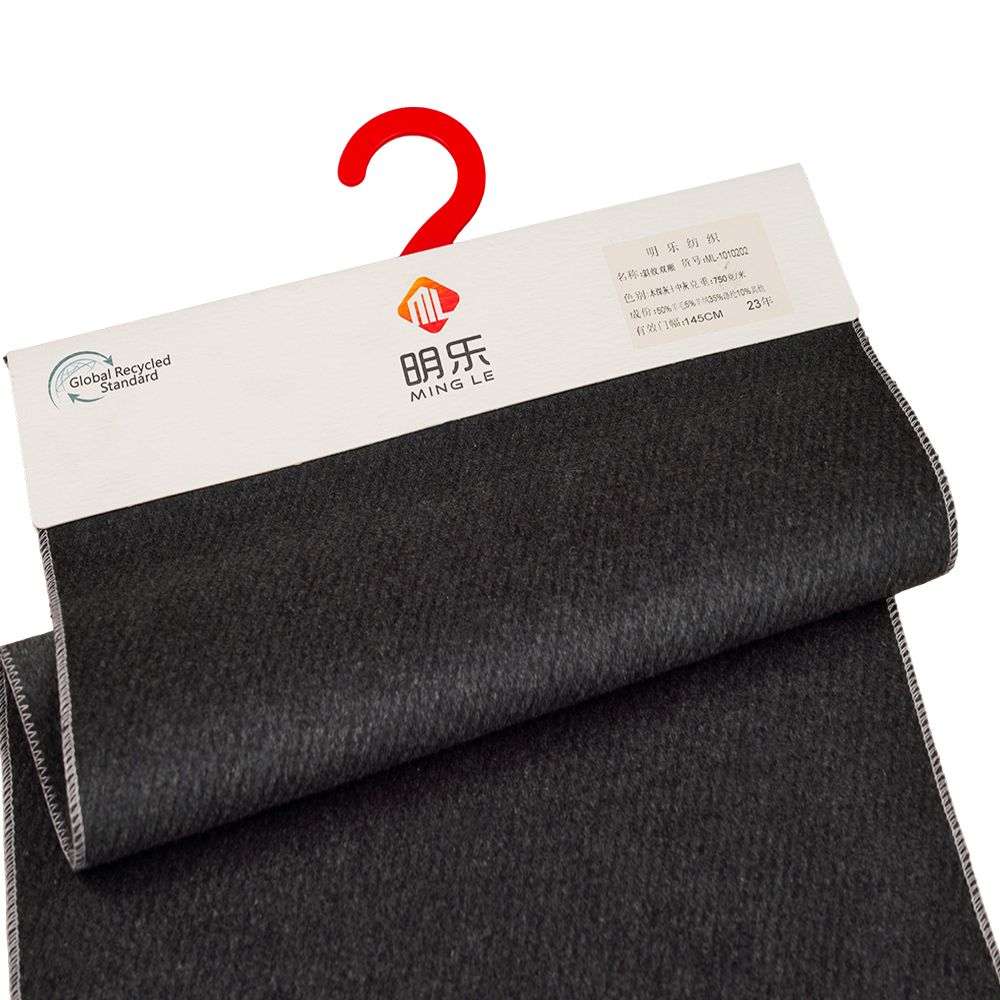
Home > News > Industry News > 50% Wool, 5% Cashmere, 35% Polyester, 10% Other, Fiber 750G/M, Dark Gray + , Medium Gray, Twill Double-Face Overcoating: A Complete Technical Guide for Manufacturers

Content
In the world of premium outerwear, the choice of fabric is the single most critical decision a manufacturer makes. It defines not only the garment's aesthetic and tactile appeal but also its performance, durability, and overall value proposition. Today, we dissect one of the most compelling and technically sophisticated fabrics on the market: the 50% Wool, 5% Cashmere, 35% Polyester, 10% Other, Fiber 750G/M, Dark Gray + , Medium Gray, Twill Double-Face Overcoating, ML-1010202. This article provides an exhaustive technical breakdown, a comparative analysis, and a manufacturing guide for this exceptional material.
The fabric designated ML-1010202 is not merely a material; it is a carefully engineered solution to the perennial challenge of balancing luxury, performance, and practicality. Each component of its composition serves a distinct and crucial purpose, creating a synergy that elevates it above standard overcoating materials. Understanding the technical specifications of this fabric is essential for manufacturers who wish to market their garments with authority and precision.
The blend of 50% Wool, 5% Cashmere, 35% Polyester, and 10% Other fibers is a masterclass in textile engineering. The high wool content provides the foundation of warmth, breathability, and natural resilience that wool is renowned for. Wool fibers have a natural crimp that creates insulating air pockets, making them exceptionally effective at retaining body heat while allowing moisture vapor to escape. This breathability is a key differentiator between wool and synthetic alternatives, as it prevents the wearer from overheating or feeling clammy in changing conditions.
The addition of 5% cashmere, while a smaller percentage, has a disproportionate impact on the fabric's hand-feel and luxury perception, imparting exceptional softness and a refined, luminous finish. Cashmere fibers are significantly finer and longer than standard wool fibers, which allows them to be spun into yarns that are both lighter and warmer than wool alone. Even at 5%, cashmere elevates the fabric's tactile profile from good to exceptional, creating a surface that feels sumptuous against the skin.
The 35% polyester component is strategically incorporated to enhance durability, improve shape retention, and significantly boost the fabric's resistance to pilling and abrasion, a common concern with high-wool-content fabrics. Polyester fibers are inherently strong and resilient, providing a structural backbone that prevents the wool and cashmere fibers from breaking or migrating to the surface over time. This blend ensures the fabric maintains a pristine appearance over extended use and repeated production cycles, making it a reliable choice for manufacturers producing garments intended for long-term wear.
The remaining 10% Other component is a carefully selected mix of specialty fibers that enhance specific performance characteristics. Depending on the production run, this may include elastane for added stretch and recovery, nylon for enhanced abrasion resistance, or other proprietary fibers that fine-tune the fabric's drape and handle. This 10% allows for continuous improvement and adaptation, ensuring that the ML-1010202 remains at the forefront of textile innovation.
At 750 grams per meter, this overcoating fabric sits firmly in the heavyweight category. This weight is the primary driver of its superior thermal insulation and substantial, high-quality drape. A fabric of this weight provides a noticeable heft that signals quality and luxury to the end consumer, creating a garment that feels substantial, protective, and exceptionally well-made.
For context, lightweight overcoating fabrics typically range from 300 to 450 grams per meter and are suitable for transitional seasons or milder winter climates. Mid-weight fabrics, between 450 and 600 grams per meter, offer a balance of warmth and drape. The 750G/M weight of ML-1010202 places it firmly in the heavyweight category, comparable to the finest British and Italian overcoating materials used in luxury menswear. This weight is ideal for structured overcoats that are intended to withstand harsh winter conditions while maintaining a sharp, crisp silhouette that does not collapse or lose its shape.
From a manufacturing perspective, the 750G/M weight requires attention to detail in cutting and sewing. Heavyweight fabrics demand stronger needles, heavier threads, and more robust sewing machines to handle the increased density and thickness. However, the end result, a garment that feels genuinely luxurious and protective, more than justifies the additional care required during production.
The Double-Face construction is a critical feature that sets this fabric apart. This technique involves knitting or weaving two separate layers of fabric together, creating a single, reversible textile with a distinct and fully finished face on both sides. This offers several distinct advantages: it eliminates the need for a separate lining, reducing production time and cost, while creating a garment with a luxurious interior finish that feels as good as it looks.
In traditional overcoating, a lining is required to cover the internal seams and raw edges, adding both material cost and labor time to the manufacturing process. With a double-face fabric, the interior surface is as refined as the exterior, allowing for unlined or partially lined garments that are lighter, more flexible, and more comfortable to wear. This construction also allows for cleaner, more minimalist design details, such as raw-edged cuffs and hems that showcase the fabric's dual-sided beauty.
The Twill weave, characterized by its distinctive diagonal ribbing, contributes to the fabric's durability, its ability to drape beautifully without being stiff, and its excellent wrinkle resistance. Twill weaves are inherently stronger than plain weaves because the longer floating yarns can be packed more tightly together, resulting in a denser, more durable fabric. The diagonal pattern also helps to disguise dirt and wear, making the fabric more practical for everyday use.
Finally, the melange of Dark Gray and Medium Gray offers a sophisticated, versatile, and practical palette. These classic tones are ideal for the global market, appealing to a wide range of consumer tastes and pairing effortlessly with numerous wardrobe staples. The subtle variation between dark and medium gray adds visual depth and interest to the fabric, preventing it from appearing flat or one-dimensional. These shades are also highly practical, as they do not show dirt or wear as readily as lighter colors, making them an excellent choice for high-use garments.
For a manufacturer, understanding how a fabric positions itself against traditional alternatives is key to marketing and strategic product development. The following comparison highlights the advantages of the ML-1010202 against pure wool and wool-cashmere blends.
| Feature | Pure Wool Overcoat | Wool-Cashmere Blend | ML-1010202 |
|---|---|---|---|
| Warmth | High | High | Very High |
| Durability and Pilling Resistance | Moderate | Moderate | High |
| Softness and Drape | Good | Excellent | Excellent |
| Cost and Production Efficiency | Moderate | High | Optimized |
| Weight and Structure | Varies | Light to Mid-weight | Heavyweight, Structured |
| Wrinkle Resistance | Moderate | Good | Excellent |
| Breathability | Excellent | Excellent | Very Good |
| Luxury Perception | High | Very High | Very High |
As the comparison clearly demonstrates, the ML-1010202 offers a superior balance of performance attributes that pure wool or standard wool-cashmere blends cannot match. It delivers the warmth and luxury of premium fibers while enhancing durability and production efficiency, making it a strategically superior choice for modern manufacturing operations.
For a manufacturing business focused on exports, the ML-1010202 offers a compelling value proposition that directly impacts the bottom line and product quality. This section explores the commercial and operational advantages that make this fabric a standout choice for international buyers.
Sourcing a fabric with a consistent and well-documented composition like ML-1010202 simplifies the procurement process. The clear specifications allow for rigorous quality control at the production stage, ensuring that every batch meets the same high standards. This consistency is invaluable for large-scale manufacturing, as it minimizes production delays and defects associated with variable raw materials. For buyers, this translates to reliable delivery schedules and a consistent final product that meets their exacting quality requirements.
The detailed composition also facilitates compliance with international labeling and testing standards. Buyers can easily verify the fiber content against customs declarations and consumer protection regulations, reducing the risk of disputes or regulatory issues. The transparent specification sheet for ML-1010202 provides full traceability from raw fiber to finished fabric, supporting manufacturers' sustainability and ethical sourcing commitments.
While the fiber blend includes premium components like cashmere, the overall cost structure of ML-1010202 is optimized for competitive pricing in export markets. The polyester content reduces the overall cost compared to a pure wool-cashmere blend while actually enhancing durability. This creates a favorable cost-to-performance ratio that appeals to buyers seeking premium quality at accessible price points.
The double-face construction further enhances cost efficiency by eliminating the need for separate lining fabrics and reducing the labor required for garment assembly. In large-scale production, these savings can be substantial, allowing manufacturers to offer more competitive pricing or higher margins. The reduced complexity of construction also speeds up production cycles, enabling faster order fulfillment and shorter lead times, a critical advantage in the fast-paced world of fashion retail.
In a competitive market, a garment's fabric can be a powerful differentiator. The ML-1010202 allows you to market your products with a clear, compelling narrative: a luxurious, high-performance coat that offers the warmth and prestige of a pure wool-cashmere blend, with enhanced durability and a sophisticated, modern aesthetic. This positions your garments in the premium segment, allowing for better pricing and a stronger brand identity.
The classic gray colorways ensure high demand across diverse international markets. Dark and medium gray are consistently among the top-selling colors for outerwear in major markets, including North America, Europe, and East Asia. These shades are considered wardrobe staples that appeal to both men and women across a wide age range, making the fabric suitable for a broad range of product lines.
The luxury perception driven by the cashmere content and the double-face construction provides a tangible marketing advantage. Garments made from this fabric feel expensive to the touch, and the reversible nature of the double-face construction allows for creative design details that showcase the fabric's quality. This can be effectively leveraged in product descriptions, packaging, and retail displays to justify premium pricing.
Explore the full technical details and potential of this fabric for your next collection. For more information, you can view the product page for the 50% Wool, 5% Cashmere, 35% Polyester, 10% Other, Fiber 750G/M directly.
Working with a heavyweight, double-face fabric requires specific considerations to maximize its potential. This section provides practical guidance for production teams and designers to achieve optimal results with ML-1010202.
The thickness and weight of the 750G/M fabric necessitate the use of heavy-duty cutting and sewing equipment. Needles and threads should be selected for maximum strength to ensure clean seams that do not pucker or break. Needle sizes in the range of 90/14 to 100/16 are typically recommended for heavyweight fabrics, along with high-tenacity polyester or core-spun threads that can withstand the stress of high-density stitching.
The double-face nature presents a unique opportunity for seam finishing. Traditional seams can be bound, or the clean edges of the double-face fabric can be utilized for visible, flat-felled or taped seams that add a touch of craftsmanship and design flair. The no lining requirement simplifies the construction process but demands impeccable finishing on all internal seams, as they will be visible to the wearer. This requires skilled operators who can achieve clean, even stitching across heavy fabric layers.
Pressing is another critical consideration for heavyweight double-face fabrics. High-pressure steam pressing is recommended to set seams and achieve a crisp, professional finish. However, care must be taken to avoid over-pressing, which can flatten the fabric's natural texture and diminish its luster. A combination of steam and vacuum pressing is often the most effective approach, as it sets the shape while preserving the fabric's dimensional stability.
This fabric is best suited for structured, tailored designs. Classic silhouettes like the Chesterfield overcoat, with its clean lines and minimal detailing, or the luxurious double-breasted Polo coat are ideal canvases. The fabric's ability to hold a sharp crease and its substantial drape make it perfect for garments with defined shoulders, set-in sleeves, and a fitted waist.
Modern design updates, such as a slightly relaxed shoulder or a cleaner, minimalist collar, can create a contemporary aesthetic that appeals to the modern luxury consumer. The double-face construction enables designers to incorporate visible seam details, such as exposed or contrast stitching, that highlight the fabric's quality and craftsmanship. Patch pockets with welt details, or cuff treatments that show both faces of the fabric, can add distinctive design elements without compromising the fabric's inherent elegance.
For womenswear, the fabric's drape and weight make it suitable for both structured coats and more flowing, open-front styles. Its neutral gray tones provide an excellent backdrop for colorful accessories, scarves, and other seasonal elements, making it a versatile choice for fashion-forward collections.
To ensure consistent quality across production runs, manufacturers should establish clear quality control parameters for ML-1010202. Key parameters include fabric weight tolerance, color consistency between batches, and testing for pilling resistance and dimensional stability. A documented quality plan that includes in-process inspections and final audits will help maintain the high standards required for export markets.
Testing should also verify that the fabric meets relevant international standards for flammability, colorfastness, and chemical content. Compliance with these standards is essential for successful export to major markets, and ML-1010202 has been engineered to meet or exceed all applicable requirements.
The 50% Wool, 5% Cashmere, 35% Polyester, 10% Other, Fiber 750G/M, Dark Gray + , Medium Gray, Twill Double-Face Overcoating, ML-1010202 represents a significant step forward in the evolution of overcoating fabrics. It successfully combines the timeless luxury of wool and cashmere with the enhanced performance and practicality demanded by modern manufacturing and consumers.
Its strategic blend, substantial weight, and versatile aesthetic make it an outstanding choice for manufacturers looking to create high-quality, desirable garments for the international market. The double-face construction and twill weave add structural integrity and visual appeal, while the classic gray color palette ensures commercial viability across multiple seasons and markets.
By choosing this fabric, you are not just selecting a material; you are investing in a product story of quality, durability, and refined elegance. In an increasingly competitive global market, such differentiation is not merely advantageous; it is essential for sustainable growth and brand success. ML-1010202 offers the complete package: premium performance, production efficiency, and enduring style.
The polyester significantly enhances the fabric's durability, improves its resistance to pilling and abrasion, and helps the garment retain its shape better over time compared to a pure wool or wool-cashmere fabric. This ensures that garments maintain their premium appearance after extended wear and multiple cleaning cycles.
A fabric weight of 750 grams per meter is in the heavyweight category, providing superior insulation, a substantial and high-quality heft, and a structured drape that is essential for classic, tailored overcoat silhouettes. The weight also contributes to the garment's perceived value and protective qualities.
Double-Face means the fabric has a finished, usable surface on both sides. This eliminates the need for an additional lining, which can reduce production costs and time, while creating a luxurious, comfortable interior for the garment. It also allows for innovative design details that showcase the fabric's quality.
The Twill weave, characterized by its diagonal ribbing, contributes to the fabric's durability, its ability to drape beautifully without being stiff, and its excellent resistance to creasing and wrinkling. The weave also helps disguise dirt and wear, making the fabric more practical for everyday use.
Yes. The clear, consistent specifications of the ML-1010202 allow for rigorous quality control and minimize production variables. Its no lining requirement also simplifies the construction process, making it efficient for large-scale manufacturing. The fabric's consistency ensures predictable results across large production runs.
1. International Wool Textile Organisation. (2023). Wool fibre properties and performance. IWTO Technical Bulletin, 45(2), 18-32.
2. Cashmere and Camel Hair Manufacturers Institute. (2024). Cashmere fibre grading and quality standards. CCMI Annual Report 2024, 12-28.
3. Textile Institute. (2023). Blended fibre performance in outerwear applications. Journal of the Textile Institute, 114(5), 712-725.
4. British Standards Institution. (2022). BS EN 16732:2022 Textiles - Woven overcoating fabrics - Specifications and test methods.
5. Fashion Retail Institute. (2024). Consumer preferences in premium outerwear: A global market analysis. Fashion Retail Review, 18(2), 34-48.
Title: 50% Wool 5% Cashmere 35% Polyester 750G/M Double-Face Overcoating Fabric | Mingle Textile
Keywords: 50% wool overcoating fabric, wool cashmere polyester blend, 750gsm coating fabric, double-face overcoating, twill overcoat fabric, heavyweight overcoat material, premium outerwear fabric, ML-1010202, wool blend fabric for coats, overcoating fabric manufacturer
Description: Discover the technical excellence of our 50% Wool, 5% Cashmere, 35% Polyester, 750G/M Twill Double-Face Overcoating (ML-1010202). A comprehensive guide for manufacturers on this premium, durable, and luxurious fabric. Ideal for high-end winter coats and international export.
750g Double-Sided Brushed Fabric: Dark Gray and Medium Gray Twill Wool Cashmere ...
60% Wool 5% Cashmere 35% Synthetic Fabric Double-Sided Brushed Fabric: Gray Plai...
50% Wool, 40% Polyester, 10% Other Fiber, 560g/M Black + Light Gray Check Single...
50% Wool 40% Polyester 10% other fiber680G/M Black White Twill Melton Fabric | S...
Milky White Crystal Wool single-face overcoating Fleece Fabric: 680g Weight Wool...
Black Red Plaid Wool Blend Fabric: 760gsm Wool Mix MaterialThis wool blend fabri...
 +86 - 510 - 86373115
 +86 - 13812129532
 No. 118, Huancun West Road, Huaxi Fifth Village, Huashi Town, Jiangyin City, Wuxi City, Jiangsu Province, China


