

 English
 中文简体
中文简体News
Home > News > Industry News > Double Faced Wool Overcoats vs. Single Layer Lined Coats: A Comprehensive Material and Manufacturing Analysis for Global Garment Procurement

Content
In the global premium apparel sector, selecting the appropriate structural composition for outerwear collections requires a careful balance of textile science, production efficiency, and consumer value. For fashion brands, luxury retailers, and textile procurement officers organizing high-end autumn and winter collections, the choice between traditional single-layer lined construction and advanced double-faced execution remains a major manufacturing decision. Both methods are widely used to produce high-end winter coats, but they differ fundamentally in fabric weaving, edge-finishing techniques, internal structural support, and physical garment weight.
Understanding these technical distinctions is crucial for B2B apparel buyers, sourcing agents, and product developers who must evaluate manufacturing costs against garment performance and wearability. This analysis provides an objective, engineering-focused comparison between double-faced wool overcoat construction and standard lined outerwear setups to assist global commercial enterprises in making informed fabric and assembly specifications.
The primary difference between a double-faced wool overcoat and a standard lined jacket lies in the structural weaving process of the base material. Standard lined coats utilize a single layer of face fabric, which is woven on conventional looms and subsequently reinforced with a separate, distinct lining material such as acetate, polyester, or silk. This lining is sewn inside the garment to hide raw edges and interlinings.
A premium double-faced garment, however, is built upon a highly specialized textile structure. This technique involves weaving two distinct layers of wool fabric simultaneously on a unique double-beam loom. During the weaving process, these two parallel fabric layers are intricately bound together by a series of high-tensile connection threads spaced at precise micro-intervals.
The resulting textile is a single, integrated piece of fabric that features two completely identical outer faces with no visible reverse side. This complex structural layout allows garment manufacturers to create coats where both the interior and exterior surfaces look and feel exactly the same. This approach eliminates the need for separate synthetic lining fabrics while delivering excellent structural stability and a elegant presentation.
The structural design of the fabric used in these two outerwear styles dictates entirely different approaches to pattern cutting and seam finishing during factory assembly. Traditional single-layer lined coats rely heavily on automated machine sewing. The raw fabric edges are cut, aligned, and stitched together using standard industrial overlock or lockstitch machines. The resulting internal seam allowances are left exposed on the inside of the garment shell, hidden from view by the subsequent installation of an independent fabric lining capsule.
The production of a double-faced wool overcoat requires a completely different, highly labor-intensive manufacturing workflow. Because the fabric consists of two interconnected layers, standard machine stitching cannot be used on raw edges without creating bulky, unsightly seams that ruin the reversible nature of the material. Instead, factory technicians must manually split the two woven layers apart along the outer edges of every cut pattern piece, typically to a depth of fifteen to twenty millimeters.
Once the layers are split, the raw edge allowances are folded carefully inward toward each other, turning the fabric edges hidden inside the center space. The two folded edges are then meticulously stitched together by hand using ultra-fine needles and matching silk or nylon threads. This hand-sewing technique creates an completely invisible, seamless edge profile where no raw fibers or stitch lines are visible on either side of the garment. For high-volume manufacturing facilities, this reliance on artisan hand-stitching increases assembly times and labor costs relative to machine-stitched lined garments, but it delivers an incredibly clean edge finish that defines luxury apparel.
Thermal retention and garment weight are critical metrics in evaluating the performance of cold-weather outerwear. Traditional lined overcoats achieve thermal insulation through a multi-layered material stack. This assembly generally consists of the wool exterior fabric, a layer of fusible synthetic interlining, a middle layer of wadding or insulation fill in some cold-climate models, and the final slick interior lining. This multi-layered approach provides effective insulation, but it can trap moisture and often results in a rigid, heavy garment that restricts user movement and places uneven pressure on the wearer’s shoulders.
Double-faced constructions achieve high thermal performance through natural air pocket insulation rather than dense material stacking. The micro-space created between the two simultaneously woven fabric layers acts as an efficient thermal barrier, trapping body heat within a natural dead-air zone.
Because the double-weave fabric provides excellent structural body and insulation on its own, manufacturers do not need to add heavy canvas interlinings or synthetic interior linings. This reduction in extra component layers allows a double-faced wool overcoat to provide exceptional warmth while keeping garment weight very low. For modern corporate travelers and luxury consumers, this optimized weight distribution reduces fatigue during extended wear and offers a flexible, body-contouring fit that moves naturally with the wearer.
To assist global garment sourcing directors, retail buyers, and textile quality control managers in conducting efficient product evaluations, the following matrix contrasts the essential performance, construction, and assembly parameters of both outerwear categories:
The selection of raw materials is the most critical factor determining the market position and durability of premium outerwear lines. Traditional lined coats can sometimes utilize lower-grade wool blends or wool-synthetic fibers for the face fabric because the interior lining completely covers the reverse side of the material, hiding fiber knots, weave inconsistencies, or minor yarn variations from the consumer.
Manufacturing a premium double-faced overcoat requires strict material consistency and high fabric purity. Because both sides of the textile are fully exposed to view and touch, the yarn used must be completely uniform throughout the entire batch. Brands typically source ultra-premium doublefaced overcoating fabric that blends long-staple merino wool with luxury cashmere fibers.
Long-staple fibers are essential because they provide the high tensile strength required to prevent tearing when the two woven layers are split apart during factory edge finishing. Furthermore, these high-grade wool fibers possess natural crimp structures that provide excellent resiliency, allowing the garment to maintain its smooth drape and resist pilling even after years of regular use in variable weather conditions.
From an interior and apparel design viewpoint, the structural differences between these two coat varieties lead to completely different garment silhouettes and styling options. Traditional lined garments rely on internal interfacing, shoulder pads, and chest canvases to build a structured shape. This approach is excellent for creating sharp, military-style coats, structured business formal outerwear, and rigid tailored designs that hold a precise shape independent of the wearer’s body shape.
The double-faced configuration excels at creating fluid, soft silhouettes. Because the garment lacks rigid internal canvas layers, the double-woven wool drape follows the natural contours of the body. This characteristic allows fashion designers to create elegant, relaxed shapes, such as unstructured wrap coats, oversized drop-shoulder overcoats, and clean minimalist cardigans. The fabric falls with a natural, heavy fluid movement that conveys luxury through simplicity, making it a favorite choice for modern lifestyle brands focused on relaxed tailored luxury.
Outerwear is constantly subjected to structural stress from sitting, packing, and changing weather conditions. A coat’s ability to resist wrinkling and retain its original shape over a multi-year product lifecycle is an important indicator of its value. Traditional lined coats can suffer from structural distortion over time due to uneven shrinking between different materials. If the outer wool shell and the inner synthetic lining react differently to humidity or commercial dry cleaning, the seams can pucker, causing the hemline to twist or sag.
Double-faced wool coats offer superior dimensional stability because they are made from a single integrated wool textile. Since the entire garment body is made from the same fiber composition, all sections expand, contract, and recover at identical rates under varied temperature and moisture conditions.
Additionally, the natural elasticity of high-grade wool fibers, combined with the double-layer weave, gives the fabric excellent wrinkle recovery. When compressed during travel or storage, the internal air pocket structure helps the fibers spring back into place, smoothing out wrinkles naturally without needing frequent pressing or steaming.
For global apparel brands planning large production runs, understanding factory requirements and labor availability is critical for managing delivery timelines. Traditional lined coats are well-suited for high-volume automated manufacturing facilities. Because the assembly steps rely on automated cutting tables, programmable pocket-setting machines, and high-speed industrial sewing equipment, production managers can easily scale output to meet tight delivery schedules.
Setting up a production line for double-faced wool coats requires highly specialized workforce planning and rigorous quality control. The splitting and hand-stitching steps cannot be automated with standard modern factory equipment. Consequently, a manufacturer must maintain access to a large team of skilled hand-sewing artisans.
Quality control managers must inspect every centimeter of hand-sewn edging to ensure consistent stitch tension and perfect edge symmetry. For global procurement officers, this means production timelines for double-faced collections must be planned with longer lead times, and factories must be selected based on their access to skilled textile craftsmen.
As global environmental standards and consumer awareness continue to evolve, the sustainability profile of apparel textiles has become a key consideration in product development. Traditional lined coats present significant challenges for textile recycling programs. Because they combine natural wool shells with synthetic interlinings, chemical adhesives, and polyester linings, recycling facilities must manually dismantle the entire garment to separate the synthetic components from the natural fibers before processing.
Double-faced wool overcoats offer a cleaner sustainability profile due to their simplified material composition. When manufactured using premium pure wool or wool-cashmere blends without synthetic interlinings or non-recyclable linings, the entire garment body consists of natural, biodegradable animal proteins.
This single-material composition simplifies the post-consumer recycling workflow, allowing the coats to be shredded and re-spun into recycled wool yarns with minimal manual teardown. This alignment with circular economy principles makes double-faced outerwear an attractive choice for contemporary fashion brands working to reduce their environmental footprint and meet strict international sustainability goals.
In conclusion, while both double-faced wool overcoats and traditional single-layer lined coats are important staples of winter apparel lines, they serve different consumer markets and manufacturing strategies. Lined coats remain an effective option for rigid, highly structured tailored designs and mass-market production runs where automated machine assembly is required to control costs.
However, for luxury brands, premium contemporary labels, and international retailers looking to offer high-end outerwear, the minimal slim double-faced configuration represents the pinnacle of modern garment engineering. By utilizing dual-beam weaving technology and artisanal hand-finishing techniques, brands can deliver exceptionally lightweight, warm, and fluidly elegant coats that stand out in the competitive global market, ensuring strong retail margins and high customer satisfaction.
Q1: Why are double-faced wool overcoats generally more expensive than standard lined coats?
A1: The higher cost is primarily due to the extensive manual labor required during factory assembly. The outer edges of every pattern piece must be split apart by hand and folded inward, then closed using blind hand-stitching. This artisanal assembly process extends production timelines significantly compared to machine-stitched lined garments.
Q2: How can a coat without an interior lining provide sufficient warmth during freezing winter temperatures?
A2: Double-faced coats achieve excellent thermal efficiency through the micro-space engineered between the two layers of simultaneously woven fabric. This internal air gap acts as a natural insulation pocket that traps body heat far more effectively than a standard single layer of fabric backed by a thin synthetic lining.
Q3: Can double-faced wool coats be repaired easily if an edge seam begins to open after extended use?
A3: Yes. Because the edges are finished using traditional hand-stitching techniques rather than permanent chemical bonding or complex overlock machines, a skilled tailor can easily open a small section, tuck the edge allowances back inside, and re-stitch the seam by hand using a blind stitch to restore its original appearance.
Q4: What fabric blend is considered ideal for commercial double-faced coat manufacturing?
A4: Premium commercial collections typically use long-staple merino wool blended with ten to twenty percent cashmere. The long-staple wool provides the tensile strength needed to handle the splitting process without fiber degradation, while the cashmere content enhances the surface softness and elevates the garment’s market appeal.
Q5: What are the specific dry-cleaning and care requirements for premium double-faced outerwear?
A5: Double-faced wool garments should be cleaned using professional dry-cleaning methods to protect the hand-sewn edge seams and natural wool fiber structure. To maintain the smooth drape between cleanings, the coat should be hung on wide, contoured wooden hangers and brushed gently with a soft garment brush to remove surface dust.
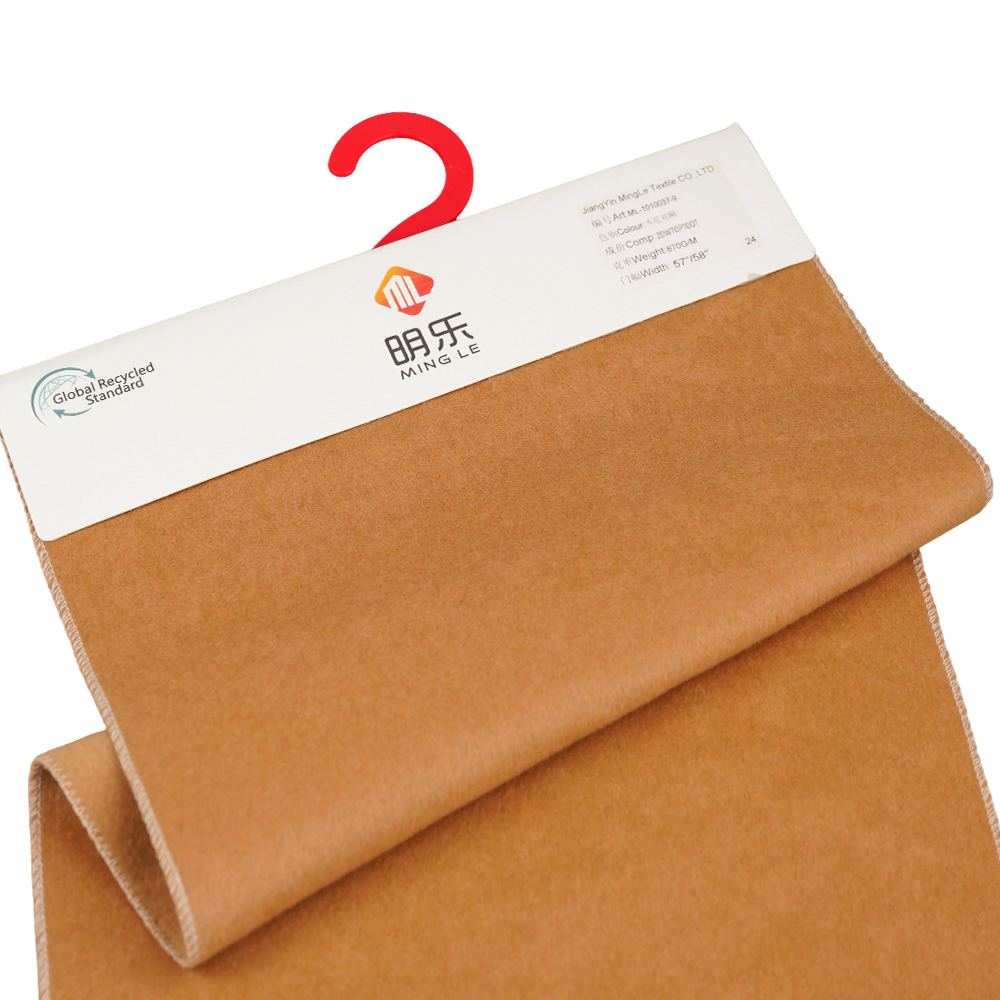
Bean Paste Double-Smooth: 720g/m thick, double-faced fleece fabric, gentle and e...
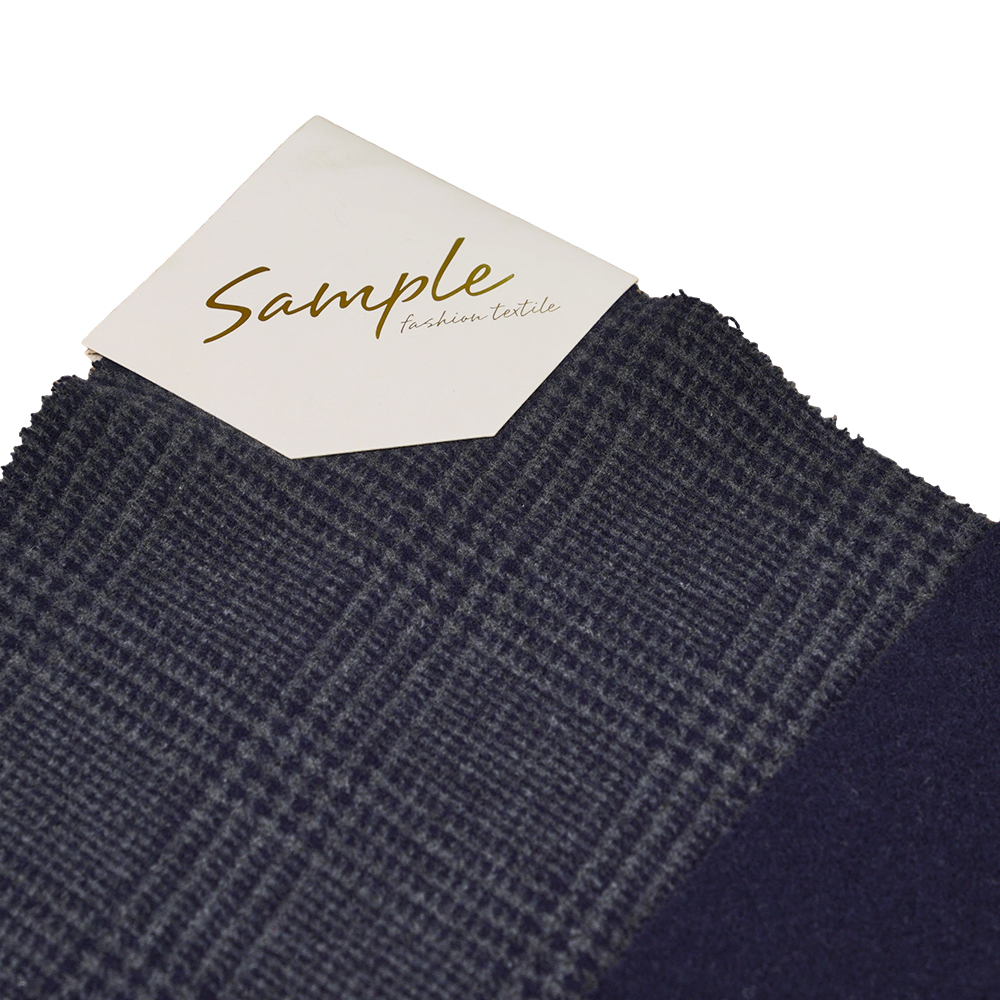
55% Wool 45% Other 645G/M Navy Blue Double-faced Velvet Fabric – Double-sided De...
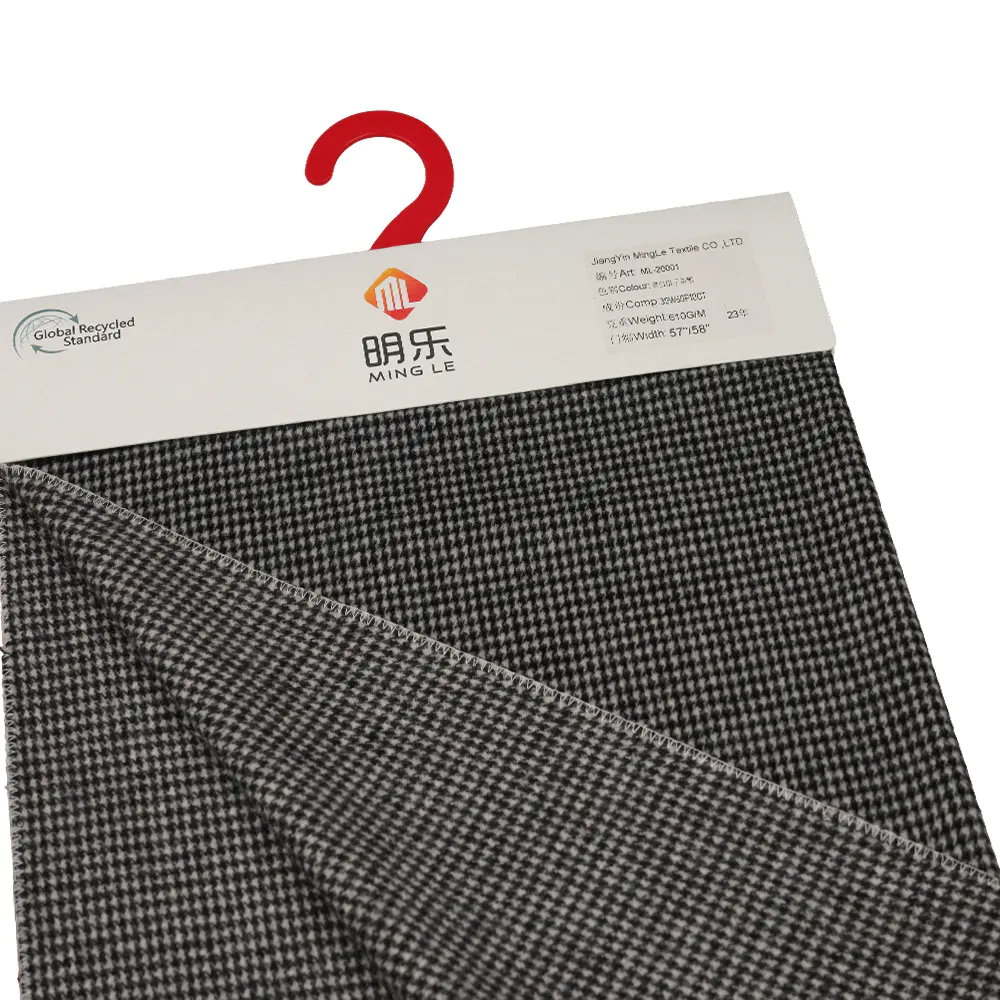
30% Wool 60% Polyester 10% other fiber610G/M Black White Plaid Single-Pile Fleec...
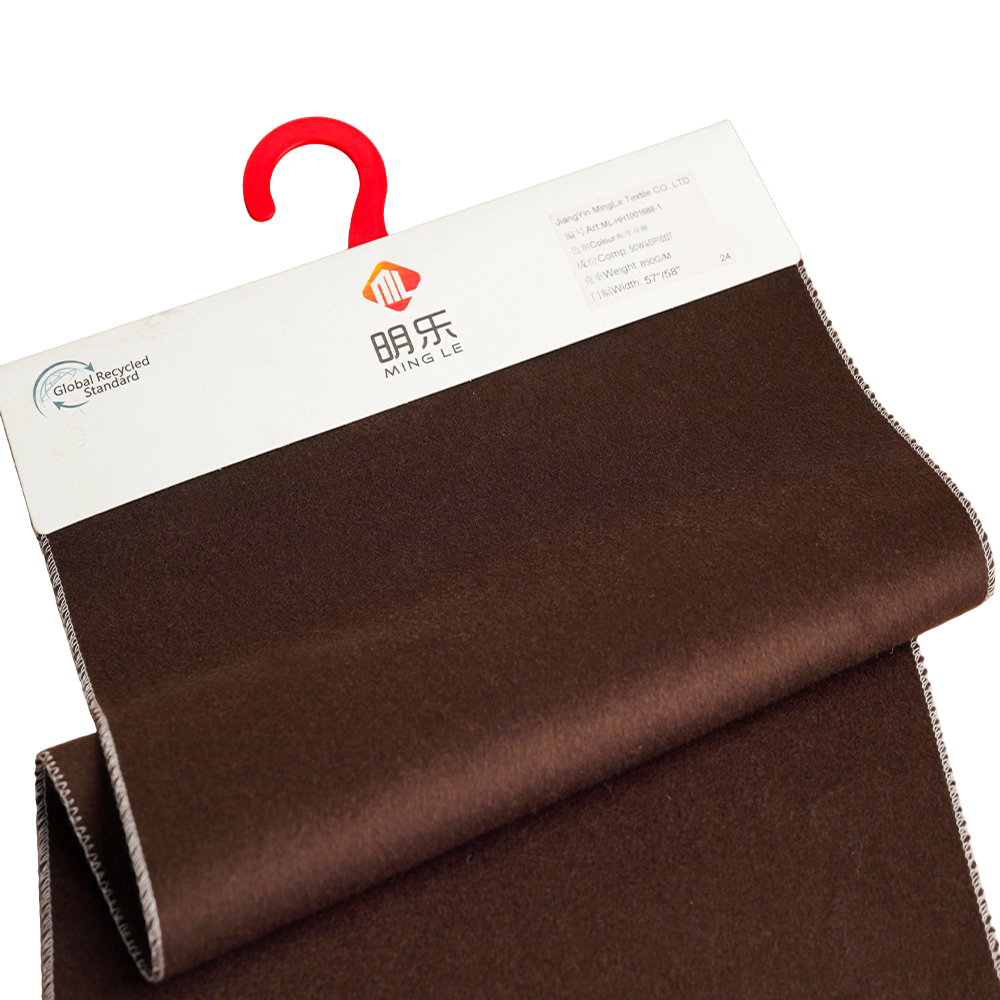
ML-HH1001688-1 Coffee Solid Color Double-face Overcoating Fabric: 850g/m, 50% Wo...
Black Red Plaid Wool Blend Fabric: 760gsm Wool Mix MaterialThis wool blend fabri...
40% Wool 60% Polyester 750GSM Black Grey Bali Woolen Fabric - Classic Versatile ...
 +86 - 510 - 86373115
 +86 - 13812129532
 No. 118, Huancun West Road, Huaxi Fifth Village, Huashi Town, Jiangyin City, Wuxi City, Jiangsu Province, China


