

 English
 中文简体
中文简体News
9% Wool 66% Polyester 25% other fiber 400G/M Gray Flannel Fabric – Versatile Neu...

Content
In the premium textile market, few materials combine functional performance with verifiable sustainability credentials as effectively as organic wool flannel fabric. It is a fabric with deep manufacturing heritage, but its modern specification — governed by fiber traceability standards, finishing chemistry restrictions, and measurable thermal properties — makes it one of the most technically demanding categories in natural textile sourcing. For apparel manufacturers, bedding producers, and wholesale buyers, understanding the engineering behind this fabric is the foundation for accurate specification and confident procurement.
Wool flannel fabric is a plain or twill-woven textile made from carded or worsted wool yarn, finished through a napping and optional milling process that raises the fiber surface to create its characteristic soft, lightly fuzzy hand. The flannel finish distinguishes it from standard wool cloth — it reduces the visibility of the weave structure and creates a dense, insulating surface layer that traps still air effectively.
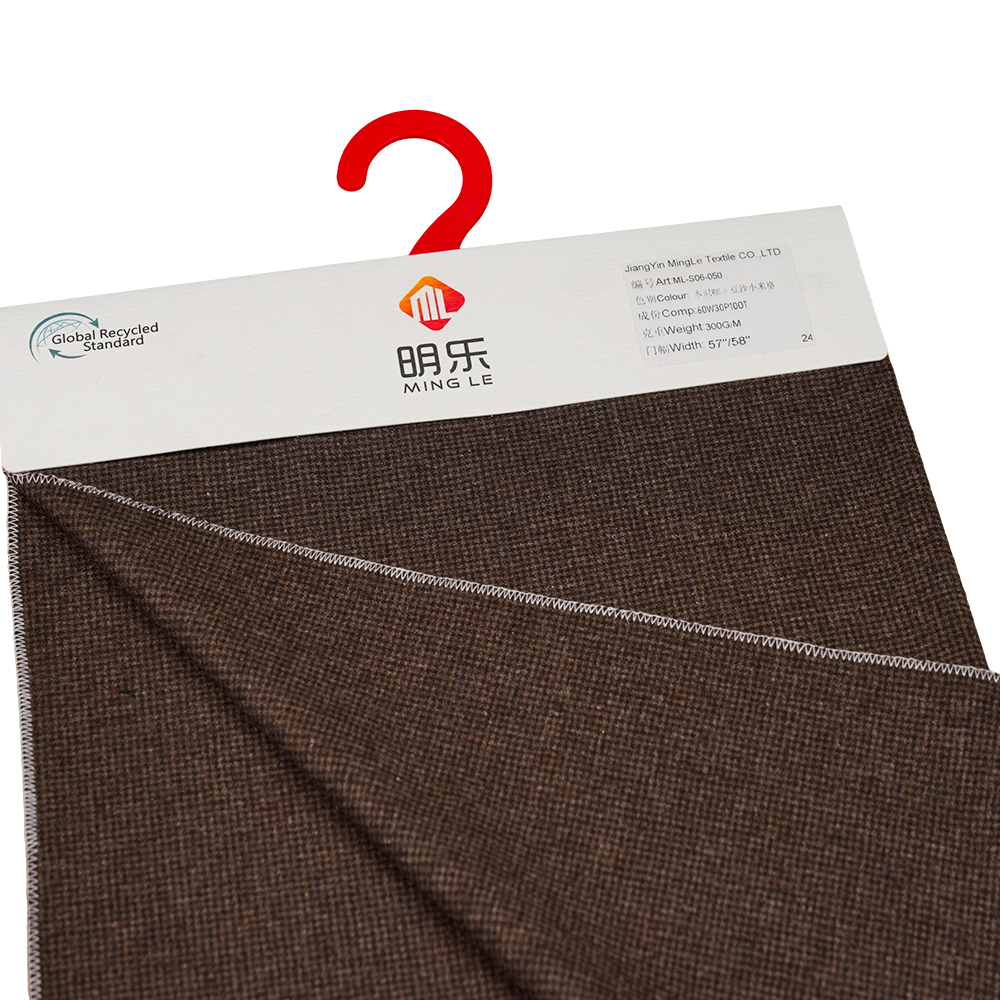
Most wool flannel is woven in a 2/2 twill or plain weave at a relatively loose sett, which allows the napping machine's wire-covered rollers to catch and raise fiber ends from both warp and weft directions. The depth and density of the nap depend on the number of napping passes, roller speed, and the fiber fineness of the yarn. Merino-based flannel fabrics, using fiber with a mean diameter of 17 to 21 microns, produce a softer, finer nap than coarser wool grades (24 to 28 microns), which generate a more robust, textured surface suitable for outerwear.
The difference between organic and conventional wool flannel is not limited to the farming practices used to raise the sheep. It extends to dyeing chemistry, finishing agents, and supply chain documentation. Conventional wool processing frequently involves chlorine-based shrink-resist treatments (DCCA process), synthetic moth-proofing agents such as permethrin, and azo dyes. Certified organic wool flannel fabric prohibits all of these. The table below compares the two categories across the parameters most relevant to product specification and retail compliance.
| Parameter | Organic Wool Flannel Fabric | Conventional Wool Flannel |
|---|---|---|
| Fiber sourcing | GOTS or OWS certified organic farms | Unverified or mulesed wool permissible |
| Shrink-resist treatment | Prohibited (no chlorine DCCA process) | Chlorine-based treatment common |
| Moth-proofing agents | Prohibited (permethrin not allowed) | Permethrin or other insecticides permitted |
| Dye system | Low-impact fiber-reactive or metal-complex dyes (restricted list) | Azo dyes and heavy metal dyes permissible |
| Finishing agents | GOTS-approved auxiliaries only | Fluorocarbon finishes and softeners permitted |
| Certification documentation | Transaction Certificate (TC) required per lot | No third-party chain-of-custody required |
| Typical price premium | 30–80% above conventional equivalent | Baseline |
When sourcing certified organic wool flannel fabric wholesale, buyers must distinguish between fiber-level certification and finished fabric certification. The Global Organic Textile Standard (GOTS) version 6.0 is the most widely recognized framework. It requires organic fiber content of at least 70 percent for the "Made with Organic" label and 95 percent for the "Organic" label, and it governs processing chemistry, wastewater treatment, and social compliance throughout the supply chain. The Organic Wool Standard (OWS) addresses fiber production only and does not cover processing. OEKO-TEX Standard 100 certifies absence of harmful substances in the finished product but does not verify organic fiber sourcing. For complete chain-of-custody assurance, GOTS is the appropriate standard.
Fabric weight, expressed in grams per square meter (GSM), is the primary specification variable for wool flannel fabric weight and warmth rating in both apparel and bedding applications. Weight correlates with thermal resistance, drape, and durability. The table below defines the standard weight categories used in the wool flannel trade and their corresponding end-use suitability.
| Weight Category | GSM Range | Thermal Performance | Typical Application | Drape |
|---|---|---|---|---|
| Lightweight | 150–220 gsm | Moderate insulation | Shirts, linings, layering pieces | Fluid, soft |
| Mid-weight | 220–320 gsm | Good insulation | Trousers, blazers, bedding | Structured with softness |
| Heavyweight | 320–450 gsm | High insulation | Coats, blankets, outerwear | Stiff, body-holding |
| Blanket weight | 450–600 gsm | Very high insulation | Blankets, throws, heavy upholstery | Dense, structured |
GSM selection directly affects cutting yield, construction technique, and care requirements. Lightweight flannel at 150 to 220 gsm requires finer sewing machine needles (size 70/10 to 80/12) and lighter interfacing to avoid stiffness at seams. Heavyweight flannel above 320 gsm generates significant seam bulk and typically requires pressing over a tailor's ham to manage seam allowance thickness. In bedding applications, GSM correlates directly with the tog rating — a 450 gsm flannel blanket provides roughly 4.0 to 5.0 tog under standard BS EN ISO 11092 test conditions.
Organic wool flannel fabric for apparel and bedding covers a wide range of end products, each with distinct performance requirements. The absence of synthetic finishing agents in organic-certified flannel means that natural fiber properties — moisture management, odor resistance, and thermal regulation — are fully expressed rather than masked by chemical treatment.
In apparel, wool flannel's moisture-wicking capacity is a key performance advantage. Wool fiber can absorb up to 30 percent of its own weight in moisture vapor before feeling wet, which supports thermoregulation during variable activity levels. Organic merino flannel at 180 to 250 gsm is particularly well suited to base and mid-layer garments, shirts, and tailored trousers in performance outdoor and luxury casualwear categories.
In bedding and home textile applications, organic wool flannel offers a combination of properties that synthetic alternatives cannot replicate:
Organic wool flannel fabric by the yard is the standard retail and small-batch wholesale purchasing format. Fabric width varies by origin and mill specification. European mills typically produce wool flannel at 140 cm to 150 cm finished width. North American domestic production often runs at 54 to 60 inches (137 to 152 cm). Japanese selvedge wool flannel is commonly produced at narrower widths of 110 to 130 cm, reflecting traditional loom configurations. For pattern cutting efficiency, fabric width is a critical variable — a 10 cm difference in usable width can change cutting yield by 5 to 8 percent on complex garment patterns, directly affecting material cost per unit.
Wool flannel fabric shrinkage and care instructions are among the most frequently misunderstood aspects of this textile category. Wool fiber has a scaly surface structure that causes irreversible felting shrinkage when exposed to heat, agitation, and moisture simultaneously. Organic wool flannel without a shrink-resist finish is particularly susceptible because the DCCA process — which chemically smooths the fiber scales — is prohibited in organic certification.
For mill-direct buyers, fabric wholesalers, and private label apparel developers sourcing at volume, the following criteria should appear in every fabric specification sheet and purchase order:
The core difference lies in fiber certification and processing chemistry. Organic wool flannel fabric uses wool sourced from farms certified under GOTS or the Organic Wool Standard, where synthetic pesticides, mulesing, and genetically modified feed are prohibited. The processing chain must also comply with restrictions on synthetic finishing agents, chlorine-based shrink treatments, and azo dyes. Regular wool flannel has no equivalent supply chain restrictions. For buyers selling into retail channels with sustainability requirements or consumer-facing organic claims, GOTS certification of the finished fabric is the required documentation standard.
For garment cutting, the standard method is to lay out all pattern pieces on a paper mock-up of the fabric width and measure the total length consumed. Add 10 to 15 percent for seam allowances, pattern matching, and fabric defect allowances on premium organic wool flannel fabric by the yard. For bedding, calculate the cut dimensions of all panels plus hem allowances and divide by the fabric width to determine yardage. Always order a pre-shrunk or pre-washed swatch and confirm finished dimensions before finalizing the cutting plan to account for any residual shrinkage.
Wool flannel fabric shrinkage and care instructions depend on whether the fabric has been pre-shrunk and whether it carries a shrink-resist finish. Organic wool flannel without chemical shrink treatment should be hand washed in cold water (maximum 30 degrees Celsius) with minimal agitation, or dry cleaned. If machine washing is necessary, use a wool or delicates program with a slow spin speed below 400 rpm. Avoid tumble drying — lay flat to dry on a clean surface. Pre-shrinking the fabric before cutting by London shrinking or professional steam pressing significantly reduces care-related dimensional change in finished garments.
When sourcing certified organic wool flannel fabric wholesale, require a current GOTS Transaction Certificate (TC) for each production lot as a minimum. The TC is issued by an approved GOTS certification body and is verifiable through the public GOTS database at global-standard.org. For fiber-level traceability, also request the OWS or GOTS scope certificate of the farm or fiber supplier. If the end product will carry an OEKO-TEX Standard 100 label for chemical safety (in addition to organic claims), require the mill's current OEKO-TEX certificate. Note that OEKO-TEX and GOTS are complementary, not interchangeable — GOTS covers organic sourcing and processing; OEKO-TEX covers harmful substance limits in the finished article.
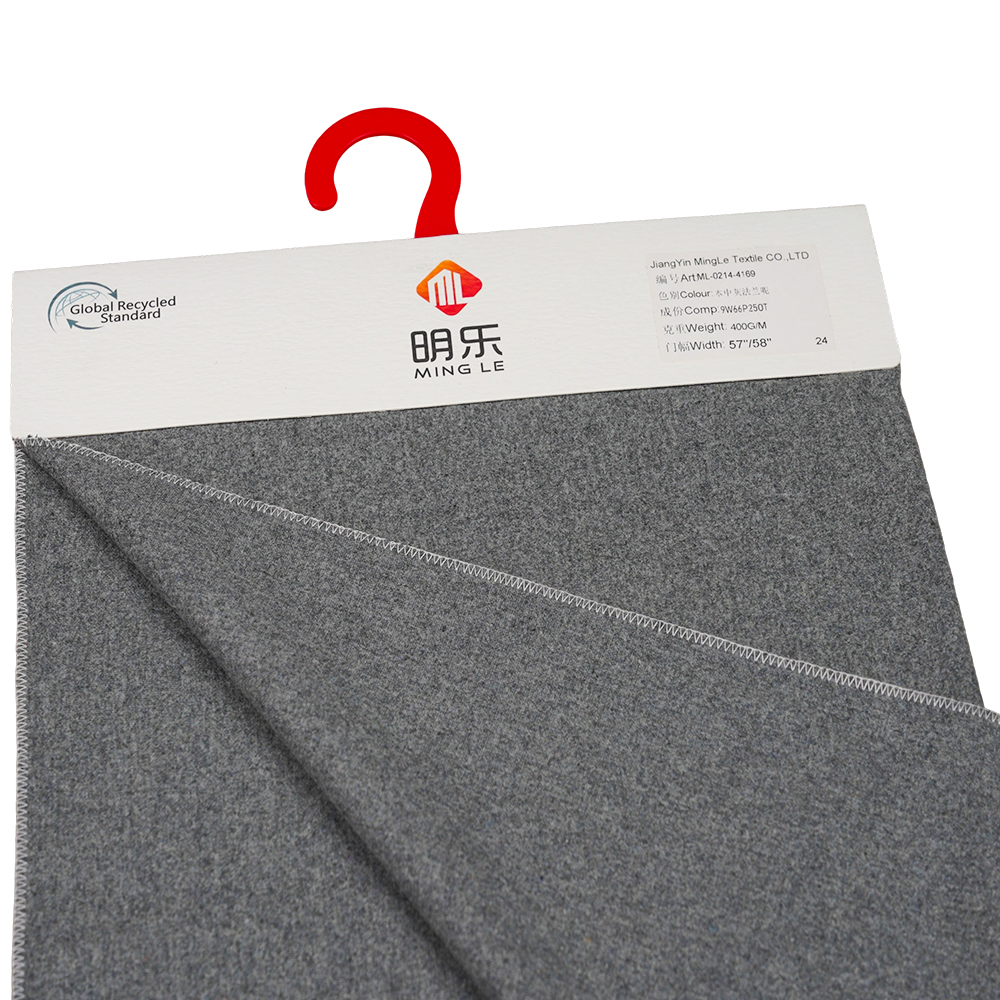
9% Wool 66% Polyester 25% other fiber 400G/M Gray Flannel Fabric – Versatile Neu...
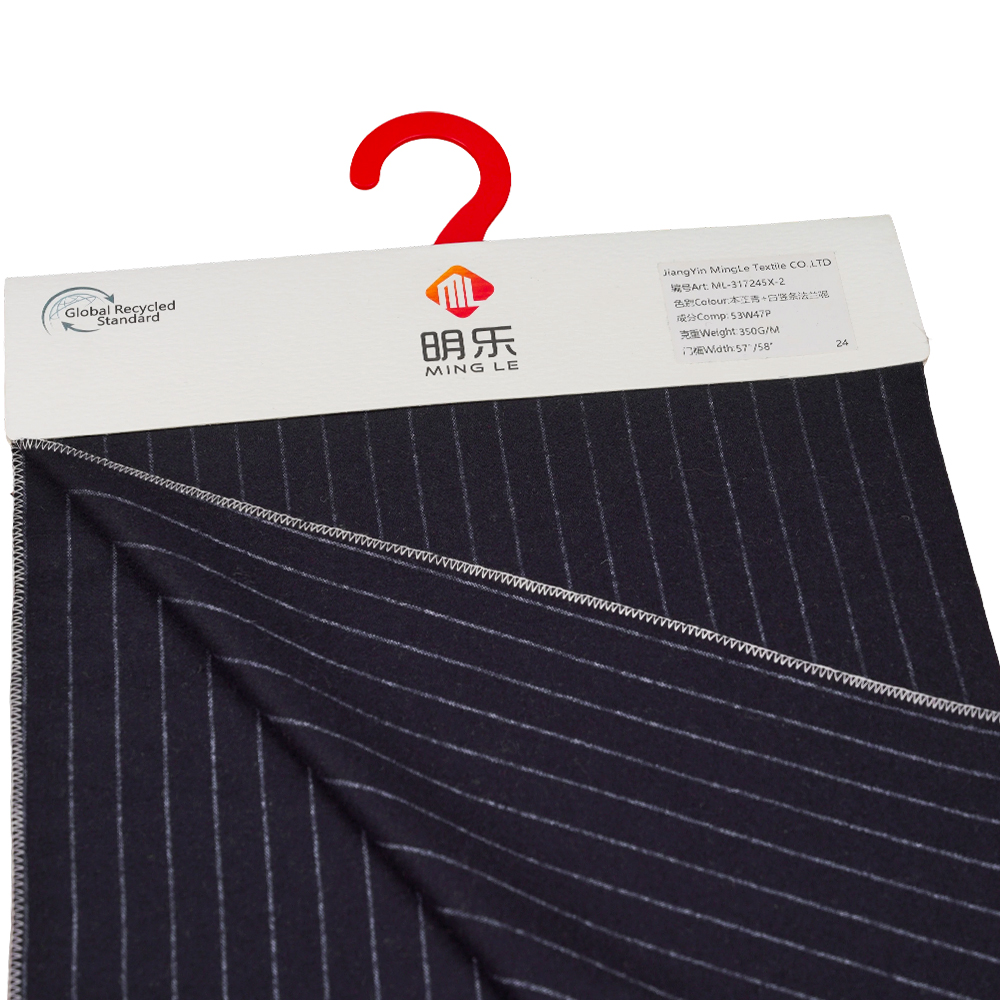
53% Wool 47% Polyester 350G/M Blue Iris + White Vertical Stripe Flannel Fabric: ...
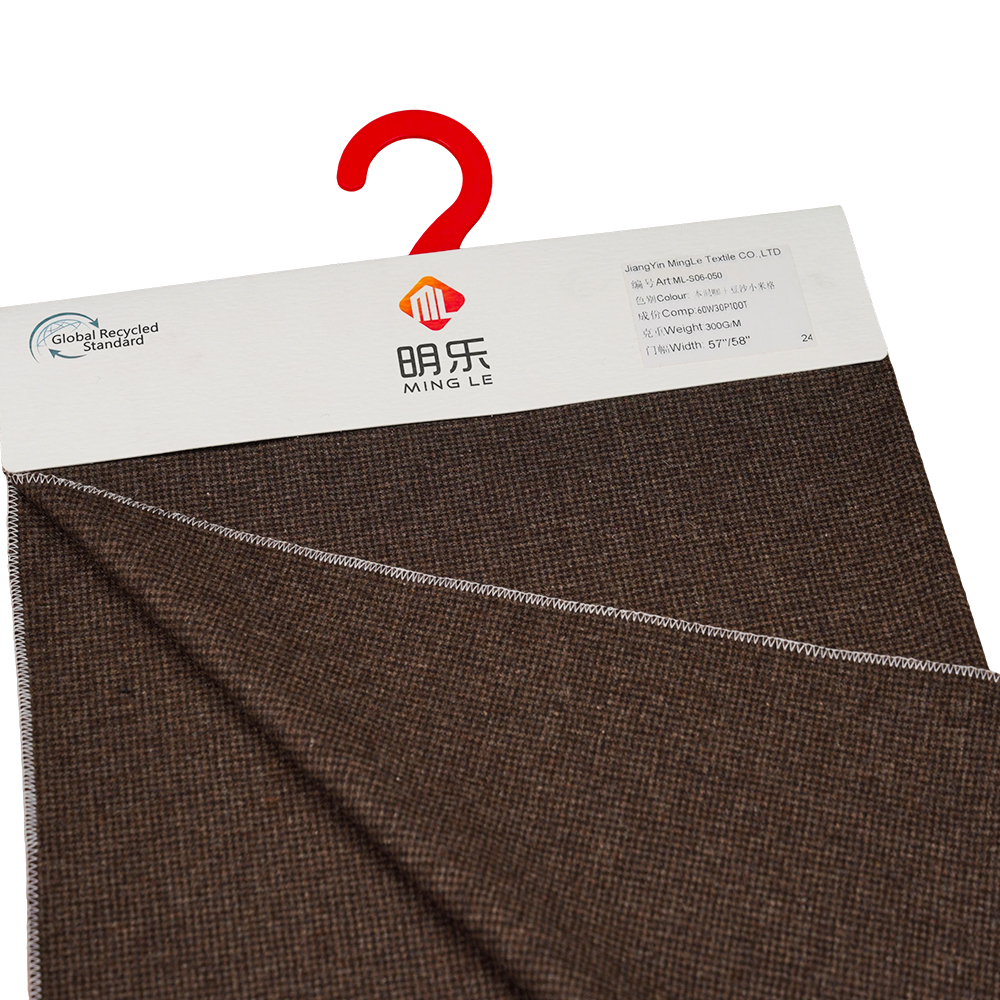
ML-S06-050 Flannel Fabric: 300g/m Wool Blend, Classic Brown CheckThis flannel f...
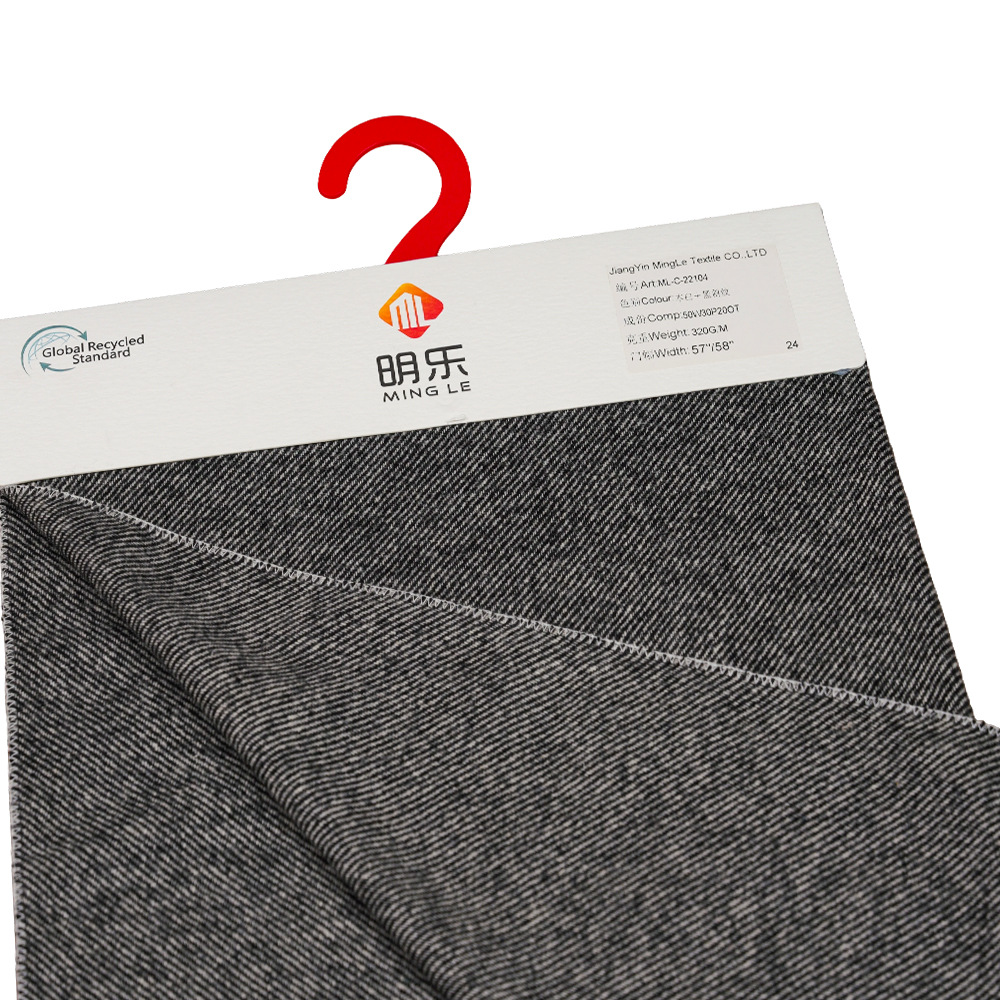
50% Wool, 30% Polyester, 20% other fiber, 320g/m Off-White + Black Twill Flannel...
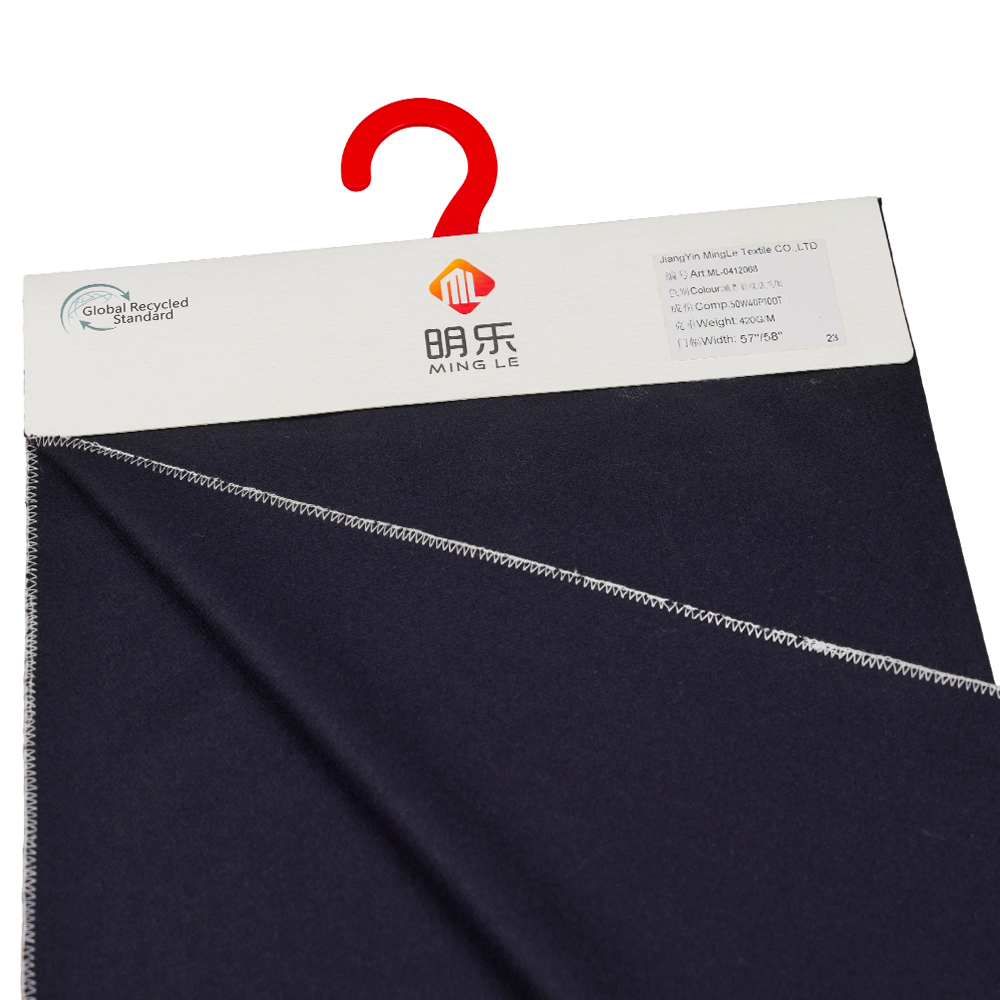
Navy Twill Flannel Fabric: 420g/m Wool Blend, Classic Twill TextureThis flannel ...
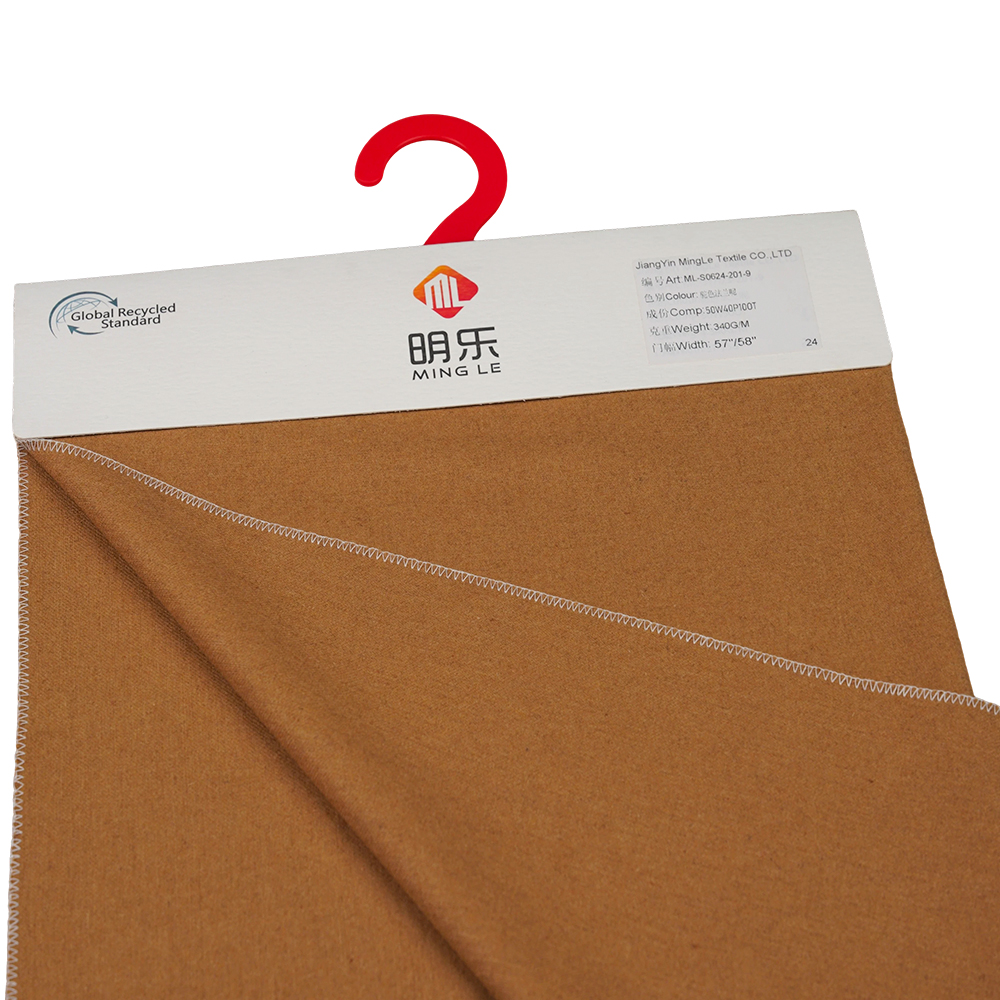
Camel Color Flannel Fabric: 50% Wool, 40% Polyester, 10% other fiber, 340 GSMThi...
 +86 - 510 - 86373115
 +86 - 13812129532
 No. 118, Huancun West Road, Huaxi Fifth Village, Huashi Town, Jiangyin City, Wuxi City, Jiangsu Province, China


